Why do surfaces get darker when they are wet?

  • Context: Undergrad 
  • Thread starter Thread starter itchyfrog
  • Start date Start date
  • Tags Tags
    Surfaces
Click For Summary
SUMMARY

The discussion centers on the optical phenomenon where surfaces, specifically stones, appear darker when wet. The primary reasons identified include increased specular reflection due to the smooth water layer and a reduction in diffuse reflection caused by the refractive index change when water fills the pores of the stones. The presence of water alters the light interaction, leading to a decrease in the overall brightness of the surface. This effect is further explained by the principles of total internal reflection and the material properties of silica, which has a refractive index of approximately 1.45-1.6.

PREREQUISITES
  • Understanding of diffuse and specular reflection
  • Knowledge of refractive index and its impact on light behavior
  • Familiarity with total internal reflection concepts
  • Basic principles of optics relevant to surface interactions
NEXT STEPS
  • Research the principles of light reflection and refraction in different materials
  • Explore the effects of surface roughness on light interaction
  • Study the optical properties of silica and its applications in art and design
  • Investigate the phenomenon of total internal reflection in various contexts
USEFUL FOR

This discussion is beneficial for artists, physicists, and anyone interested in the optical properties of materials, particularly in understanding how light interacts with surfaces in different states (wet vs. dry).

itchyfrog
Messages
3
Reaction score
0
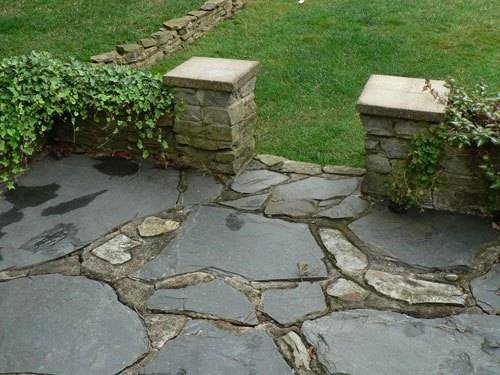
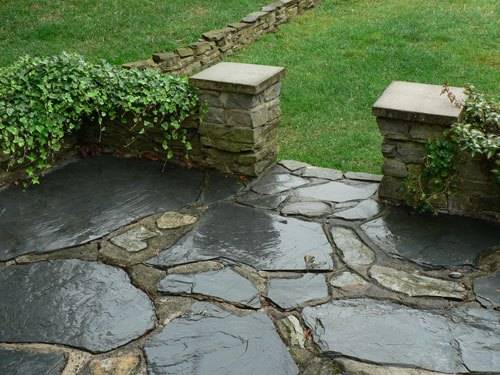
A couple of pictures to get started:
ch07-wet-2.jpg


ch07-wet-1.jpg


I'm not a physicist, but a professional artist, so an overly technical explanation may not have any meaning (especially if it's maths!). However I am very interested in how light interacts with matter and I am puzzled as to what is going on here.

Firstly, the dry stones have mostly diffuse reflection and a small amount of specular reflection which is blurred by the roughness of the stones (you can see a faint sky reflection on them).

The wet stones obviously have a much greater specular component and you can see things being reflected quite clearly. However the diffuse component appears to be much darker - this is especially clear in the second photo where the small remaining wet patches are much darker than the surrounding areas.

I believed that the reason the stones get darker is because the layer of water is reflecting a greater proportion of the light directly (specular reflection) so there would simply be less light for the diffuse material to reflect, hence it appears darker.

However this may be too simplistic, for instance maybe the layer of water is changing the refractive index of the surface thereby somehow contributing to this effect.

Any answers or help with this problem would be greatly appreciated. I did try a search but came up with nothing.
 
Science news on Phys.org
Just to add to the discussion:

another artist has suggested that the difference is due solely to the change in the specular characteristics of the stones. The dry stones appear brighter because you are looking at the combined diffuse reflection and the scattered specular reflection, whereas in the wet stones the specular reflection is concentrated by the smoothness of the water but the underlying diffuse reflection is unchanged.

This sounds good in theory, but I'm not sure if it can really account for the big difference in brightness: the dry stones would have to have a pretty high specular component to account for all that extra light causing a scattered sheen on the surface.

Another problem I have with this idea is that it implies that the stones would also get darker when they are polished, since the specular reflection would become less scattered.

Does this sound plausible?
 
http://www.victoria.ac.nz/scps/staff/johnlekner/publications/darkerwhenwet.pdf

There are two effects in this model- an increase in total internal reflection, and the refractive index change cause by the presence of a thin film.
 
Last edited by a moderator:
water, like any other material, swollows energy. more energy swollowed, less energy (light) reflected.

oh yes.. I am stupid. :D
 
Andy Resnick said:
http://www.victoria.ac.nz/scps/staff/johnlekner/publications/darkerwhenwet.pdf

There are two effects in this model- an increase in total internal reflection, and the refractive index change cause by the presence of a thin film.

thanks - that was very informative :D
 
Last edited by a moderator:
The water cowering the rough surface of the stone makes a smooth layer on it, and the light reflected from the front surface of this water layer is dominated by specular reflection. Watching the surface at the proper angle at sunshine ( equal to the angle of incidence of the light) the surface appears very bright, otherwise it looks dark.
Still there is diffuse reflection and scattering at the stone surface, but the irregularities of the stone are surrounded by water now. Reflection, both specular and diffuse, and scattering too, depend on the refractive indexes of the reflecting surface and of its surrounding, and the higher the difference between them the higher is the reflection. Your stones are dark by themselves, I mean that they would appear dark grey, almost black, when polished. I think the material is some kind of silica, and the refractive index is about 1.45-1,6. The refractive index of water is 1.33, that of air is 1. In case of dry stones, the difference between the refractive indexes is high, and the difference is much lower when the pores of the stones are filled with water.


ehild
 

Similar threads

  • · Replies 1 ·
Replies
1
Views
3K
  • · Replies 5 ·
Replies
5
Views
11K
  • · Replies 6 ·
Replies
6
Views
4K
  • · Replies 4 ·
Replies
4
Views
5K
  • · Replies 2 ·
Replies
2
Views
10K
  • · Replies 40 ·
2
Replies
40
Views
6K
  • · Replies 9 ·
Replies
9
Views
6K
  • · Replies 36 ·
2
Replies
36
Views
5K
  • · Replies 22 ·
Replies
22
Views
5K
  • · Replies 21 ·
Replies
21
Views
5K