Why does alanine salt have a pH of 6.113?

  • Thread starter Thread starter fangrz
  • Start date Start date
  • Tags Tags
    Ph Salt
Click For Summary

Discussion Overview

The discussion revolves around the pH of alanine salt, specifically addressing its dissociation in solution, the behavior of its functional groups, and the implications for its acidity or basicity. Participants explore concepts related to amino acids, zwitterions, and potential polymerization in the context of alanine.

Discussion Character

  • Exploratory
  • Technical explanation
  • Debate/contested
  • Conceptual clarification

Main Points Raised

  • Some participants question whether alanine salt dissociates in solution and how this affects its pH, noting that it has a pH of about 6.113, which is suggested to be the average of its two pKa values.
  • There is a discussion about the carboxyl group potentially acting as a weak base and whether the amine group can be considered a weak acid, with some uncertainty expressed about the terminology used.
  • One participant asserts that sodium alanine salt will not have a pH near 6.1 and claims that it will be alkaline when dissolved, while another participant suggests that the neutral alanine in solution is zwitterionic.
  • Participants discuss the relationship between the pI of alanine and its neutral form, with some confusion about the basicity of the alaninate salt and the role of the carboxyl group in accepting protons.
  • There is speculation about the polymerization of alanine in water, with some participants suggesting that the carboxyl group acts as a weak acid, while others clarify that polymerization is unlikely to occur under normal conditions.
  • One participant raises the question of whether zwitterionic amino acids have the NH2 group acting as a weak base and the COOH group as a weak acid, leading to a discussion about the relative strengths of these groups affecting the overall pH.

Areas of Agreement / Disagreement

Participants express differing views on the behavior of alanine salt in solution, particularly regarding its pH and the roles of its functional groups. There is no consensus on whether the salt is acidic or basic, and the discussion remains unresolved on several technical points.

Contextual Notes

Some participants indicate a need for a better understanding of the ionization of amines and carboxylic acids, suggesting that assumptions about the behavior of alanine and its salt may depend on specific definitions and conditions not fully explored in the discussion.

fangrz
Messages
38
Reaction score
0
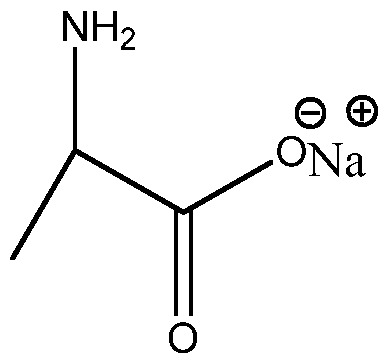
I understand that alanine salt ooks like this:
imgf000011_0001.png


However, does it look like that in solution? Does the salt dissociate? I know that alanine salt has a pH of about 6.113 because it is the average of the 2 pKas. However, if this salt dissociates, it seems that the carboxyl group is a weak base. Does this mean that the amine group is a weak acid? I cannot find online that the amine group goes from NH2 to NH (unless in a protein backbone), but I do see that it can go from NH2 to NH3+?
 
Chemistry news on Phys.org
In the last words you seem to have the essential of the answer to your question.
 
epenguin said:
In the last words you seem to have the essential of the answer to your question.

Thank you! I gather that the salt is soluble, so there is Na+ in solution, and its effect on pH is negligible. So, I am now looking at the amino acid portion of the salt. I understand how normal dehydrolysis works to make the protein backbone. However, there can't seem to be a dehydrolysis reaction occurring here in order to make NH2 go to NH since the carboxyl group is deprotonated?
 
You really need to revise on almost any book ionisations of amines, carboxylic acids, and amino acids, then you could ask better questions. You will see no reaction "NH2 go to NH" just -NH2 to -NH3+.

Actually the sodium alanine salt will not have a pH near 6.1. Neutral alanine, e.g. what you get out of the bottle labeled alanine will give you that pH and essentially all the molecules are zwitterions (look it up). If instead you get out of the bottle labeled "alanine Na Salt" (it could be called sodium alaninate but it never is) then you have essentially what you have pictured but if you dissolve it it will be alkaline. Yes it is fully dissociated.
 
epenguin said:
You really need to revise on almost any book ionisations of amines, carboxylic acids, and amino acids, then you could ask better questions. You will see no reaction "NH2 go to NH" just -NH2 to -NH3+.

Actually the sodium alanine salt will not have a pH near 6.1. Neutral alanine, e.g. what you get out of the bottle labeled alanine will give you that pH and essentially all the molecules are zwitterions (look it up). If instead you get out of the bottle labeled "alanine Na Salt" (it could be called sodium alaninate but it never is) then you have essentially what you have pictured but if you dissolve it it will be alkaline. Yes it is fully dissociated.

Thank you! I apologize if my terminology is bad; I have not taken organic chemistry yet. I looked up zwitterions and pIs; is it true that the pI is essentially the pH of the neutral pure amino acid? Also, the alaninate salt is basic because of the -COO- group accepting protons, right?
 
fangrz said:
Thank you! I apologize if my terminology is bad; I have not taken organic chemistry yet. I looked up zwitterions and pIs; is it true that the pI is essentially the pH of the neutral pure amino acid?
That's right.
fangrz said:
Also, the alaninate salt is basic because of the -COO- group accepting protons, right?
I wouldn't say that's a good way of putting it, in fact not right. If you dissolve some alanine it will be pH about 6, and essentially all zwitterIonic +NH3CH3CHCOO- . The salt is what you get if to that per mole of alanine you add one mole of NaOH. You would expect that to also make it alkaline. Doing that you won't have done anything to the -COO- group which will remain negatively charged but rather you will have deprotonated the amino -NH3+ group to make it -NH2.

You don't need to know everything about the chemistry to get the basic ideas of amino acids (we are talking only of their physical aspect) but you need to at least some basics of them, and physical chemistry of acids and bases in general, at least enough to be comfortable with these formulae.
 
epenguin said:
That's right.

I wouldn't say that's a good way of putting it, in fact not right. If you dissolve some alanine it will be pH about 6, and essentially all zwitterIonic +NH3CH3CHCOO- . The salt is what you get if to that per mole of alanine you add one mole of NaOH. You would expect that to also make it alkaline. Doing that you won't have done anything to the -COO- group which will remain negatively charged but rather you will have deprotonated the amino -NH3+ group to make it -NH2.

You don't need to know everything about the chemistry to get the basic ideas of amino acids (we are talking only of their physical aspect) but you need to at least some basics of them, and physical chemistry of acids and bases in general, at least enough to be comfortable with these formulae.

Thank you again! When you dissolve alanine in water, doesn't it form a polymer? Is the reason why it is acidic is that at the end of the chain, the carboxyl group acts as a weak acid, overriding the weak base effect of the amine group? In this regard, are there multiple polymer chains in solution? I am not quite sure what alanine dissolved in water actually looks like. I really appreciate your help.
 
fangrz said:
Thank you again! When you dissolve alanine in water, doesn't it form a polymer? Is the reason why it is acidic is that at the end of the chain, the carboxyl group acts as a weak acid, overriding the weak base effect of the amine group? In this regard, are there multiple polymer chains in solution? I am not quite sure what alanine dissolved in water actually looks like. I really appreciate your help.

No not in water. You are right that there is a sort of chemical possibility there in principle of polymerization, but the equilibrium is all against it. Look at the supposed polymerization reaction - it's actually getting rid of water. In fact you can get a sort of messy polymerization by heating nearly dry amino acids, I forget exact conditions, which has interested some Origin of life people. Of course proteins in life are synthesized from amino acids but the latter need to be activated by adenylyation if that means anything to you, plus a whole lot of other stuff which is a large fraction of molecular biology, not suitable for one paragraph summaries! :oldbiggrin:.
 
  • Like
Likes   Reactions: fangrz
epenguin said:
No not in water. You are right that there is a sort of chemical possibility there in principle of polymerization, but the equilibrium is all against it. Look at the supposed polymerization reaction - it's actually getting rid of water. In fact you can get a sort of messy polymerization by heating nearly dry amino acids, I forget exact conditions, which has interested some Origin of life people. Of course proteins in life are synthesized from amino acids but the latter need to be activated by adenylyation if that means anything to you, plus a whole lot of other stuff which is a large fraction of molecular biology, not suitable for one paragraph summaries! :oldbiggrin:.

Thank you! Am I right, though, that for zwitterion amino acids, the NH2 acts as a weak base and the COOH acts as a weak acid, and the weak acid overrides the effect of the weak base to make the pH of the solution acidic? Thanks again (I keep saying this but I really appreciate your explanations!)
 
  • #10
fangrz said:
Am I right, though, that for zwitterion amino acids, the NH2 acts as a weak base and the COOH acts as a weak acid, and the weak acid overrides the effect of the weak base to make the pH of the solution acidic?

It depends on their relative strengths, so in general, depending on the amino acid, the solution can be either slightly acidic or slightly basic.
 
  • #11
epenguin said:
No not in water. You are right that there is a sort of chemical possibility there in principle of polymerization, but the equilibrium is all against it. Look at the supposed polymerization reaction - it's actually getting rid of water. In fact you can get a sort of messy polymerization by heating nearly dry amino acids, I forget exact conditions, which has interested some Origin of life people. Of course proteins in life are synthesized from amino acids but the latter need to be activated by adenylyation if that means anything to you, plus a whole lot of other stuff which is a large fraction of molecular biology, not suitable for one paragraph summaries! :oldbiggrin:.
Borek said:
It depends on their relative strengths, so in general, depending on the amino acid, the solution can be either slightly acidic or slightly basic.
Thank you everyone! I realized I had it mixed up, since amino acids exist in +NH3CH3CHCOO- form.
 

Similar threads

  • · Replies 15 ·
Replies
15
Views
8K
  • · Replies 1 ·
Replies
1
Views
5K
  • · Replies 0 ·
Replies
0
Views
2K
Replies
13
Views
8K
  • · Replies 2 ·
Replies
2
Views
2K
Replies
4
Views
2K
Replies
3
Views
8K
  • · Replies 4 ·
Replies
4
Views
26K
  • · Replies 3 ·
Replies
3
Views
4K
Replies
4
Views
7K