Discussion Overview
The discussion centers around the representation of coefficients in mathematical expressions, specifically the preference for using exact values in radical form versus decimal approximations. Participants explore the implications of using approximations in calculations and the nature of irrational numbers.
Discussion Character
Main Points Raised
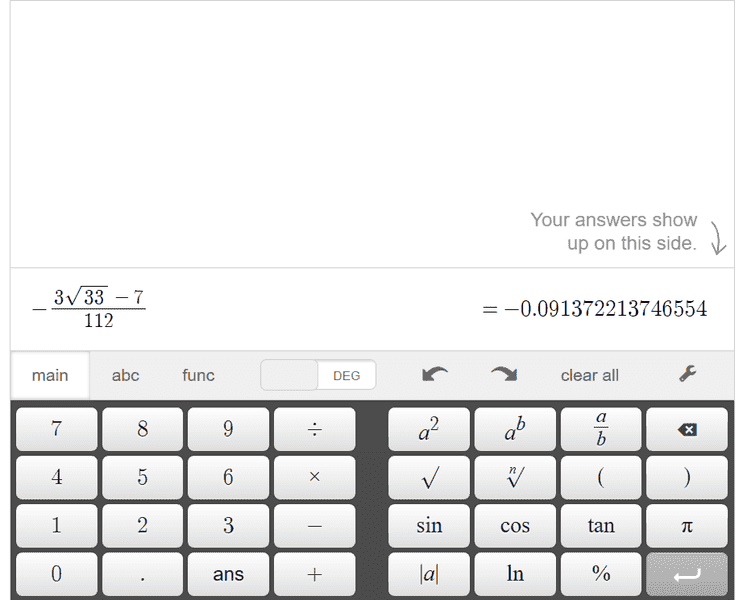
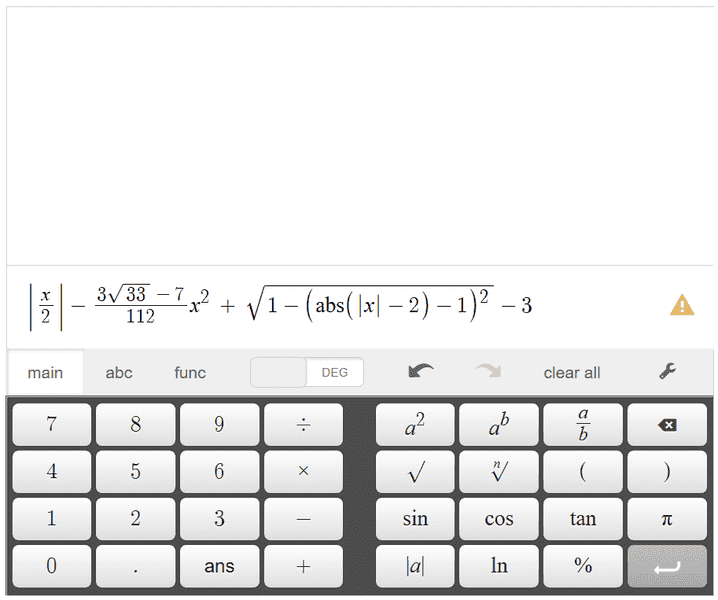
- One participant questions why a coefficient is written in radical form instead of as a decimal approximation, citing a specific expression.
- Another participant clarifies that decimal representations are approximations and that no matter how many digits are used, there is always an error associated with them.
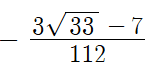
- A further contribution emphasizes that the radical form, such as ##-\frac{3\sqrt{33}-4}{112}##, is exact, contrasting it with the imprecision of decimal approximations.
- One participant explains the concept of irrational numbers using ##\sqrt{2}## as an example, noting that its decimal representation is infinite and non-repeating, thus never exactly equal to the radical form.
Areas of Agreement / Disagreement
Participants express differing views on the merits of using exact values in radical form versus decimal approximations, indicating that the discussion remains unresolved with multiple competing perspectives.
Contextual Notes
Participants have not reached a consensus on the best approach to represent coefficients, and there are unresolved questions regarding the implications of using approximations in mathematical expressions.