medeek
- 46
- 6
I've recently started working on a wind load calculator.
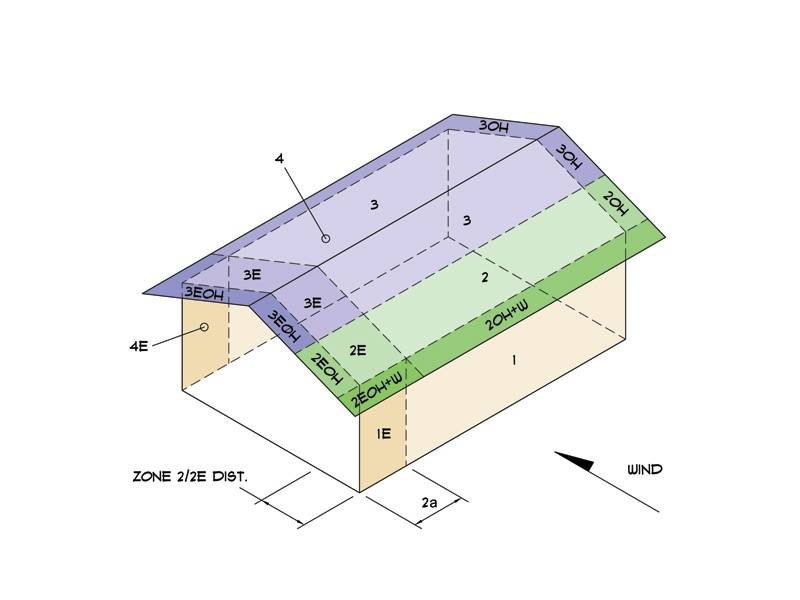
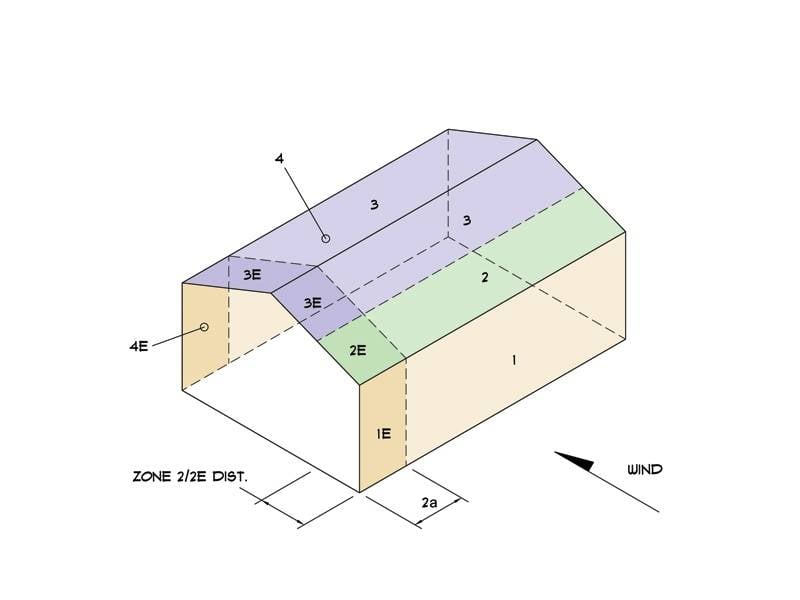
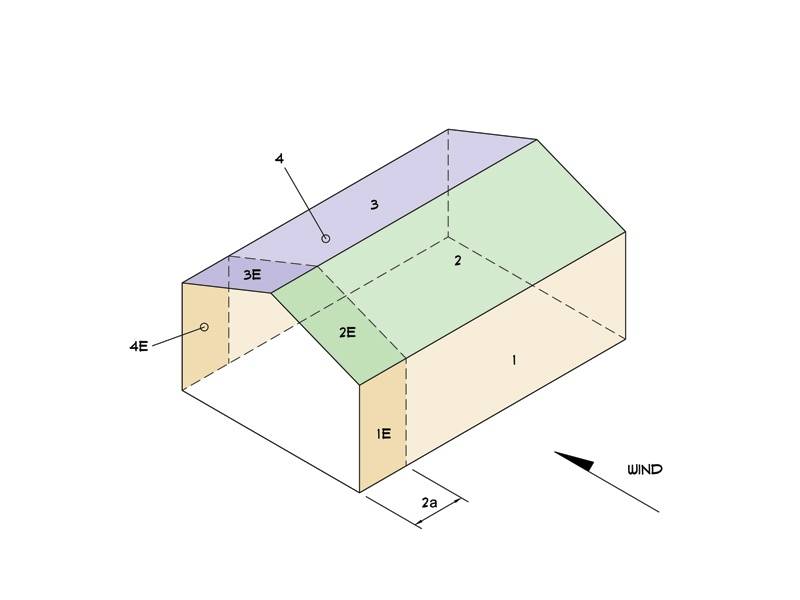
Notice the complexity when overhangs are added to the roof. These load diagrams show the Envelope Procedure for a Gable Roof:
Load Case A:

Load Case B:
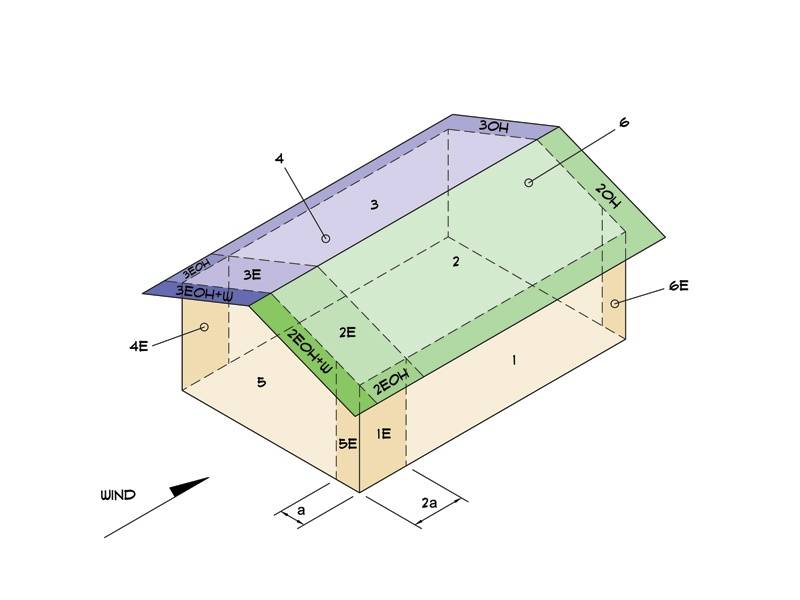
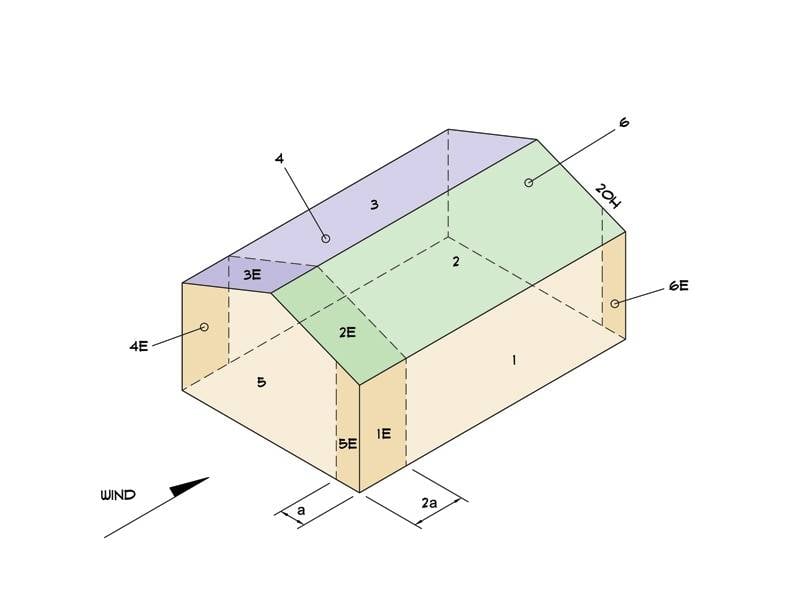
If torsional load cases are required then another Load Case A and B are required for the torsional load case.
Give the gable roof option a whirl, all of the other options are not programmed yet and I may never add them pending further research as to how well I can extrapolate the Envelope Procedure to these configurations.
If there are no overhangs set the overhang values to zero, I will need to add in a footnote about that later just to clarify.
Not a finished product yet, not by a long shot. The current Todo list includes the following:
To Do List:
1) Calculate min. lateral load with roof forces neglected and min. pressures of 8 psf and 16 psf on roof and walls respectively. (psf)
2) Calculate max. uplift and max. horizontal reactions of trusses or rafters assuming 24" o/c and 16" o/c for design of hurricane ties (lbs).
3) Calculate base wind shear in transverse and longitudinal direction (lbs).
4) Calculate shear wall reactions (lbs) and unit shear (plf) assuming only external shear walls (4 walls).
5) Calculate roof diaphragm distributed load (plf) assuming one story building with external shear walls only.
6) Include C & C wind loads for component design.
7) Include Directional Procedure as a comparison to Envelope Procedure or setup separate calculator for this method.
8 ) Complete PDF report output.
http://design.medeek.com/resources/wind/wind_calculator.pl
Notice the complexity when overhangs are added to the roof. These load diagrams show the Envelope Procedure for a Gable Roof:
Load Case A:
Load Case B:
If torsional load cases are required then another Load Case A and B are required for the torsional load case.
Give the gable roof option a whirl, all of the other options are not programmed yet and I may never add them pending further research as to how well I can extrapolate the Envelope Procedure to these configurations.
If there are no overhangs set the overhang values to zero, I will need to add in a footnote about that later just to clarify.
Not a finished product yet, not by a long shot. The current Todo list includes the following:
To Do List:
1) Calculate min. lateral load with roof forces neglected and min. pressures of 8 psf and 16 psf on roof and walls respectively. (psf)
2) Calculate max. uplift and max. horizontal reactions of trusses or rafters assuming 24" o/c and 16" o/c for design of hurricane ties (lbs).
3) Calculate base wind shear in transverse and longitudinal direction (lbs).
4) Calculate shear wall reactions (lbs) and unit shear (plf) assuming only external shear walls (4 walls).
5) Calculate roof diaphragm distributed load (plf) assuming one story building with external shear walls only.
6) Include C & C wind loads for component design.
7) Include Directional Procedure as a comparison to Envelope Procedure or setup separate calculator for this method.
8 ) Complete PDF report output.
http://design.medeek.com/resources/wind/wind_calculator.pl
