SUMMARY
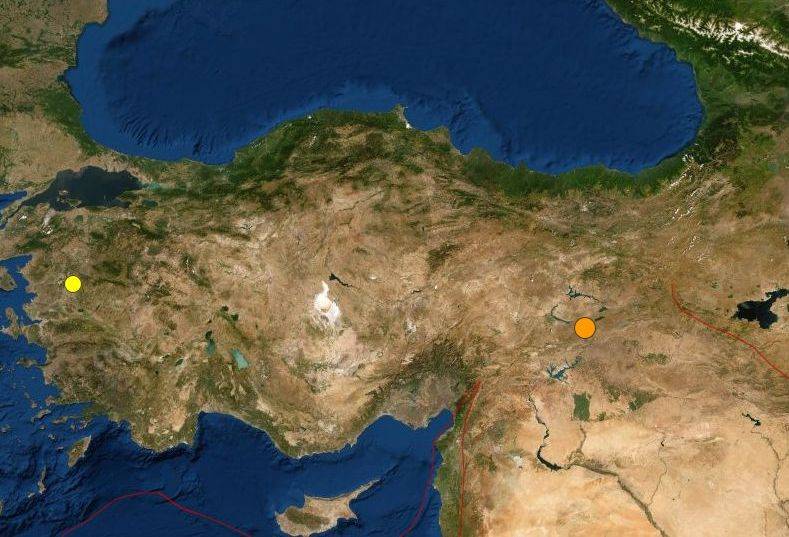
A Mw 6.7 earthquake has been recorded in Turkey, approximately 100 km from the nearest major city, Diyarbakir, while a Mw 5.6 quake is closer to populated areas. The two events are independent, originating from separate fault systems, although both are influenced by tectonic motion in the region. The Moment Magnitude scale (Mw) is currently the preferred measurement for earthquake size, providing a more accurate representation than older scales like ML (Local Magnitude). The discussion highlights the inadequate building standards in Turkey, particularly in rural areas, which exacerbate the impact of seismic events.
PREREQUISITES
- Understanding of seismic measurement scales, particularly Moment Magnitude (Mw).
- Knowledge of tectonic plate movements, specifically the Arabian and Anatolian plates.
- Familiarity with earthquake engineering standards and building codes.
- Experience using Google Earth for geographical analysis.
NEXT STEPS
- Research the differences between Moment Magnitude (Mw) and Local Magnitude (ML) scales.
- Explore the tectonic dynamics of the Arabian and Anatolian plates.
- Investigate earthquake-resistant building practices and codes in earthquake-prone regions.
- Utilize Google Earth to analyze the geographical impact of recent earthquakes in Turkey.
USEFUL FOR
Seismologists, earthquake engineers, urban planners, and anyone interested in understanding the implications of seismic activity in Turkey and the effectiveness of building standards in mitigating earthquake damage.