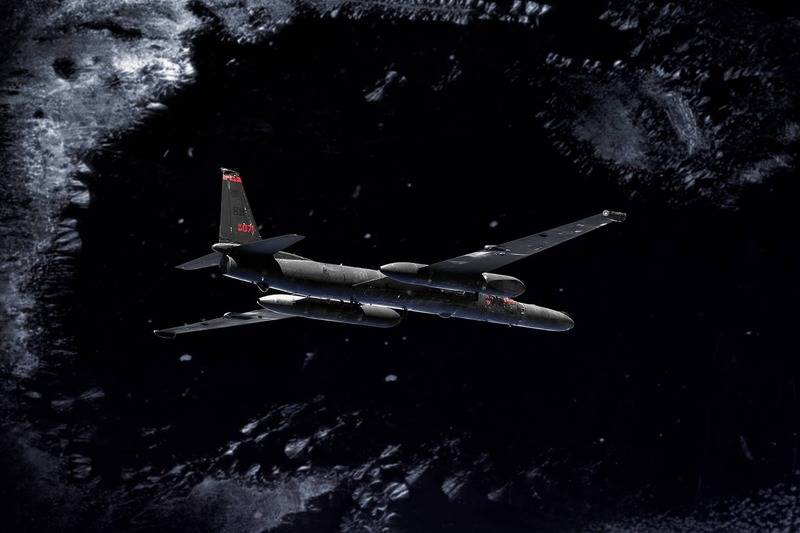
A photoshoot at the edge of space

  • Thread starter Thread starter Flyboy
  • Start date Start date
Click For Summary

Discussion Overview

This thread discusses a recent air-to-air photoshoot involving the U-2 Dragon Lady at high altitudes, exploring the complexities of aerial photography at the edge of space. Participants share insights about the challenges faced during the shoot, including the concept of geometric turns used to maintain formation and spacing between aircraft.

Discussion Character

  • Exploratory
  • Technical explanation
  • Debate/contested
  • Mathematical reasoning

Main Points Raised

  • Some participants express excitement about the unique nature of the photoshoot and the challenges it presented, particularly regarding speed and altitude constraints.
  • Questions arise about the term "geometric turns," with participants attempting to clarify its meaning in the context of aerial formation flying.
  • One participant suggests that geometric turns involve adjusting turn rates and radii to maintain relative positions without changing airspeed.
  • Another participant elaborates on the necessity for precise coordination among pilots due to the narrow flight envelope of the U-2, emphasizing that adjustments in airspeed are not feasible at such altitudes.
  • Some participants humorously reference the Flat Earth Society's potential reactions to the photos, indicating a light-hearted debate about the portrayal of the Earth's curvature in the images.
  • A participant proposes a mathematical analogy involving strings to describe the relationship between the flight paths of the two planes during the photoshoot.

Areas of Agreement / Disagreement

There is no consensus on the exact definition of "geometric turns," as participants offer differing interpretations and explanations. The discussion remains unresolved regarding the specifics of how these turns are executed in practice.

Contextual Notes

Participants acknowledge the complexity of maintaining formation at high altitudes with limited airspeed adjustments, but the discussion does not resolve the technical details of geometric turns or their implications for aerial photography.

Flyboy
Gold Member
Messages
426
Reaction score
633
https://www.thedrive.com/the-war-zo...y7D8jbt94q6bYimcQSNZoGo3Y5eQUNp_IfJNPocD2NOso

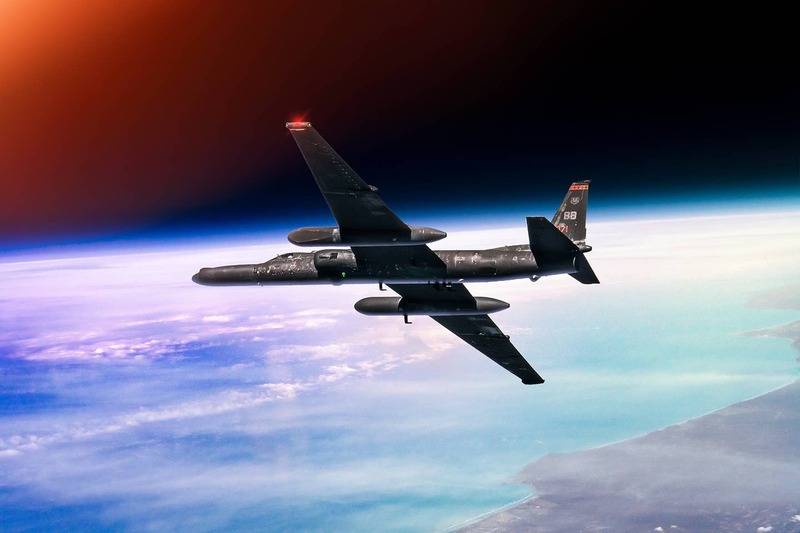
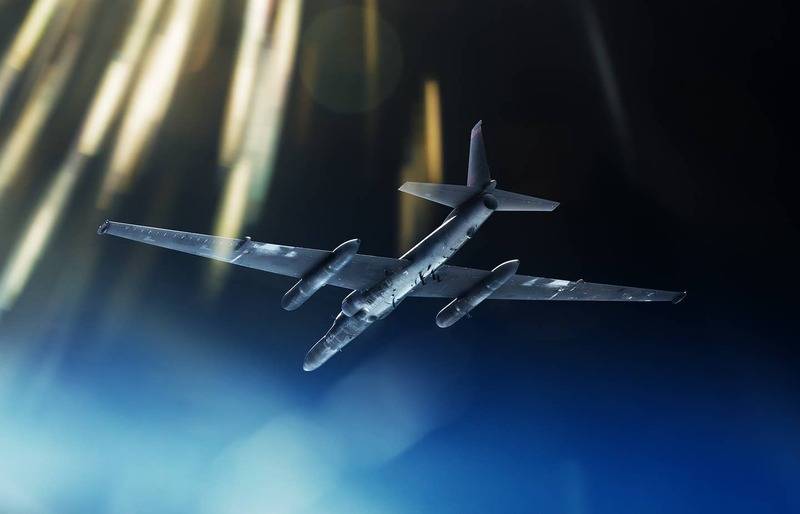
I never expected to ever see the Dragon Lady in an air-to-air photoshoot at her operational altitude, but here we are. Apparently this was in the works for 6+ years to make happen, but by god was it worth it.
<em>Blair Bunting</em>


A U2 Dragon Lady spy plane photographed by Commercial Photographer Blair Bunting. The image is part of the series Photoshoot at the Edge of Space, in which Bunting did a photoshoot above 70,000 feet while in a spacesuit.

<em>Blair Bunting</em>


“Doing a photoshoot like this at the edge of space is entirely different than when I did the same thing with fighter jets,” Blair reflected. “At these altitudes, there are only 5 knots of speed that separate the planes from going so fast they fall apart or going too slow that they fall out of the sky completely. For this reason, we had to use geometric turns to stagger the aircraft rather than having the second plane speed up or slow down, which was yet another complexity that made this photoshoot as challenging as it was.”

Give the whole article a read. It's really neat.
 
  • Like
Likes   Reactions: Andy Resnick, DennisN, nuuskur and 5 others
Computer science news on Phys.org
The article has some real nice pictures.
They kind of have a feel, aviator-noir.

I hope they got that guy out of the engine.
 
Nice.
Q. "Where is the U2 flying today"?
A. "The same place as usual; coffin corner".
 
  • Informative
  • Like
Likes   Reactions: hutchphd and berkeman
Great stuff, thanks @Flyboy :smile:

BTW, what are "geometric turns"?
“At these altitudes, there are only 5 knots of speed that separate the planes from going so fast they fall apart or going too slow that they fall out of the sky completely. For this reason, we had to use geometric turns to stagger the aircraft rather than having the second plane speed up or slow down, which was yet another complexity that made this photoshoot as challenging as it was.”
 
The Flat Earth Society is going to have some choice words for those faked pics that show the edge of the Earth as curved. :smile:
 
  • Haha
  • Like
Likes   Reactions: DennisN, BillTre and berkeman
phinds said:
The Flat Earth Society is going to have some choice words for those faked pics that show the edge of the Earth as curved.
The Flat Earth Society is going to use those obviously unfaked legitimate pics to prove that the Earth is a flat, round disk. :smile:
 
  • Like
Likes   Reactions: BillTre
BillTre said:
I hope they got that guy out of the engine.
Hey, it's better than the guy who has to inspect the inlet duct on an F-16. Damn thing has a strut in the middle of it you have to be mindful of on your way back out. :oldlaugh:
berkeman said:
BTW, what are "geometric turns"?
Not entirely sure, but from my understanding and (admittedly virtual) experience in formation work, they're talking about using different turn rates/radii to adjust their spacing. I.E. if one plane turns "inside" the other while maintaining the same airspeed, the inside plane will seem to move faster than the one on the outside. The inverse is actually something you have to keep in mind during more typical formation flying. Guy on the inside of the turn has to throttle back a touch, guy on the outside has to throttle up a touch. Flight lead gets to sit there fat dumb and happy and critique the other guys for poor stationkeeping. :oldbiggrin:
 
  • Like
Likes   Reactions: BillTre and berkeman
berkeman said:
BTW, what are "geometric turns"?

Flyboy said:
Hey, it's better than the guy who has to inspect the inlet duct on an F-16. Damn thing has a strut in the middle of it you have to be mindful of on your way back out. :oldlaugh:

Not entirely sure, but from my understanding and (admittedly virtual) experience in formation work, they're talking about using different turn rates/radii to adjust their spacing. I.E. if one plane turns "inside" the other while maintaining the same airspeed, the inside plane will seem to move faster than the one on the outside. The inverse is actually something you have to keep in mind during more typical formation flying. Guy on the inside of the turn has to throttle back a touch, guy on the outside has to throttle up a touch. Flight lead gets to sit there fat dumb and happy and critique the other guys for poor stationkeeping. :oldbiggrin:

I think they mean something like this:
Screenshot 2023-08-31 at 3.11.58 PM.png
 
  • Haha
Likes   Reactions: DennisN
BillTre said:
I think they mean something like this:
Um, no.
 
  • #10
berkeman said:
Um, no.
If the planes have to largely maintain an airspeed, then they can adjust their relative positions by turning in arc of different radii.
Like what Calvin was contemplating.
 
  • #11
BillTre said:
If the planes havev to largely maintain an airspeed, then they can adjust their relative positions by turning in arc of different radii.
Like what Calvin was contemplating.
Correct.

Here, lemme throw up another formation shot, this time from DCS.
Screen_230220_012114.jpg


The Mirage in the back is on the inside of the two Viggens. Flight lead is on the outside (in 11), at the front of the stack. All aircraft are currently in a right bank. Normally, for the Mirage to maintain formation in the correct spot with the lead plane, he'd throttle back because he's got a smaller turn radius and covers less distance. If it were reversed and turning left, he'd have to throttle up to stay in position to cover the longer arc. It's a bit challenging to wrap your head around at first, but it get easier with practice.

The U-2s didn't have that luxury of airspeed adjustment. They have a very narrow flight envelope at that altitude, typically listed at ~+/- 5 knots indicated airspeed. Adjusting your airspeed to adjust your position is not an option. You have to play with your relative velocities to make it work. So, to close on the other plane, they would need to turn tighter than the plane they're trying to chase. Likewise, if they need to back off, they'd turn outside of the lead plane. There's no doubt a lot of radio chatter going on to coordinate that kind of work, as there's only so much you can brief on the ground.

If there's still confusion, I can try to get a session with another pilot in DCS to get some examples. The Viggens would provide an excellent platform for that, as they've got an autothrottle that allows them to hold a fixed airspeed and we can use that to emulate the limited flight envelope.
 
  • Like
Likes   Reactions: BillTre
  • #12
The various turns must alternate between the two planes so that over the entire flight the distance between them doesn't grow. I imagine it like having two strings of equal length (the flight paths) with their end points pinned to together (the planes must start and end the flight together). You can deform the two strings however you like to represent a flight path (without stretching the strings or moving their end points). Two points moving along the deformed strings at equal speed, starting at one of the end points, will have a displacement vector (the line of sight for the photo) determined by how the strings were deformed.

P.S.: This would be a great real world example to serve as a starting point for some fun problems in an introductory differential geometry course.
 
Last edited:
  • Like
Likes   Reactions: BillTre

Similar threads

  • · Replies 4 ·
Replies
4
Views
4K
  • · Replies 18 ·
Replies
18
Views
2K
  • · Replies 7 ·
Replies
7
Views
3K
  • · Replies 8 ·
Replies
8
Views
2K
  • · Replies 22 ·
Replies
22
Views
4K
  • · Replies 112 ·
4
Replies
112
Views
22K
  • · Replies 13 ·
Replies
13
Views
15K
  • · Replies 2 ·
Replies
2
Views
2K
  • · Replies 1 ·
Replies
1
Views
6K
  • · Replies 3 ·
Replies
3
Views
2K