SUMMARY
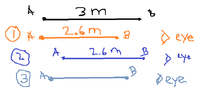
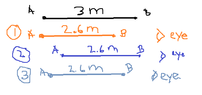
The discussion centers on the interpretation of the angle of a spaceship's cone tip as observed from a stationary frame, specifically addressing the effects of length contraction in special relativity. Participants debate the correct assumptions regarding the spaceship's motion and the resulting angle perceived by an observer. The consensus indicates that the angle decreases due to length contraction when the spaceship moves parallel to the observer's axis. The correct answer to the posed question is identified as (C), based on the proper understanding of the motion and orientation of the spaceship.
PREREQUISITES
- Understanding of special relativity concepts, particularly length contraction.
- Familiarity with the Lorentz transformation and its implications on measurements in different frames.
- Basic knowledge of vector representation in physics, including angles and motion direction.
- Ability to interpret diagrams related to motion and angles in a relativistic context.
NEXT STEPS
- Study the implications of length contraction in special relativity using "Einstein's Theory of Special Relativity".
- Learn about the Lorentz transformation and its application in different inertial frames.
- Explore the concept of simultaneity and how it affects measurements in relativistic physics.
- Investigate visual representations of relativistic effects, such as "relativity simulators" or educational games like those from MIT's gamelab.
USEFUL FOR
This discussion is beneficial for physics students, educators, and anyone interested in understanding the nuances of special relativity, particularly in relation to motion and observation of angles in different frames of reference.