Iqbal94
- 4
- 0
Hi guys,
I did a few sets of test in determining the natural frequency of a crane lifting loads. From that, I tried to find two constant from its initial function.
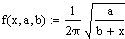
a is the stiffness of the pole that was holding the crane
b is the weight of the crane
x is the weight of the load
The tests were completed by using three different loads on three different position. I plotted the graph as below.
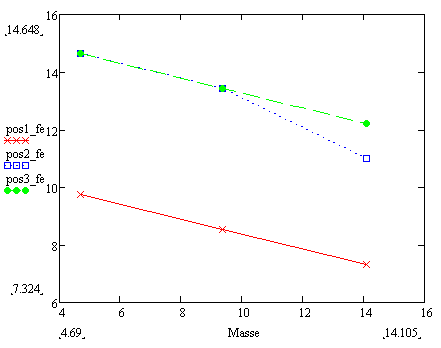
From the obtained graph and the initial function, I tried to determine the value of constant A and B. By calculating manually, the value of A and B are not constant but it supposed to be constant. I tried using MATHCAD to find the value of the constants by using nonlinear regression method but I am not convince that is a right solution. Any of you know any mathematical approximation method that I can use?
I did a few sets of test in determining the natural frequency of a crane lifting loads. From that, I tried to find two constant from its initial function.
a is the stiffness of the pole that was holding the crane
b is the weight of the crane
x is the weight of the load
The tests were completed by using three different loads on three different position. I plotted the graph as below.
From the obtained graph and the initial function, I tried to determine the value of constant A and B. By calculating manually, the value of A and B are not constant but it supposed to be constant. I tried using MATHCAD to find the value of the constants by using nonlinear regression method but I am not convince that is a right solution. Any of you know any mathematical approximation method that I can use?