Discussion Overview
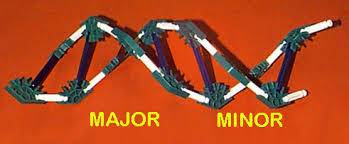
The discussion revolves around the differentiation between A-T and T-A base pairs in the context of DNA grooves, specifically focusing on the major and minor grooves. Participants explore the structural characteristics of these grooves and their implications for molecular interactions, particularly with proteins.
Discussion Character
- Exploratory
- Technical explanation
- Conceptual clarification
- Debate/contested
Main Points Raised
- Some participants note that the major groove occurs where the DNA backbones are farther apart, while the minor groove occurs where they are closer together, but express confusion about the differences between the two grooves.
- One participant suggests that viewing a base pair from the top down reveals that the major and minor grooves present different combinations of hydrogen-bond donors and acceptors, with the minor grooves appearing similar across various base pairs and the major grooves differing significantly.
- A participant expresses a lack of understanding regarding the statement that minor grooves look very similar across different base pairs.
- Another participant provides an analogy comparing the minor groove to a generic address and the major groove to a specific address, suggesting that proteins can bind more generically to the minor groove and more specifically to the major groove.
- It is mentioned that proteins can interact with DNA by examining the shape of base pairs and through hydrogen bonding, raising the question of whether one can differentiate between A-T and T-A base pairs in the minor versus the major grooves.
Areas of Agreement / Disagreement
Participants express confusion and differing levels of understanding regarding the structural differences between the major and minor grooves, as well as the implications for base pair differentiation. There is no consensus on whether A-T and T-A base pairs can be distinguished based on the grooves.
Contextual Notes
Some limitations include the potential for misunderstanding the structural implications of the grooves and the complexity of protein-DNA interactions that may not be fully resolved in the discussion.