Can You Solve These Vector Questions About Wind?

  • Thread starter Thread starter uniquegirl
  • Start date Start date
  • Tags Tags
    Vector Wind
Join the discussion
Ask a follow-up here, or get your own question answered by working scientists, mathematicians and engineers — people, not an autocomplete.
Real named experts · corrections over time · the nuance an AI answer skips
49 replies · 3K views
uniquegirl
Messages
27
Reaction score
13
Homework Statement
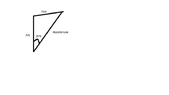
1 a) A kite skier is moving at 25 m s^1 in the N 25^0 E
direction as shown in the diagram. Calculate the
northerly and easterly velocity of the skier.

b) A strong gust of wind from the west causes the skier to accelerate to the east at 2.0 m s-2 for 1.8 s.
Calculate the new velocity in the easterly direction

c) Use your answer in (b) to calculate the size and direction of the new resultant velocity of the skier
Relevant Equations
N/A
N/A
 

Attachments

  • Capture.PNG
    Capture.PNG
    3.2 KB · Views: 153
Last edited:
Physics news on Phys.org
According to our guidelines in order to receive help, you must show some effort towards the solution. Tell us what you think. "No idea where to start" is not showing an effort. It would also help if you figured out what equations are relevant and put them under heading "Relevant equations" where you actually put the statement of the problem. We provide the template to organize you and get you started so please, for future reference, use it appropriately.
 
  • Like
Likes   Reactions: Lnewqban
So a vector diagram, One arrow to the north, one somewhere in between North and east and one towards east.
 
  • Like
Likes   Reactions: Lnewqban
Would I use 25degrees sin/cos to find the northerly and easterly velocity?
 
DRAW A DIAGRAM. Then we can discuss it. If you have mistakes, we'll help you see where.

Also, "please help" is not really a helpful subject line.
 
For part 1a) you are being asked to find the northerly and easterly components of the given velocity vector.

If you truly have ‘no idea where to start’, watch the video below. It explains how to find the components of any vector, including the trigonometry you need. (Alternative videos can easily be found.)

You need to take the initiative; e.g.
- watch and understand the video;
- try solving part 1a) using what you have learned;
- post your working/answer here to get feedback.

Then 1b) and 1c) can be tackled.

 
  • Like
Likes   Reactions: Delta2
Thank you so much I really appreciate the help, I will figure out question 1 and then post the answers:smile:
 
  • Like
Likes   Reactions: Lnewqban
Capture.PNG


My vector diagram is-
Capture1.PNG


Attempt at 1a) Northerly velocity: Sin 25degrees=Vn/25
Vn= 25sin25degrees
= 10.56 ms^1 N
Easertly Velocity: Cos 25 degrees= vn/25
Vn= 25cos25 degrees
vn= 22.65 ms^1 E
 
uniquegirl said:
Attempt at 1a) Northerly velocity: Sin 25degrees=Vn/25
This is not correct.

##\sin 25^o## and ##\cos 25^o## can be defined in terms of a right triangle where one of the angles in the triangle is ##25^o##. "Side opposite", "side adjacent", and "hypotenuse" are involved.

Were you thinking in terms of a particular right triangle? If so, can you sketch or describe the triangle that you had in mind?
 
  • Like
Likes   Reactions: Delta2 and Lnewqban
Lnewqban said:
It seems that the location of West is not correct.
sorry, I accidentally labelled it wrong in my diagram, I meant East
 
  • Like
Likes   Reactions: Lnewqban
TSny said:
This is not correct.

##\sin 25^o## and ##\cos 25^o## can be defined in terms of a right triangle where one of the angles in the triangle is ##25^o##. "Side opposite", "side adjacent", and "hypotenuse" are involved.

Were you thinking in terms of a particular right triangle? If so, can you sketch or describe the triangle that you had in mind?
Just a normal right-angle triangle.
 
uniquegirl said:
Just a normal right-angle triangle.
Here is your drawing
1656979540144.png

There are no right triangles indicated in the drawing. Can you post an updated diagram which shows the particular right triangle that you used to set up your expression for ##\sin 25^o##?

If you did not use a right triangle, can you explain how you arrived at ##\sin 25^o = \large \frac{v_n}{25}##?
 
  • Like
Likes   Reactions: Delta2
I just used trigonometry because that is what you use to find the horizontal and vertical velocities. So it was just a guess. Are you allowed to tell me which equation would be best fit in this situation or would I have to figure that out?
 
Is velocity=distance/time a better formula? But because I'm not given a time, I'm a bit confused
 
uniquegirl said:
I just used trigonometry because that is what you use to find the horizontal and vertical velocities.
Can you explain how you used trigonometry?

uniquegirl said:
So it was just a guess.
We want to avoid guessing.

uniquegirl said:
Are you allowed to tell me which equation would be best fit in this situation or would I have to figure that out?
It would not really help you if I told you the equation. If I did, what would you do the next time you have a similar, but somewhat different problem? It's essential that you learn to figure it out using basic information that you have learned.

I'm sure you've learned the basic trigonometry shown in this link.

Can you draw a right triangle in your drawing that has the ##25^o## angle as one of the angles in the right triangle? If you can, then you can try to identify which side is the "side adjacent" to the ##25^o## angle, etc.
 
  • Like
Likes   Reactions: Delta2
uniquegirl said:
Are you allowed to tell me which equation would be best fit in this situation or would I have to figure that out?
To add to what @TSny said, we are not here to GIVE you answers, we are here to help you figure out how to GET answers.

Blindly plugging things into equations is not how you get answers. You get answers by learning to understand the physics involved in problems.
 
TSny said:
Can you explain how you used trigonometry?We want to avoid guessing.It would not really help you if I told you the equation. If I did, what would you do the next time you have a similar, but somewhat different problem? It's essential that you learn to figure it out using basic information that you have learned.

I'm sure you've learned the basic trigonometry shown in this link.

Can you draw a right triangle in your drawing that has the ##25^o## angle as one of the angles in the right triangle? If you can, then you can try to identify which side is the "side adjacent" to the ##25^o## angle, etc.
 

Attachments

  • Untitled.png
    Untitled.png
    3.5 KB · Views: 138
The one in-between opp and hyp
 
uniquegirl said:
The one in-between opp and hyp
No. Here is a more carefully drawn diagram showing how the north and east components ##V_n## and ##V_e## are drawn.

1656984637694.png

We always construct the components by "perpendicular projection" of the (red) vector onto the axes. That is, the dotted lines meet the axes at right angles. So, we end up with right triangles.

The upper left right-triangle is the one you were essentially drawing. The right angle is the angle between the sides that are opposite and adjacent to the 25o angle.

Can you see how to use a trig function to determine ##V_n##?
 
  • Like
Likes   Reactions: Lnewqban and Delta2
Would it be Vn= opp/hyp? But since the measurements for opp aren't given...
 
uniquegirl said:
Would it be Vn= opp/hyp? But since the measurements for opp aren't given...
Hmm, no . Can you write cos(25) and sin(25) in terms of adj,opp and hyp? Vn plays the role of adjacent side and Ve playes the role of opposite side btw in case you didn't catch that.
 
  • Like
Likes   Reactions: Lnewqban
But since Ve isn't given, would it be 25? or am I missing something?