Car traffic producing shock wave

Click For Summary
SUMMARY

The discussion focuses on calculating the distance (d) between the front end of a buffer zone and the rear bumper of the next car in a traffic scenario involving both slow and fast-moving vehicles. It emphasizes the importance of understanding flow rates, boundaries, and densities in traffic dynamics. The participants suggest introducing constants for upstream and downstream flow densities (ρu and ρd) to simplify the problem-solving process. The conversation highlights the necessity of visualizing flow rates to equate the movement of fast and slow cars effectively.

PREREQUISITES
  • Understanding of basic physics concepts such as flow rates and boundaries.
  • Familiarity with traffic dynamics and vehicle spacing.
  • Knowledge of mathematical modeling for distance and speed calculations.
  • Ability to interpret and manipulate equations involving density and flow.
NEXT STEPS
  • Research the principles of fluid dynamics as they apply to traffic flow.
  • Study mathematical models for calculating vehicle spacing and flow rates.
  • Explore the concept of shock waves in traffic scenarios and their implications.
  • Learn about the application of constants in physics equations to simplify complex problems.
USEFUL FOR

Traffic engineers, physics students, and anyone interested in understanding the dynamics of vehicle flow and traffic congestion.

rudransh verma
Gold Member
Messages
1,067
Reaction score
96
Homework Statement
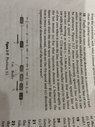
An abrupt slowdown in concentrated traffic can travel as a pulse, termed as a shock wave, along the line of cars, either downstream (in the traffic direction) or upstream, or it can be stationary. Fig shows a uniformly spaced line of cars moving at speed v =25 m/s towards a uniformly spaced line of slow cars moving at speed vc =5m/s. Assume that each faster cars adds length L =12 m(car length plus buffer zone ) to the line of slow cars when it joins the line and assume that it slows abruptly at the last instant. a) For what separation distance d between the faster cars does the shock wave remain stationary. If the separation is twice that amount, what are the b)speed and c)direction (upstream or downstream )of the shock wave?
Relevant Equations
v= distance /time
I don’t get where exactly the lengths start and end in figure.
 

Attachments
  • image.jpg
    image.jpg
    56.7 KB · Views: 160
Physics news on Phys.org
They have drawn each car with an imaginary buffer zone in front. This reflects the spacing that will exist once the cars have queued up in the slow line.

We are not given the true length of the cars from front bumper to rear bumper. Nor do we need to know that number.

We are asked to compute distance ##d## which extends from the front end of the buffer zone to the rear bumper of the next car to the front while the cars are queued in the fast line.

Since you have shown no work, I will not attempt to give any hints on how to proceed.
 
Last edited:
  • Like
Likes   Reactions: SammyS
jbriggs444 said:
We are asked to compute distance d which extends from the front end of the buffer zone to the rear bumper of the next car to the front while the cars are queued in the fast line.
So the time it takes for the slow cars to move one L is same as the time taken by the fast cars to travel L(assuming we are measuring the distance traveled from how much the rear wheels of the car travels)+d. That’s how the shock waves will be stationary.
For the second part, the fast car travels L+2d and at the same time slow cars travel distance >L. Then what should I do?
 
Last edited:
rudransh verma said:
For the second part, the fast car travels L+2d and at the same time slow cars travel distance >L. Then what should I do?
The mental image that I would pursue is flow rate.

You have an upstream flow into a boundary. You have a downstream flow from a boundary. You can ask how fast the boundary must move to ensure that the two flow rates are identical.

My inclination would be to introduce two new named constants into the problem -- the density of the upstream flow (##\rho_u##) and the density of the downstream flow (##\rho_d##). That will keep you from getting bogged down in details when you write down the equation that equates the two flow rates.
 
Last edited:
jbriggs444 said:
You have an upstream flow into a boundary. You have a downstream flow from a boundary. You can ask how fast the boundary must move to ensure that the two flow rates are identical.

My inclination would be to introduce two new named constants into the problem -- the density of the upstream flow (ρu) and the density of the downstream flow (ρd). That will keep you from getting bogged down in details when you write down the equation that equates the two flow rates.
What is a boundary, flow, density of flow? I don’t understand !
 
rudransh verma said:
What is a boundary, flow, density of flow? I don’t understand !
A boundary is where one thing ends and another begins. In this case, the relevant boundary would be between the front of the line of fast cars and the back end of the line of slow cars.

A flow is a rate at which stuff passes through a boundary. In this case could be measured in "cars per second".

Density often means mass per unit volume. But the term is more general than that. It can be a generic measure of how much stuff you have compared to how much space you have to hold it. In this case it could be measured in "cars per meter"
 
Hey! Actually I am facing with some problem. Before I read this thread, I thought that this would be done with equation of fast and slow car position. But, after I read this thread, I am pretty interested. Could anyone please help me to use this guidance? thanks!
 
  • Like
Likes   Reactions: Delta2
Please keep the discussion in your new thread. You can post a link in your new thread pointing back to this old one, and say what you have learned from reading through this old thread and how you think you should apply it to your own thread start. Thanks.
 
  • Like
Likes   Reactions: SammyS

Similar threads

  • · Replies 22 ·
Replies
22
Views
3K
Replies
1
Views
2K
  • · Replies 2 ·
Replies
2
Views
1K
  • · Replies 2 ·
Replies
2
Views
2K
  • · Replies 31 ·
2
Replies
31
Views
2K
  • · Replies 4 ·
Replies
4
Views
2K
Replies
2
Views
2K
  • · Replies 12 ·
Replies
12
Views
8K
  • · Replies 7 ·
Replies
7
Views
2K
Replies
5
Views
2K