Recent M6.5 earthquake in Cook Strait and foreshock sequence
- Thread starter davenn
- Start date
Join the discussion
Registration is free. Start your own thread to ask a follow-up.
32 replies · 16K views
Earth sciences news on Phys.org
StevieTNZ
- 1,944
- 837
davenn said:haha Lisa ... we had better send some foam rubber to Stevie
the area is still producing a few shakes, but has quietened down over the last week
The M5.1 was too small for me to record in Australia, some 2500-3000km away
Dave
Hi Dave
Did you capture the earthquake we had 20 mins ago? http://www.geonet.co.nz/quakes/region/newzealand/2014p051675
Science Advisor
Gold Member
- 9,747
- 11,967
yup sure did
have a look on the seismogram at
http://www.sydneystormcity.com/seismograms.htm
the waves are still rolling in
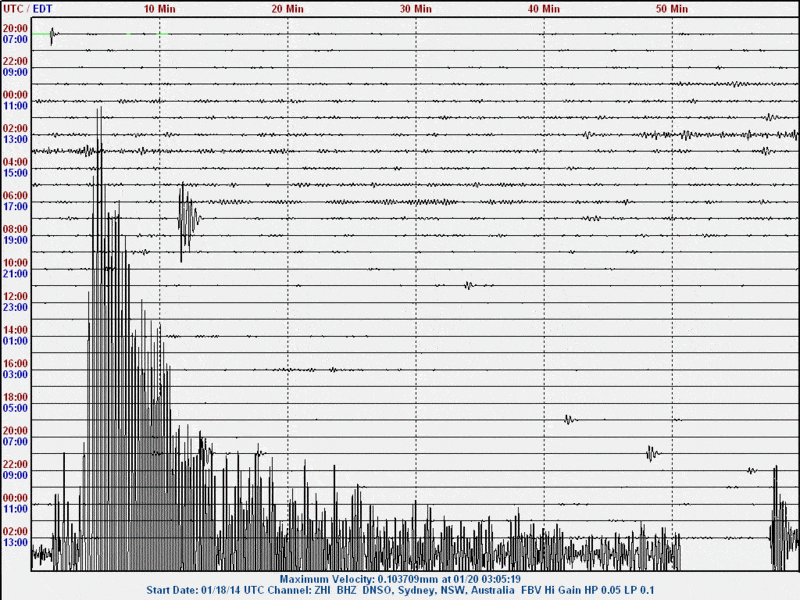
Dave
have a look on the seismogram at
http://www.sydneystormcity.com/seismograms.htm
the waves are still rolling in
Dave
Attachments

Last edited:
Similar threads
- Astronuc
- · Replies 2 ·
- Earth Sciences
- Replies
- 2
- Astronuc
- · Replies 4 ·
- Earth Sciences
- Replies
- 4
- Astronuc
- · Replies 1 ·
- Earth Sciences
- Replies
- 1
- davenn
- · Replies 4 ·
- Earth Sciences
- Replies
- 4
- davenn
- · Replies 7 ·
- Earth Sciences
- Replies
- 7
- Astronuc
- · Replies 6 ·
- Earth Sciences
- Replies
- 6
- Astronuc
- · Replies 1 ·
- AI and Computer Science
- Replies
- 1