Cloud chamber - electron tracks? - solved

Click For Summary

Discussion Overview

The discussion revolves around the characteristics of electron tracks observed in cloud chambers, particularly focusing on discrepancies between visual representations and actual observed tracks. Participants explore the nature of these tracks, the influence of magnetic fields, and the accuracy of educational materials depicting them.

Discussion Character

  • Debate/contested
  • Exploratory
  • Technical explanation

Main Points Raised

  • Some participants express skepticism about the accuracy of diagrams depicting electron tracks, suggesting they may be artist impressions rather than realistic representations.
  • Others provide explanations for the irregularity of beta particle tracks, attributing this to their light weight and interactions with air molecules, which cause deflections.
  • A participant questions the validity of explanations accompanying the images in educational materials, noting inconsistencies with observed phenomena.
  • Some participants recall seeing higher-quality images of particle tracks in older literature, contrasting them with the current representations discussed.
  • There is mention of the role of magnetic fields in influencing particle tracks, with some arguing that DIY cloud chambers may not generate sufficient magnetic fields to produce the smooth curves depicted in some diagrams.
  • One participant references a video showing electron tracks, suggesting that while representations are useful for educational purposes, they do not necessarily reflect every possible track produced by particles.
  • Another participant asserts that DIY cloud chambers can indeed show spiral tracks under certain conditions, citing specific examples from experiments.

Areas of Agreement / Disagreement

Participants generally disagree on the accuracy of the visual representations of electron tracks and the explanations provided in educational materials. There is no consensus on the validity of the diagrams or the conditions under which the tracks are produced.

Contextual Notes

Participants note that the discussion is influenced by varying interpretations of visual data and the limitations of DIY setups in replicating certain experimental conditions, such as magnetic fields.

Merlin3189
Homework Helper
Gold Member
Messages
1,733
Reaction score
824
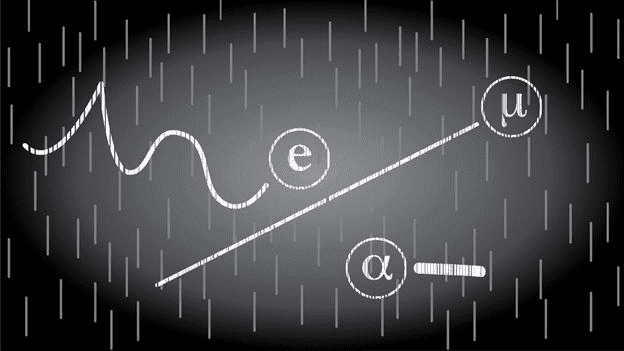
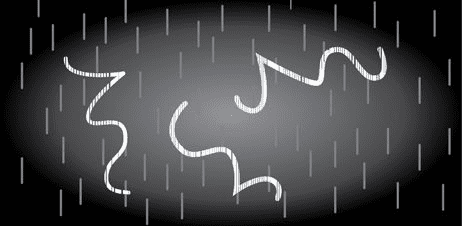
Following a thread on building a cloud chamber I searched some other sites and encountered some eg. diagrams of electron tracks which puzzled me.

I searched for actual photos and found some very irregular tracks ascribed to electrons, but nothing like these. I can't see how they could arise without a very strangely (unreasonably) varying magnetic field.

Sources: Fermilab/SLAC's Symmetry magazine, not copied because may be copyright, but copied from some weird site which had probably copied it from them.
1582920699108.png

1582920730642.png

Inevitably they are also copied to instructables.
This latter photo is also copied in a publication by U.o.Birmingham, UK where they are explained as, "The unusual pattern is as a result of being bounced around by heavier air molecules."
That might explain some of the photos I've seen, but they are nothing like these.

Can anyone explain how these tracks occur?
 
Last edited:
Physics news on Phys.org
There is online literature on cloud chamber tracks, explaining why alpha rays are so short and dense, muons are so long and straight, and betas are so irregular. Just do a WWW search. Some of these sources date derive from 80+ years ago, back when Wilson cloud chambers were at the leading edge of physics. Normal betas are very light weight and easily deflected by atoms in the air, causing the irregular tracks. You will also notice that the beta tracks become thicker and more irregular at one end, i.e. as they lose kinetic energy and slow down. In general, the slower the particle, the more time to interact with surrounding air molecules, and more chances to generate ions. As you can see on Youtube videos of cloud chambers, a magnet largely affects just the betas, since they are so light-weight and slow in comparison to the muons, and light-weight in comparison to the alphas. The magnet causes the betas to spiral in the same direction, a situation is entirely different from your illustration.
 
Thanks Steve. Yes I'm aware of most of this, as I did indeed search.
I suppose what I'm really saying is that these seem very wrong to me -just uninformed artist impressions. But being in a university document produced to help teachers and in a magazine sponsored by Fermilab/SLAC, it seems odd that they would not get it right, or get it so wrong.
 
  • Sad
Likes   Reactions: Motore
I think that such photos in their original publications are invariably accompanied by explanatory captions.
 
sysprog said:
I think that such photos in their original publications are invariably accompanied by explanatory captions.
It's not a photo. They are accompanied by explanations. The explanations do not seem to fit the images.

The explanation in Symmetry magazine 2015 is "If your track looks like the path of a lost tourist in a foreign city, you’re looking at an electron or positron (the electron’s anti-matter twin). Electrons and positrons are created when a cosmic ray crashes into atmospheric molecules. Electrons and positrons are light particles and bounce around when they hit air molecules, leaving zig-zags and curly-cues. "

In the U.o.B'ham document 2018, "The unusual pattern is as a result of being bounced around by heavier air molecules."

Although the pictiures appear to be copies, neither acknowledges any source. I have not found anything earlier than 2015.
 
  • Sad
Likes   Reactions: Motore
Merlin3189 said:
It's not a photo. They are accompanied by explanations. The explanations do not seem to fit the images.

The explanation in Symmetry magazine 2015 is "If your track looks like the path of a lost tourist in a foreign city, you’re looking at an electron or positron (the electron’s anti-matter twin). Electrons and positrons are created when a cosmic ray crashes into atmospheric molecules. Electrons and positrons are light particles and bounce around when they hit air molecules, leaving zig-zags and curly-cues. "

In the U.o.B'ham document 2018, "The unusual pattern is as a result of being bounced around by heavier air molecules."

Although the pictiures appear to be copies, neither acknowledges any source. I have not found anything earlier than 2015.
You're not citing the original source of the pictures. I saw much higher resolution cloud chamber particle trail pictures in a 1968 book when I was in grade school. These in this thread look like finger-painted cartoons to me.
 
Yes. I'd like to find the original source, both of the finger paintings and the actual cloud chamber pictures which they were based on. If you've seen anything like this, please tell me where.

I'd have thought felt tip rather than finger paint, but it's not the quality that bothers me. In each place I've found these copied, they are indicationss of what you might see with a diy cloud chamber. No magnets and maybe no electric field. Are you telling me that, even in a real cloud chamber with whatever magnets and fields you want, you could get a track such as is indicated by these crude pictures? And that you've actually seen photos of them? And you were sure (1968 grade school) that they were of electrons, positrons or beta rays?
 
I was in 8th grade in 1971. The book was entitled 'High Energy Physics'. As I recall, the particle the cloud chamber trail of which I thought to be the 'sproingiest' (made-up word but I'm sure you understand its meaning well enough) was the sigma hyperon, but I'm not sure; the pictures were like particle trail soup, but the trails still had very fine high-contrast definition.
 
Last edited:
I really don't understand where the issue is.

In the video below I can clearly see electrons or beta particles going zigzag or in some spiraling wavy ways, confirming the above represantations.
Of course the representations are just a graphical tool to tell students or a layman which particle leaves which trail. It doesn't mean that every electron or beta particle should leave a such a trail. If the particle is energetic enough it will leave a straigth trail.

The magnetic field is sometimes added just for distinguishing electrons from positrons and that's when you actually see strong spirals, but I don't think you could make a high enough magnetic field in a DIY cloud chamber. Also note that those representations do not seem anything like a spirals from an electron or positron in a cloud chamber with the magnetic field (bubble chamber below).

f995987f667a506bc61b873158e501f4.jpg
 
  • Like
Likes   Reactions: davenn and Merlin3189
  • #10
Thanks for your comments and the excellent video.

My issue was with the smooth curves. All the electron pictures I'd seen were erratic, not smooth curves. The near reversal of direction also seemed unusual, though I suppose this should be possible.
The only reason for the smooth curves would seem to be a magnetic field, but with the reversal of curvature and the variation in radius both increasing and decreasing on the smae track, that didn't seem plausible.
Your video is the first time I've seen a track like that.
 
  • #11
Motore wrote:

> ... when you actually see strong spirals, but I don't think you
> could make a high enough magnetic field in a DIY cloud chamber.

DIY cloud chambers with readily acquired magnets easily show spiral tracks, for example, from
the beta decay of cesium 137 as in this video. The magnet is shown inserted in the chamber at roughly the one minute point. The cesium is in contaminated soil in the plastic bag from Fukushima prefecture. You can see that all the betas spiral in the same direction.

 
  • Like
Likes   Reactions: Merlin3189

Similar threads

  • · Replies 9 ·
Replies
9
Views
9K
  • · Replies 2 ·
Replies
2
Views
4K
  • · Replies 4 ·
Replies
4
Views
4K
  • · Replies 4 ·
Replies
4
Views
7K
  • · Replies 3 ·
Replies
3
Views
4K