Discussion Overview
The discussion revolves around identifying a specific LaTeX symbol that resembles a combination of a smile and a frown, as mentioned in Bloch's text on the construction of rational numbers. Participants are sharing insights on how to create this symbol using LaTeX code.
Discussion Character
- Technical explanation
- Meta-discussion
Main Points Raised
- Peter inquires about the LaTeX code for a symbol that looks like a combination of a smile and a frown, referencing its appearance in Bloch's work.
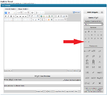
- Some participants mention that the symbol can be found in the Quick LaTeX element under the Algebra section, identified as "\asymp" which produces the symbol $$\asymp$$.
- Peter expresses gratitude for the information and notes a need to refer to a guide from the Linear and Abstract Algebra forum.
- Peter acknowledges a misunderstanding regarding the symbol and apologizes for the confusion.
- Another participant suggests the use of Detexify, a tool for recognizing LaTeX symbols from handwritten input, for future reference.
- There is a suggestion to incorporate a button in the editor that would link to the Detexify page in a popup window.
Areas of Agreement / Disagreement
Participants generally agree on the LaTeX code for the symbol, but there is no consensus on the best way to integrate additional resources like Detexify into the forum's editor.
Contextual Notes
The discussion includes references to specific resources and tools for LaTeX symbol recognition, but does not resolve the broader implications of symbol usage in mathematical contexts.