Directional magnetic field

  • Context: Undergrad 
  • Thread starter Thread starter Esquilo
  • Start date Start date
Click For Summary

Discussion Overview

The discussion revolves around the concept of directing and concentrating magnetic fields, particularly in the context of electromagnetic induction and the use of coils or solenoids. Participants explore various methods and theoretical frameworks, including comparisons to Halbach arrays and antenna directivity.

Discussion Character

  • Exploratory
  • Technical explanation
  • Debate/contested

Main Points Raised

  • One participant questions how to direct and concentrate a magnetic field in a single direction, referencing electromagnetic induction and the perpendicular nature of magnetic fields to electric flow.
  • Another participant suggests that there are various methods to guide and concentrate magnetic fields and requests references or diagrams for clarification.
  • A participant mentions the concept of Halbach arrays and expresses interest in achieving a similar effect using coils with current instead of permanent magnets.
  • There is a discussion about the differences between magnetic fields produced by antennas and those from DC permanent magnets, with a focus on the weak magnetic fields radiated by antennas.
  • One participant expresses skepticism about the feasibility of achieving a unidirectional magnetic field and suggests that understanding the application could lead to alternative solutions.
  • Another participant proposes using high permeability materials to direct the magnetic field on small scales.
  • A participant notes that magnetic field lines are inherently loops, indicating a fundamental limitation in emitting a field in just one direction.
  • One participant indicates that they will open a new thread to continue their project, suggesting that the current discussion may no longer be relevant.

Areas of Agreement / Disagreement

Participants express a range of views on the feasibility of directing magnetic fields, with some proposing methods and others questioning their viability. There is no consensus on a definitive solution, and the discussion remains unresolved.

Contextual Notes

Participants reference various theoretical concepts and practical applications, but there are limitations in the assumptions made about the nature of magnetic fields and the effectiveness of proposed methods.
Esquilo
Messages
21
Reaction score
0
Hi, I have a question that I can't resolve and I have many doubts. Then considering the phenomenon of electromagnetic induction in which a magnetic field varying over time generates an electromotive force, the magnetic field propagates perpendicularly to the electric flow and therefore with closed lines. This is how I can direct and concentrate the magnetic field in a single direction, perhaps decreasing it from other directions?? Thanks
 
Physics news on Phys.org
There are various ways to guide and concentrate magnetic field. Could you post a reference with some diagrams for the method you are asking about? Thanks.
 
  • Like
Likes   Reactions: Esquilo
berkeman said:
There are various ways to guide and concentrate magnetic field. Could you post a reference with some diagrams for the method you are asking about? Thanks.
hi berkemann, so the concept I'm following is to concentrate the magnetic field lines in a single "part" of a conductor (loop or solenoid) as happens in Halbach arrays, this is precisely the effect I want to obtain, but not with magnets but with coils with current flowing through them. the effect is also similar to the proximity effect (umbrella) that is created with antennas, in which the main lobe is longer than the secondary lobes, so it is a question of arranging and concentrating the magnetic field lines
CEM-2.jpg
CEM-2.jpg
download.jpeg
 
Thank you for posting more information and the diagrams.

Halbach arrays use DC permanent magnets: https://en.wikipedia.org/wiki/Halbach_array

The diagrams you posted are for RF EM radiation from antennas with directivity: https://en.wikipedia.org/wiki/Directivity

Antennas radiate EM, not just magnetic fields. In fact, the magnetic fields radiated by antennas are quite weak compared to DC permanent magnets. Is your intention to try to come up with an antenna array that somehow magnifies and directs magnetic field?
 
  • Like
Likes   Reactions: Esquilo
berkeman said:
Thank you for posting more information and the diagrams.

Halbach arrays use DC permanent magnets: https://en.wikipedia.org/wiki/Halbach_array

The diagrams you posted are for RF EM radiation from antennas with directivity: https://en.wikipedia.org/wiki/Directivity

Antennas radiate EM, not just magnetic fields. In fact, the magnetic fields radiated by antennas are quite weak compared to DC permanent magnets. Is your intention to try to come up with an antenna array that somehow magnifies and directs magnetic field?
So berkerman, the antenna image refers to what I want the lobe of the variable magnetic field produced to be, so it was just an example. Then I want to exploit the phenomenon of electromagnetic induction, through a solenoid or coil conductor, in which the magnetic field lines coming out are very directive only from one direction of the coil, this is achieved with a lot of current, but the lines will always tend to be radial,

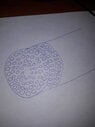
I would like to convey the magnetic field only from one direction. In the first image I have drawn the arrangement of the honeycomb structure of the Halbach coils which concentrate the magnetic field in a single direction, and do I think more overlapping structures will strengthen the final field?

In the second image there is the shape of the directivity of the magnetic field, very pronounced in one direction, in my opinion, with many adjustments it could be feasible, what do you think? It's just a matter of concentrating all the lines from a single direction like Halbach arrays do, but in this case I would like to overlap them to increase the magnetic field
20240421_001925.jpg
20240421_003552.jpg
 

Attachments

  • 20240421_001925.jpg
    20240421_001925.jpg
    26.2 KB · Views: 71
To be honest, I don't think there is a solution for what you are asking (based on my limited understanding of your request). But if you tell us what your application is and what you are trying to accomplish, maybe there is an alternative way of achieving it.
 
What length/area scale are you interested in? Is this a tabletop experiment or more like an antenna question?

On small scales the likely answer is to use high permeability materials to direct the B-field into and out of the area of interest.
 
Last edited:
  • Like
Likes   Reactions: berkeman
Magnetic field lines are always loops, so you cannot emit a field in just one direction.
 
  • Like
Likes   Reactions: davenn
good morning, a month has passed, I know, I'm very sorry, but I went to Switzerland for work and my line didn't work there. in the meantime I continued my little project and I think this discussion has become obsolete, so if the forum administrators allow me I will open a new updated thread, it will be called "power transfer halbach or dipole", sorry again gentlemen.
 
  • #10
Please see my question in your "new" thread. Thank you.
 

Similar threads

  • · Replies 5 ·
Replies
5
Views
1K
  • · Replies 1 ·
Replies
1
Views
917
  • · Replies 9 ·
Replies
9
Views
2K
  • · Replies 5 ·
Replies
5
Views
3K
  • · Replies 4 ·
Replies
4
Views
2K
  • · Replies 7 ·
Replies
7
Views
2K
  • · Replies 9 ·
Replies
9
Views
2K
  • · Replies 5 ·
Replies
5
Views
728
  • · Replies 7 ·
Replies
7
Views
2K
  • · Replies 1 ·
Replies
1
Views
1K