AY156
- 5
- 1
- TL;DR
- Electrical breakdown of oil film shows a signal resembling arcing. How do I prevent arcing to study electric discharge?
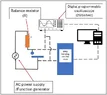
I am a mechanical engineer researching electrical damage in lubricated contacts. In my tests, I apply 18V DC across a steel ball-disc contact with an elastohydrodynamic lubrication film (more simply an oil film between 600-900 nanometers in thickness) between the surfaces. This film, according to recent research, acts as a capacitor and a resistor in parallel. I observe dielectric breakdown of the film (as expected, as the applied voltage exceeds the electric field strength of the film), and the voltage signal across the contact shows the breakdown as a voltage drop.
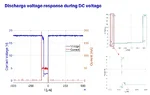
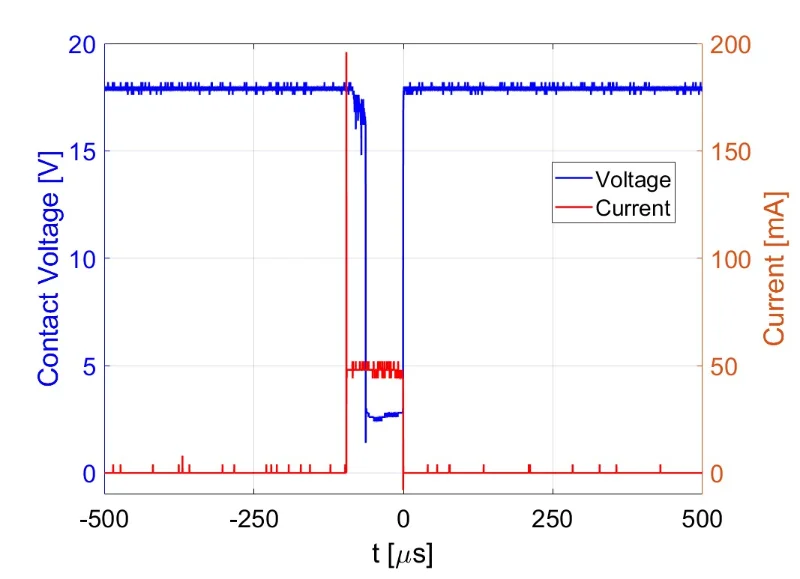
The voltage drops from 18V to 2V and has a duration between 80-100 microseconds. The current during the breakdown is limited to a maximum of 50 milliamperes using a variable resistor in series to the ball-disc contact. A sample signal of voltage and current captured during the test is attached, showing the nature of the breakdown. I also observe craters on the steel surfaces resembling the electric discharge damage.
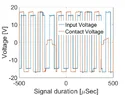
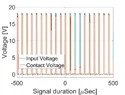
Does the signal show an electric discharge or an arc? Because discharges are instantaneous and the signals show a standing wave in some cases, having a 100-microsecond duration. Also, if I want instantaneous discharge of energy and prevent arcing, is adding a capacitor in series the right way to move forward?
The voltage drops from 18V to 2V and has a duration between 80-100 microseconds. The current during the breakdown is limited to a maximum of 50 milliamperes using a variable resistor in series to the ball-disc contact. A sample signal of voltage and current captured during the test is attached, showing the nature of the breakdown. I also observe craters on the steel surfaces resembling the electric discharge damage.
Does the signal show an electric discharge or an arc? Because discharges are instantaneous and the signals show a standing wave in some cases, having a 100-microsecond duration. Also, if I want instantaneous discharge of energy and prevent arcing, is adding a capacitor in series the right way to move forward?
Last edited by a moderator: