MHB Find a formula for the Riemann sum and take the limit of the sum as n->infinite

Click For Summary
SUMMARY

The discussion focuses on calculating the Riemann sum for a function over the interval [1,5] by dividing it into n equal subintervals and using the right-hand endpoint for each subinterval. The user, Matt, seeks assistance in finding a formula for the Riemann sum and taking the limit as n approaches infinity to determine the area under the curve. The forum emphasizes the importance of showing work and clarifying specific questions to facilitate effective assistance.

PREREQUISITES
  • Understanding of Riemann sums
  • Knowledge of limits in calculus
  • Familiarity with the concept of subintervals
  • Basic skills in function analysis
NEXT STEPS
  • Research the derivation of Riemann sums for various functions
  • Learn about the Fundamental Theorem of Calculus
  • Study techniques for taking limits in calculus
  • Explore examples of calculating areas under curves using integration
USEFUL FOR

Students and educators in calculus, mathematicians interested in numerical methods, and anyone looking to deepen their understanding of Riemann sums and area calculations under curves.

tornado711
Messages
1
Reaction score
0
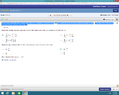
For the function given below find a formula for the Riemann sum obtained by dividing the interval [1,5] into n equal subintervals and using the right-hand endpoint for each c subscript k. Then take a limit of thissum as n-> infinite to calculate the area under the curve over [1,5].

Below you can see the problem. I was able to guess them correctly, so that I could perhaps try to work backwards to get it. Below is the problem. I found a. but i need to find parts b and c how do I do this?

Thanks,
MattView attachment 5501
 

Attachments

  • gelp.png
    gelp.png
    32.5 KB · Views: 133
Physics news on Phys.org
Hi tornado711 and welcome to MHB!

It's not clear (at least to me) what you mean by "parts b and c". I don't see a reference to them anywhere on the attached image. Also, we ask (and our forum rules state) that users show their work, or any ideas on where to begin, when posting a problem. This eliminates the possibility of a redundant reply and gives us a clear idea of exactly what it is that you need help with. Can you post what you have done so far and clarify what you mean by "parts b and c"?
 
Relativistic Momentum, Mass, and Energy Momentum and mass (...), the classic equations for conserving momentum and energy are not adequate for the analysis of high-speed collisions. (...) The momentum of a particle moving with velocity ##v## is given by $$p=\cfrac{mv}{\sqrt{1-(v^2/c^2)}}\qquad{R-10}$$ ENERGY In relativistic mechanics, as in classic mechanics, the net force on a particle is equal to the time rate of change of the momentum of the particle. Considering one-dimensional...

Similar threads

  • · Replies 2 ·
Replies
2
Views
2K
  • · Replies 16 ·
Replies
16
Views
4K
  • · Replies 2 ·
Replies
2
Views
2K
  • · Replies 8 ·
Replies
8
Views
2K
  • · Replies 7 ·
Replies
7
Views
2K
  • · Replies 14 ·
Replies
14
Views
3K
  • · Replies 2 ·
Replies
2
Views
2K
  • · Replies 1 ·
Replies
1
Views
1K
  • · Replies 24 ·
Replies
24
Views
4K
  • · Replies 4 ·
Replies
4
Views
8K