QuantumRose
- 11
- 1
Problem:
https://drive.google.com/open?id=19PDuyshgP6u4U9mXU3BfrF031J8wL12B
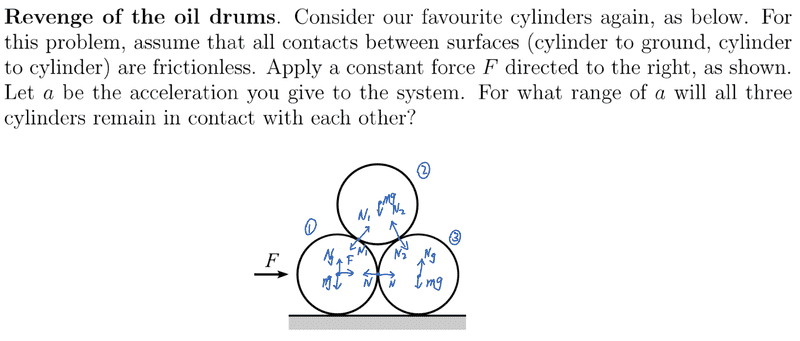
Attempt: I tried to solve the range by listing out the Newton's 2nd laws of each drum

https://drive.google.com/open?id=1Eslg2Wy3orG41eywwm_O6qN4OQ3QN-bA
and from the equations of the drum 2, I get
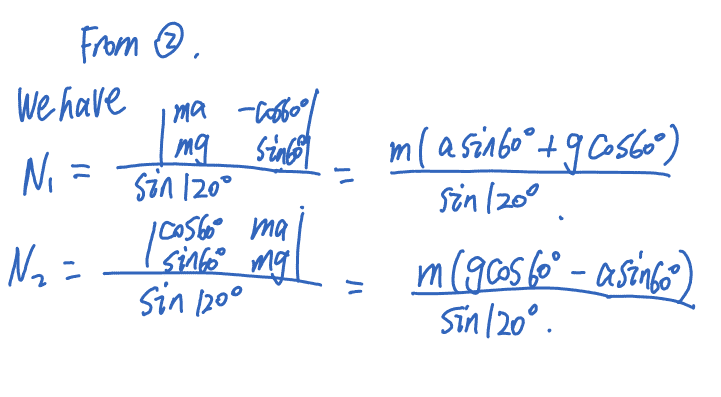
https://drive.google.com/open?id=19MFda8L_YuDBlsOg1_76O3-w1rJjHhfW
Since drum 2 must stay on the bottom drums, so it will not fly up, thus
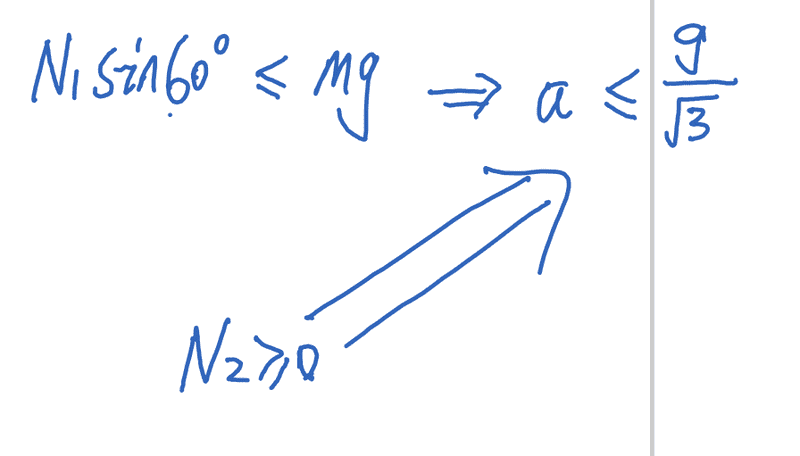
https://drive.google.com/open?id=1tpDM2zHyDQ84m73GC0EgcZsNz5Q4tq1z
I got the upper bound of the acceleration, but I don't know if it is correct.My question:
Although I got the seemingly correct upper bound of the acceleration, but I don't know how I can get the lower bound of the acceleration?
https://drive.google.com/open?id=19PDuyshgP6u4U9mXU3BfrF031J8wL12B
Attempt: I tried to solve the range by listing out the Newton's 2nd laws of each drum
https://drive.google.com/open?id=1Eslg2Wy3orG41eywwm_O6qN4OQ3QN-bA
and from the equations of the drum 2, I get
https://drive.google.com/open?id=19MFda8L_YuDBlsOg1_76O3-w1rJjHhfW
Since drum 2 must stay on the bottom drums, so it will not fly up, thus
https://drive.google.com/open?id=1tpDM2zHyDQ84m73GC0EgcZsNz5Q4tq1z
I got the upper bound of the acceleration, but I don't know if it is correct.My question:
Although I got the seemingly correct upper bound of the acceleration, but I don't know how I can get the lower bound of the acceleration?
Attachments


Last edited:
