Finding Radial Force from Free Body Diagram

Click For Summary
SUMMARY

The discussion centers on calculating the radial force (Fr) from a free body diagram involving vertical forces, specifically the weight (Fz), friction force (Ff), and normal force (Fn). The radial force is defined as the horizontal component of the normal force, and the final expression for Fr must include the coefficient of friction (μ) without any squared trigonometric functions. The user initially confused the radial force with the friction force but clarified that the professor's instructions require using the vertical forces balance equation to derive Fr.

PREREQUISITES
  • Understanding of free body diagrams
  • Knowledge of vertical force balance equations
  • Familiarity with friction coefficients (μ)
  • Basic trigonometry related to force components
NEXT STEPS
  • Study the derivation of radial force in mechanical systems
  • Learn about the application of friction coefficients in force calculations
  • Explore vertical force balance equations in physics
  • Investigate the role of trigonometric functions in force component analysis
USEFUL FOR

Students in physics or engineering courses, particularly those studying mechanics, as well as educators looking for examples of force analysis in free body diagrams.

Slipjoints
Messages
6
Reaction score
1
Homework Statement
Finf the radial force caused by the horizontal component of the normal force
Relevant Equations
Balance equation
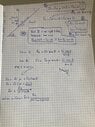
I have a question regarding a homework exercise. My professor asked me to find the radial force in the free body diagram in the image included. There is a weight Fz from above and it is assumed that it is countered by the vertical component of both the Ff (friction force) and the Fn (normal force). The radial force (Fr) is supposed to be equal to the horizontal component of Fn. The other thing I know for sure is that the friction coefficient (Greek letter mu) should be in the final expression for Fr. However he also says there should not be any squared trigonometric functions in the final expression and I can't seem to make that work. So basically I have to find an expression for fr from the vertical forces balance equation that includes the coefficient of friction and without squared trigonometric functions, anyone that can help?
 

Attachments

  • IMG_0461.jpg
    IMG_0461.jpg
    80.7 KB · Views: 186
Physics news on Phys.org
Should it be force of friction rather than radial force?

Welcome!
 
Yeah that's what I thought too initially, but he specifically said I should use the balance equation of vertical forces and substitute the horizontal component of the normal force into it in order to get the radial force expression.
 
Lnewqban said:
Should it be force of friction rather than radial force?

Welcome!
By accident replied to the thread instead of to your comment, but my reply to you is reply #3
 
Lnewqban said:
Should it be force of friction rather than radial force?

Welcome!
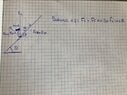
Just found out the right answer, thanks for the help anyway. I added an image in case youre curious. last line is because it is actually a cone.
 

Attachments

  • IMG_0464.jpg
    IMG_0464.jpg
    56.5 KB · Views: 155

Similar threads

  • · Replies 5 ·
Replies
5
Views
2K
  • · Replies 14 ·
Replies
14
Views
3K
  • · Replies 5 ·
Replies
5
Views
1K
Replies
9
Views
2K
  • · Replies 11 ·
Replies
11
Views
3K
  • · Replies 14 ·
Replies
14
Views
1K
Replies
7
Views
2K
  • · Replies 7 ·
Replies
7
Views
4K
Replies
10
Views
3K