Fishing for atmospheric electricity

  • Context: Graduate 
  • Thread starter Thread starter Russ Edmonds
  • Start date Start date
  • Tags Tags
    Atmospheric Electricity
Join the discussion
Ask a follow-up here, or get your own question answered by working scientists, mathematicians and engineers — people, not an autocomplete.
Real named experts · corrections over time · the nuance an AI answer skips
8 replies · 2K views
Russ Edmonds
Messages
20
Reaction score
16
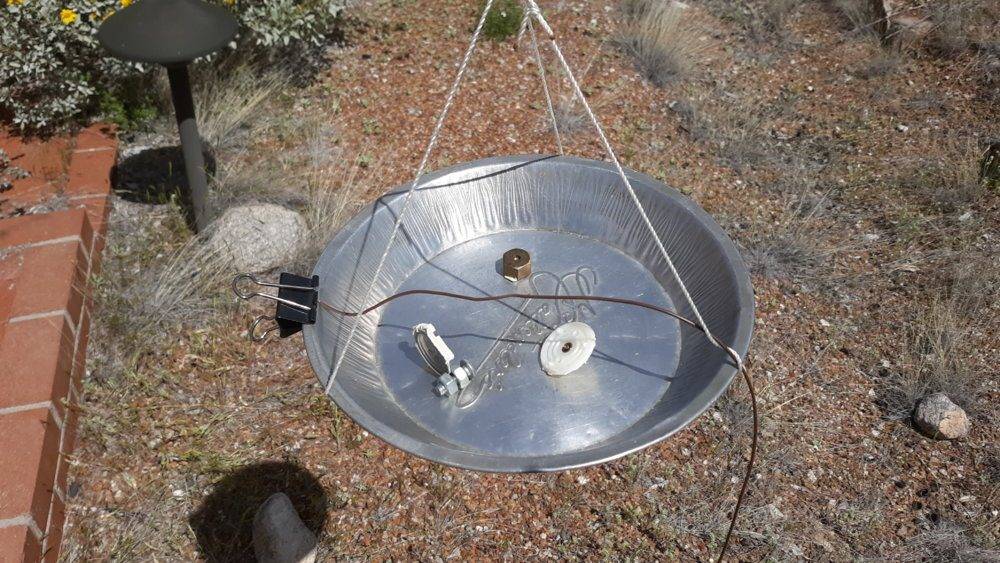
Fishing for atmospheric electricity.Three microcuries of Am-241 were placed in a aluminum pie tin.
fair weather field probe.jpg


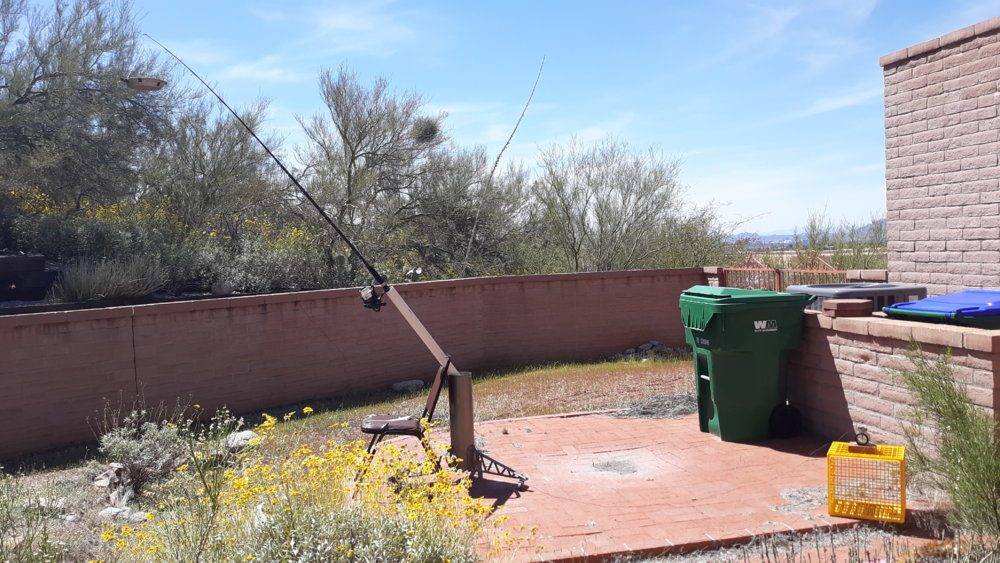
The pie tin was then suspended 2.7 meters in the air by a fishing pole. The pie tin was insulated from ground by the nylon fishing line. A wire connection was hung from the pie tin to the top terminal of a gold leaf electroscope. The outer case of the electroscope was connected to Earth ground.
atmospheric gold leaf electroscoper setup.jpg


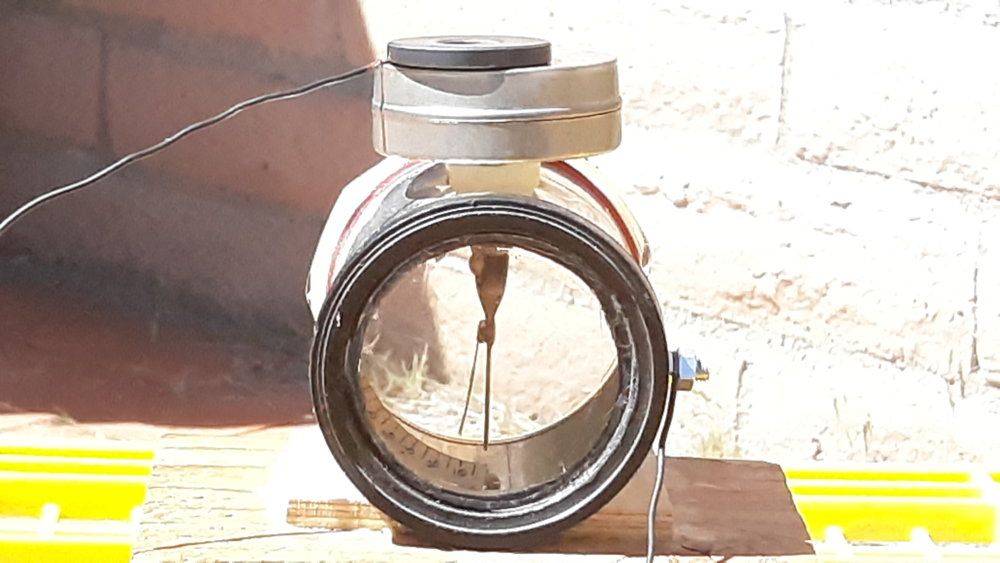
The first reading was at 11:43 am MST and based on the gold leaf deflection, represents a voltage of about 100 volts giving a field strength of 37 volts per meter.
gold leaf atmospheric electricity reading 1.jpg


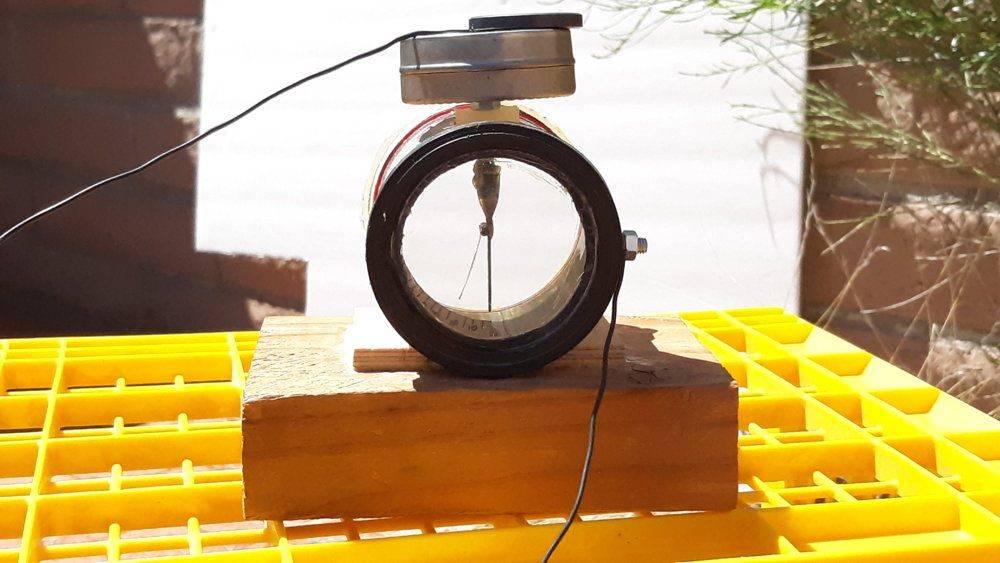
The next reading was at 1:10 pm MST and represents a voltage of about 225 volts giving a field strength of 83 volts per meter. This was the highest reading I got. Strong winds made me stop the experiment.
gold leaf atmospheric electricity reading 2.jpg


These field values seen low and this might be due to my backyard being in a depression with the terrain sloping up on two sides. I might try doing this experiment in my front yard were the terrain slopes down on two sides. If the neighbors see this however they'll probably think I'm a nut job.
 
Physics news on Phys.org
Russ Edmonds said:
If the neighbors see this however they'll probably think I'm a nut job.
No, no, no. They won't be thinking anything like that. :wink:

Fun experiment. What was the level of humidity during the experiment? That will be another limiting factor in the static charge that you can build up.
 
berkeman said:
What was the level of humidity during the experiment? That will be another limiting factor in the static charge that you can build up.
The humidity was about 30%. This is the first time I got this experiment to work after about eight failed attempts. I found the cause of these failures to be poor insulation of the pie tin and the insulation of the wire from the pie tin to the electroscope. I ended up having to suspend this wire in air between the pie tin and electroscope.
 
  • Like
Likes   Reactions: Bystander
There was an experiment I did as a kid which used an isolated elevated metal bucket of saline solution that dripped slowly from a needle point on the bucket bottom. The electrometer was replaced by a small neon bulb to ground. The flash was every few seconds.
I've not seen this experiment anywhere else since, but it was amazingly good.
And I'm sure nobody looked at me askance.
 
  • Like
Likes   Reactions: Russ Edmonds and berkeman
Russ Edmonds said:
Fishing for atmospheric electricity.Three microcuries of Am-241 were placed in a aluminum pie tin.The pie tin was then suspended 2.7 meters in the air by a fishing pole. The pie tin was insulated from ground by the nylon fishing line. A wire connection was hung from the pie tin to the top terminal of a gold leaf electroscope. The outer case of the electroscope was connected to Earth ground.The first reading was at 11:43 am MST and based on the gold leaf deflection, represents a voltage of about 100 volts giving a field strength of 37 volts per meter.The next reading was at 1:10 pm MST and represents a voltage of about 225 volts giving a field strength of 83 volts per meter. This was the highest reading I got. Strong winds made me stop the experiment.These field values seen low and this might be due to my backyard being in a depression with the terrain sloping up on two sides. I might try doing this experiment in my front yard were the terrain slopes down on two sides.
What was the purpose of your experiment?
Small level of ionizing radiation can speed up the charge build up, but once the charge is collected, the build up almost completely stops in low fair weather conditions (charge depends on external field and size/elevation of the metalic structure). If your goal is to just to measure fair weather ambient E-fields an electrostatic fieldmeter used as local potential probe, mounted at convenient height is enough. The fieldmeter for the sake of better preceison has to be at least 10x its diameter away from other objects.

Nugatory said:
Have made it for a high school project loong ago. Max voltages were in 10 kV range. There was a lot tweaking, adjusting and redisgning before thing properly worked. Ah, sweet memories..
 
  • Like
Likes   Reactions: hutchphd
zoki85 said:
If your goal is to just to measure fair weather ambient E-fields an electrostatic fieldmeter used as local potential probe, mounted at convenient height is enough.
The purpose of the experiment was partly historical, I was curious to see if I could measure the fair weather E-field using my gold leaf electroscope. Abraham Bennet did this experiment back in 1788, only he used a lantern flame for the ionization probe. Yes a field mill or field meter is a much better instrument to use for this measurement.