Fourier Series: Understanding Non-Periodic Signals

Click For Summary
SUMMARY

The discussion centers on the application of Fourier Series and the Discrete Fourier Transform (DFT) in analyzing non-periodic signals. Users clarify that a non-periodic, time-limited signal can be treated as a single period of a periodic signal through periodic extension, allowing the use of Fourier Series. The Fast Fourier Transform (FFT) is identified as a computationally efficient method to calculate the DFT, which converts a list of time-domain values into frequency-domain coefficients. Understanding the function f(x) is crucial for accurate Fourier analysis, and digitization methods are necessary for estimating f(x) from visual representations.

PREREQUISITES
  • Fourier Series and Fourier Transform concepts
  • Discrete Fourier Transform (DFT) fundamentals
  • Fast Fourier Transform (FFT) algorithm
  • Basic signal processing techniques
NEXT STEPS
  • Study the mathematical foundations of Fourier Series and Fourier Transforms
  • Learn about the implementation of the Discrete Fourier Transform (DFT)
  • Explore the Fast Fourier Transform (FFT) algorithm and its applications
  • Research methods for digitizing analog signals to estimate f(x)
USEFUL FOR

Signal processing engineers, data analysts, and anyone interested in the mathematical representation of signals and their frequency components will benefit from this discussion.

tim9000
Messages
866
Reaction score
17
It's been quite a few years but I recently watched a video about how every picture can be represented by a number of overlapping constructive and destructive peaks from a Fourier (transform or series? I don't remember which).

I remember that Fourier series was for periodic and transform was for non-periodic, and I remember the formulas for the series coefficients and the transform and inverse transform equations. But what I can't remember is, say you have a picture, or lests go simpilar than that and say a wave.

I assume you can say that anything, any complex snipit of a signal, is periodic, even if it isn't, and just discard the rest of the series? For instance:
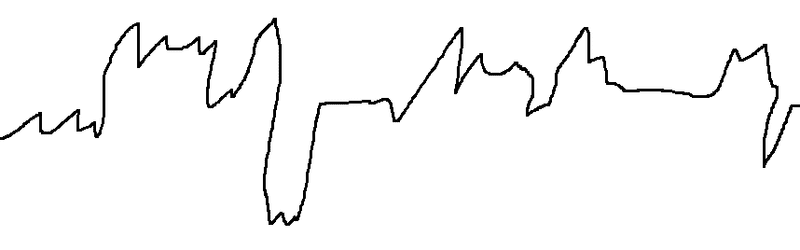
12.png

Another way of putting this questions is: is the can you take the series of a non-periodic and just discard the rest of the series? Instead of the transform; turning anything into a periodic series.
But also, say you had that signal, on some scale so you could see time and amplitude, how do you actually know what the f(t) is? Because you need that to calculate the transform or series?
If you've just got some signal, how do you know what you're actually opperating on to get the coefficients or do the transform?

Cheers
 
Physics news on Phys.org
tim9000 said:
Another way of putting this questions is: is the can you take the series of a non-periodic and just discard the rest of the series? Instead of the transform; turning anything into a periodic series.
I don't know what you mean by "discard the rest of the series."

Anyway, if you have a non-periodic signal that is time limited, then you can simply assume that you only have a single period of a periodic signal and find the Fourier series. This is called the "periodic extension" of a signal. We do this all the time in the digital domain. The discrete Fourier Transform (DFT) assumes that the finite list of numbers you give it is one period of a periodic signal. The FFT (fast Fourier transform) is simply a fast way to compute the DFT - and the FFT is used all the time in many devices. There can be perils of this (google "periodic convolution") but they are avoidable.

jason
 
  • Like
Likes   Reactions: phion
jasonRF said:
I don't know what you mean by "discard the rest of the series."

Anyway, if you have a non-periodic signal that is time limited, then you can simply assume that you only have a single period of a periodic signal and find the Fourier series. This is called the "periodic extension" of a signal. We do this all the time in the digital domain. The discrete Fourier Transform (DFT) assumes that the finite list of numbers you give it is one period of a periodic signal. The FFT (fast Fourier transform) is simply a fast way to compute the DFT - and the FFT is used all the time in many devices. There can be perils of this (google "periodic convolution") but they are avoidable.

jason
Hi Jason,
thanks for the reply, yeah that's what I was wondering: if you could say you only had one period, for a non-periodic time limited signal. [thanks for the confirmation]
But say the picture I scribbled above had amplitude and time and that I didn't want to use some pre-coded function of the FFT, than how would I figure out the Fourier coefficients of that signal mathematically?
What's the method for finding the 'f(x)' of the signal?
 
Last edited:
tim9000 said:
But say the picture I scribbled above had amplitude and time and that I didn't want to use some pre-coded function of the FFT, than how would I figure out the Fourier coefficients of that signal mathematically?
What's the method for finding the 'f(x)' of the signal?
Somehow you need to know what f(x) is - either a function you can write down, or a numerical approximation. If you know the continuous time function form you simply integrate (if you don't know the formulas - google is your friend). If you have discrete samples, then you are looking to estimate the Discrete Fourier Transform (DFT). You should be able to find formulas for DFT on Wikipedia or elsewhere.

In both cases, you are representing the function as a sum of complex exponential that have an integer number of periods over the time interval over which you know f(x). The formulas are "nice" because such complex exponentials are orthogonal for both the continuous time and evenly sampled discrete time.
Does that help?

jason
 
jasonRF said:
Somehow you need to know what f(x) is - either a function you can write down, or a numerical approximation. If you know the continuous time function form you simply integrate (if you don't know the formulas - google is your friend). If you have discrete samples, then you are looking to estimate the Discrete Fourier Transform (DFT). You should be able to find formulas for DFT on Wikipedia or elsewhere.

In both cases, you are representing the function as a sum of complex exponential that have an integer number of periods over the time interval over which you know f(x). The formulas are "nice" because such complex exponentials are orthogonal for both the continuous time and evenly sampled discrete time.
Does that help?

jason
Sorry, so what's the difference between the DFT and the FFT? can you only do the FFT when you know what f(x) is?

As I tried to indicate in the picture above I don't know it's f(x), if it has one (maybe it'd be really complex, regardless it's unknown). So I'd have to take the DFT I suppose. Does the DFT generate a formula, or just like an array of data?

Could you 'dumb' your last sentence down a bit, lol, what do you mean by orthogonal. Even though it didn't quite sink in, I loved reading it.

Thanks Jason
 
tim9000 said:
Sorry, so what's the difference between the DFT and the FFT? can you only do the FFT when you know what f(x) is?

As I tried to indicate in the picture above I don't know it's f(x), if it has one (maybe it'd be really complex, regardless it's unknown). So I'd have to take the DFT I suppose. Does the DFT generate a formula, or just like an array of data?

I'm not understanding your questions. If you do not know what f(x) is you can do pretty much nothing with f(x) - square it, integrate it, differentiate it, etc. If all you have is a drawing, you can digitize the drawing to get a list of values that allow you to estimate f(x), then you can do whatever you want with that estimate.

The FFT is simply a fast way to compute the DFT. (Have you attempted to google some of this before asking?)
https://en.wikipedia.org/wiki/Fast_Fourier_transform
I only mentioned FFT because many people have heard of FFTs...perhaps a mistake on my part.

In general the DFT takes a list of N numbers and returns a different list of N numbers that represent the coefficients of complex exponentials. If you have a nice closed form formula that describes the input numbers you can sometimes sum the series analytically to get a formula for the DFT, but that is usually not the case (even if you do have a nice formula for the input numbers).

jason
 
jasonRF said:
I'm not understanding your questions. If you do not know what f(x) is you can do pretty much nothing with f(x) - square it, integrate it, differentiate it, etc. If all you have is a drawing, you can digitize the drawing to get a list of values that allow you to estimate f(x), then you can do whatever you want with that estimate.

The FFT is simply a fast way to compute the DFT. (Have you attempted to google some of this before asking?)
https://en.wikipedia.org/wiki/Fast_Fourier_transform
I only mentioned FFT because many people have heard of FFTs...perhaps a mistake on my part.

In general the DFT takes a list of N numbers and returns a different list of N numbers that represent the coefficients of complex exponentials. If you have a nice closed form formula that describes the input numbers you can sometimes sum the series analytically to get a formula for the DFT, but that is usually not the case (even if you do have a nice formula for the input numbers).

jason
Ah I see. So if you FFT a list of numbers (from the time domain) you'll get another list of numbers (that are in the frequency domain).
Why even if you have a nice closed form formula that describes the input numbers, why only sometimes is it possible to get a formula for the DFT?

Do you have a method of digitisation for a sketched waveform's list of values, to produce an estimate of f(x) in mind?

Cheers
 

Similar threads

  • · Replies 8 ·
Replies
8
Views
4K
  • · Replies 3 ·
Replies
3
Views
2K
  • · Replies 9 ·
Replies
9
Views
3K
  • · Replies 33 ·
2
Replies
33
Views
3K
  • · Replies 6 ·
Replies
6
Views
3K
  • · Replies 6 ·
Replies
6
Views
2K
  • · Replies 3 ·
Replies
3
Views
4K
  • · Replies 2 ·
Replies
2
Views
2K
  • · Replies 6 ·
Replies
6
Views
3K
  • · Replies 1 ·
Replies
1
Views
2K