Generator shaft rotation through spring and magnet (Is this feasible in Physics?)

  • Context: High School 
  • Thread starter Thread starter Micheal_Leo
  • Start date Start date
Click For Summary

Discussion Overview

The discussion revolves around the feasibility of using a spring and magnet mechanism to run an electrical generator, particularly in the context of electric bikes. Participants explore the potential applications, challenges, and underlying physics of such a system, including energy transfer and efficiency concerns.

Discussion Character

  • Exploratory
  • Debate/contested
  • Technical explanation
  • Conceptual clarification

Main Points Raised

  • Some participants question the practicality of using a battery to power a generator through a spring and magnet mechanism, suggesting it may not serve a useful purpose.
  • Others propose that the system could be used to generate electricity while riding an electric bike, but express concerns about the feasibility of charging the battery with the same energy source.
  • There is a discussion about the role of regenerative braking in electric bikes, with some noting that energy recovery is only possible during braking, not while the bike is in motion.
  • Participants highlight the inherent losses in energy transfer between the battery and generator, suggesting that net energy output would be less than input due to these losses.
  • One participant raises specific technical challenges, such as the need for the bike to reach a certain speed to charge the battery effectively, and the implications of stopping the bike on generator operation.
  • Some contributions emphasize that while electric bikes can utilize rider energy, the efficiency of energy transfer remains a significant concern.

Areas of Agreement / Disagreement

Participants express multiple competing views regarding the feasibility and efficiency of the proposed mechanism. There is no consensus on whether the spring and magnet system is a viable method for generating electricity in the context discussed.

Contextual Notes

Limitations include assumptions about energy recovery mechanisms, the efficiency of energy transfer, and the specific operational conditions of electric bikes. The discussion does not resolve these technical uncertainties.

Who May Find This Useful

Individuals interested in the mechanics of electric bikes, energy generation systems, and the principles of regenerative braking may find this discussion relevant.

Micheal_Leo
Messages
103
Reaction score
4
Hi Respected Teachers and Members ,

I would like to know that how can i run electrical generator through spring and magnet mechanism , The source can be battery to spring and magnet mechanism and spring and magnet mechanism run the shaft of generator and produce electricity

Thank you very much

Pic.webp
 
Last edited:
Physics news on Phys.org
What is the point of this device? I can't think of a good reason to power a generator with a battery except to change the voltage or to turn the DC into some sort of AC power, and those don't typically use 'springs and magnets'. You're not thinking that this could be turned into some sort of perpetual motion device, are you?
 
  • Like
Likes   Reactions: Isaacpalmer and Micheal_Leo
Drakkith said:
What is the point of this device? I can't think of a good reason to power a generator with a battery except to change the voltage or to turn the DC into some sort of AC power, and those don't typically use 'springs and magnets'. You're not thinking that this could be turned into some sort of perpetual motion device, are you?
In fact, this idea would work like this: generate electricity on an electric bike when the bike is in motion, we have to generate electricity to charge the battery, so wants to use the energy from the battery and run the generator and to have enough electricity to charge the battery.
 
Then the spring and magnets are not helpful. You want to just have the battery and the generator. When you want to charge the battery you take mechanical energy from the person, use the generator to convert it to electric power, and store it in the battery. When you want to assist the person you would simply run the same devices in reverse. You would discharge the battery, supply electric power to the motor and convert it to mechanical energy to assist the person. A motor is just a generator run in reverse
 
  • Like
Likes   Reactions: ShadowKraz, Isaacpalmer and Micheal_Leo
Micheal_Leo said:
In fact, this idea would work like this: generate electricity on an electric bike when the bike is in motion, we have to generate electricity to charge the battery, so wants to use the energy from the battery and run the generator and to have enough electricity to charge the battery.
Obviously you cannot use the battery's electricity to charge itself, so I hope that's not what you were trying to do. You cannot even use the motion of the bicycle unless you're recovering energy during braking.
 
  • Like
Likes   Reactions: Isaacpalmer, Micheal_Leo and russ_watters
Drakkith said:
Obviously you cannot use the battery's electricity to charge itself, so I hope that's not what you were trying to do. You cannot even use the motion of the bicycle unless you're recovering energy during braking.
how about If we connect battery to generator and have electricity so that we have less loss.
 
Micheal_Leo said:
how about If we connect battery to generator and have electricity so that we have less loss.
The only way you get less loss is if you use the generator for braking. This is the principle of hybrid automobiles.
 
  • Like
Likes   Reactions: Micheal_Leo
Micheal_Leo said:
how about If we connect battery to generator and have electricity so that we have less loss.
Let's say the battery outputs 100 watts to the circuit that includes the generator. The generator will receive 95ish watts thanks to losses in the battery and the rest of the circuit. Then the generator will output 90ish watts, again due to various losses (resistance, radiative losses, etc). Even if you feed that back to the battery you'll still have a net loss.
 
  • Like
Likes   Reactions: Micheal_Leo and russ_watters
Drakkith said:
Let's say the battery outputs 100 watts to the circuit that includes the generator. The generator will receive 95ish watts thanks to losses in the battery and the rest of the circuit. Then the generator will output 90ish watts, again due to various losses (resistance, radiative losses, etc). Even if you feed that back to the battery you'll still have a net loss.
yes indeed , losses are the factors that contribute to net output power to battery
 
  • #10
Micheal_Leo said:
yes indeed , losses are the factors that contribute to net output power to battery
I don't know what you're trying to say with this.
 
  • Like
Likes   Reactions: russ_watters
  • #11
Drakkith said:
You cannot even use the motion of the bicycle unless you're recovering energy during braking

Electric bikes also use the energy from the rider, 'gently' pedalling on the flat and also the energy available when rolling downhill. It's like a savings account in the bank; regular small payments allow you to make big purchases once a year. (i.e. for going up a steep hill).

The extra load on your pedals to produce enough energy to be worth storing in the battery will be noticeable. I remember, as a lad, fitting two dynamos and an extra lamp to my bike and the effect of that was very noticeable; similar to storing a useful amount of energy for the motor, later. Nothing's free.

And, of course, whenever you transfer energy between battery and motor generator there is some loss.
 
  • Like
Likes   Reactions: Micheal_Leo and russ_watters
  • #12
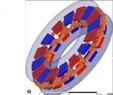
if we attach axial flux generator with wheel of bike , we know that we have electricity but two problems i am facing that
1) when bike stop , the generator will stop and cut electricity to battery
2) the bike speed is 35km/h and the battery is 48v , so we need more than 48v to charge battery .the bike motion should be very fast every time to achieve more than 48v , so bike fast motion is also impossible
 

Attachments

  • Screenshot 2025-08-06 115438.webp
    Screenshot 2025-08-06 115438.webp
    35.2 KB · Views: 29
  • Skeptical
Likes   Reactions: weirdoguy
  • #13
I'm not sure what to tell you that hasn't already been said. You cannot use the motion of the bike to charge the same battery you are using to power the bike, except during regenerative braking.
 
  • #14
Over 50% of new bike sales are now electric , but very few have regenerative braking ...
So chances are youre bike doesn't (recharge battery with braking)
If youre route has many inclines this might be worth investiating , how you can use existing motor to regenerate , or add some device yourself ..
The fact most manufacturers don't do this suggests it's not worth the trouble.
 
  • Like
Likes   Reactions: russ_watters and Drakkith

Similar threads

  • · Replies 7 ·
Replies
7
Views
3K
  • · Replies 5 ·
Replies
5
Views
3K
  • · Replies 5 ·
Replies
5
Views
746
  • · Replies 5 ·
Replies
5
Views
1K
  • · Replies 12 ·
Replies
12
Views
2K
  • · Replies 9 ·
Replies
9
Views
2K
  • · Replies 5 ·
Replies
5
Views
2K
  • · Replies 8 ·
Replies
8
Views
2K
  • · Replies 5 ·
Replies
5
Views
2K
  • · Replies 22 ·
Replies
22
Views
2K