Germany abandons nuclear power by 2022

Click For Summary

Discussion Overview

The discussion centers around Germany's decision to abandon nuclear power by 2022, exploring the implications for the future of nuclear energy globally. Participants examine the potential consequences of this shift, the safety and economic viability of nuclear power, and the impact of recent nuclear accidents, particularly the Fukushima disaster. The conversation includes various perspectives on energy sources, sustainability, and the future of energy production.

Discussion Character

  • Debate/contested
  • Exploratory
  • Technical explanation

Main Points Raised

  • Some participants express uncertainty about whether the abandonment of nuclear power is a positive or negative development, suggesting it may stress the need for renewable energy solutions.
  • Others argue that nuclear power is essential for sustaining human advancement and that its "glory days" are still ahead, citing the long-term potential of current nuclear technologies.
  • Concerns are raised about the impact of recent nuclear accidents, particularly in Japan, on the future of nuclear energy, with some suggesting that these events will lead to increased scrutiny and potentially hinder the expansion of nuclear power.
  • Participants discuss the economic implications of nuclear power, noting that increased safety regulations following accidents may drive up costs and affect market viability.
  • There are differing views on the availability of fossil fuels, with some claiming that oil and coal reserves are sufficient for centuries, while others challenge this notion, citing concerns about peak oil and the difficulty of accessing new resources.
  • Some participants highlight the ongoing controversies surrounding the safety and economic feasibility of new nuclear projects, referencing specific cases like the Olkiluoto Nuclear Power Plant in Finland, which has faced significant delays and cost overruns.

Areas of Agreement / Disagreement

Participants do not reach a consensus; multiple competing views remain regarding the future of nuclear power, its safety, economic viability, and the implications of recent nuclear incidents.

Contextual Notes

The discussion reflects a range of assumptions about energy sources, market dynamics, and the influence of historical events on future energy policies. Participants express differing opinions on the definitions of safety and economic viability in the context of nuclear energy.

DevilsAvocado
Gold Member
Messages
867
Reaction score
91
Looks like the glory days of nuclear power is over.

https://www.youtube.com/watch?v=DG3Z5e9rfW0

http://www.usatoday.com/news/world/2011-05-30-germany-nuclear-power_n.htm
http://www.reuters.com/article/2011/05/30/us-germany-nuclear-idUSTRE74Q2P120110530

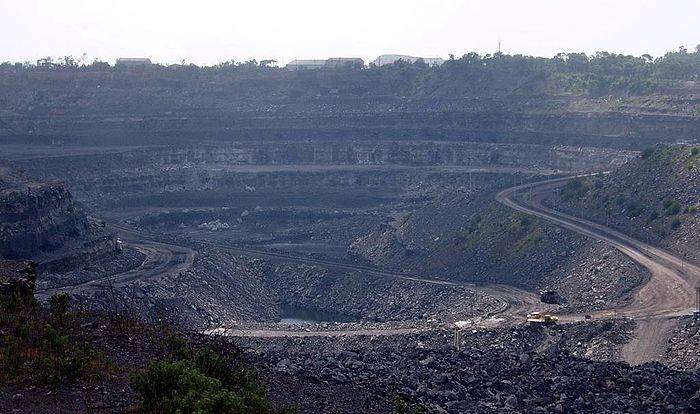
Don’t know if this is a good or bad thing. Let’s hope that the alternative is more environmental than this:

700px-182619562_00d6f703b6_b.jpg


An (over?)optimistic view is that this maybe will stress the solutions for renewable energy (or http://en.wikipedia.org/wiki/Nord_Stream" will be a very wealthy country in the next decades).
 
Last edited by a moderator:
Physics news on Phys.org
DevilsAvocado said:
Looks like the glory days of nuclear power is over.
Delayed, maybe. Certainly not over, since nuclear power's glory days are far in the future if at all.

Sure, we have enough oil and coal for a couple centuries, but assuming humans are still around, and still advancing, no known energy source can come close to sustaining us other than nuclear.

Eventually humans will recognize the real lesson from nuclear accidents, including the recent one in Japan: nuclear power plants designed decades ago have been safer by far than any other practical source of energy, and current designs are even much safer. And there is no practical alternative to power the advancement of the human race in the long run.

Nuclear power is in its infancy, centuries away from its glory days. The only long term alternative is to technologically stagnate and/or degrade.
 
Al68 said:
Delayed, maybe. Certainly not over, since nuclear power's glory days are far in the future if at all.

We are all free to have our visions of the future; no one can tell for sure what’s in the pipeline. However if one looks more closely at the reality, there are several factors pointing in opposite direction.

Japan is the third largest economy in the world and Germany is the fourth. To say that – what happened lately in these countries will not affect the future of nuclear power – is not convincing.

Furthermore Japan is (was?) a major producer/exporter and a leader in the http://en.wikipedia.org/wiki/Nuclear_renaissance" . The core meltdown in 3 reactors in Fukushima I will of course have an effect on this:
http://en.wikipedia.org/wiki/Nuclear_renaissance

In March 2011 the nuclear emergencies at Japan's Fukushima I Nuclear Power Plant and other nuclear facilities raised questions among some commentators over the future of the renaissance. Platts has reported that "the crisis at Japan's Fukushima nuclear plants has prompted leading energy-consuming countries to review the safety of their existing reactors and cast doubt on the speed and scale of planned expansions around the world". China, Germany, Switzerland, Israel, Malaysia, Thailand, United Kingdom, Italy and the Philippines are reviewing their nuclear power programs. Indonesia and Vietnam still plan to build nuclear power plants. Countries such as Australia, Austria, Denmark, Greece, Ireland, Luxembourg, Portugal, Israel, Malaysia, New Zealand, North Korea, and Norway remain opposed to nuclear power. Following the Fukushima I nuclear accidents, the International Energy Agency *halved* its estimate of additional nuclear generating capacity built by 2035.


Despite personal preferences, it’s the market and the economy that in the end decides what will be produced in the future.

700px-Nuke%2C_coal%2C_gas_generating_costs.png


Serious accidents and rapid changes in "costumer behavior" will have an effect on current cost of $/megawatt-hour, and will probably change the incitements on future investments:

Levelized_energy_cost_chart_1%2C_2011_DOE_report.gif


Nancy Folbre, an economics professor at the University of Massachusetts, has questioned the economic viability of nuclear power following the 2011 Japanese nuclear accidents:
http://en.wikipedia.org/wiki/Cost_of_nuclear#Accidents

The proven dangers of nuclear power amplify the economic risks of expanding reliance on it. Indeed, the stronger regulation and improved safety features for nuclear reactors called for in the wake of the Japanese disaster will almost certainly require costly provisions that may price it out of the market.


Al68 said:
Sure, we have enough oil and coal for a couple centuries

Oil for a couple centuries? Do you have a reference? Or is this a personal speculation?

It seems like some very prominent persons have a slightly different view:
http://en.wikipedia.org/wiki/Peak_oil

All the easy oil and gas in the world has pretty much been found. Now comes the harder work in finding and producing oil from more challenging environments and work areas.
— William J. Cummings, Exxon-Mobil company spokesman, December 2005

It is pretty clear that there is not much chance of finding any significant quantity of new cheap oil. Any new or unconventional oil is going to be expensive.
— Lord Ron Oxburgh, a former chairman of Shell, October 2008

[World] reserves are confused and in fact inflated. Many of the so-called reserves are in fact resources. They're not delineated, they're not accessible, they’re not available for production.
— Sadad I. Al-Husseini, former VP of Aramco, presentation to the Oil and Money conference, October 2007

600px-GrowingGap.jpg


600px-Hubbert_world_2004.png


Or do you mean that the price is negligible? Drive to work = $1000 :bugeye:

800px-Oil_Prices_1861_2007.svg.png


Al68 said:
Eventually humans will recognize the real lesson from nuclear accidents, including the recent one in Japan: nuclear power plants designed decades ago have been safer by far than any other practical source of energy, and current designs are even much safer.

Sure, it’s possible to build a 99.99% safe nuclear power plant, but then again, you might be missing the economy involved. One of the latest, biggest and safest; http://en.wikipedia.org/wiki/Olkiluoto_Nuclear_Power_Plant" in Finland looks promising:

olkiluoto_pierre-francoisgrosjean.jpg


But nothing is perfect, and there are controversies about safety and economy:
http://en.wikipedia.org/wiki/Nuclear_renaissance

New reactors under construction in Finland and France, which were meant to lead a nuclear renaissance, have been delayed and are running over-budget


http://en.wikipedia.org/wiki/Cost_of_nuclear#New_plants_under_construction

The 1600 MWe EPR reactor is being built in Olkiluoto Nuclear Power Plant, Finland. A joint effort of French AREVA and German Siemens AG, it will be the largest pressurized water reactor (PWR) in the world. ... However, as of August 2009, the project is "more than three years behind schedule and at least 55% over budget, reaching a total cost estimate of €5 billion ($7 billion) or close to €3,100 ($4,400) per kilowatt".


http://en.wikipedia.org/wiki/Olkiluoto_Nuclear_Power_Plant

According to Professor Stephen Thomas, "Olkiluoto has become an example of all that can go wrong in economic terms with new reactors".[9] Areva and the utility involved "are in bitter dispute over who will bear the cost overruns and there is a real risk now that the utility will default". The project has also been criticized by the Finnish nuclear safety regulator, STUK, because "instructions have not been observed in the welding of pipes and the supervision of welding". STUK has also noted that there have been delays in submitting proper paperwork. Olkiluoto 3 was supposed to be the first "third generation" reactor which would pave the way for a new wave of identical reactors - safe, affordable, and delivered on time - across Europe. The delays and cost overruns have had knock-on effects in other countries.


Adding all this together, it’s quite hard for me to see the bright nuclear future you are talking about...
 
Last edited by a moderator:
DevilsAvocado said:
The core meltdown in 3 reactors in Fukushima I will of course have an effect on this..
Sure, and as was discussed in a couple of recent threads, nuclear power is the most dangerous way to make power in the world...except for all the other ways. Nuclear power is https://www.physicsforums.com/showthread.php?p=2882522#post2882522", contrary to popular misconceptions. But I have no interest in repeating those threads, so here are some links:
https://www.physicsforums.com/showthread.php?p=2882522#post2882522
https://www.physicsforums.com/showthread.php?t=482057
https://www.physicsforums.com/showthread.php?t=482076
https://www.physicsforums.com/showthread.php?t=480017
Oil for a couple centuries? Do you have a reference? Or is this a personal speculation?
Just a guess, as a reasonable best case scenario. But the specifics are irrelevant to my point, which was that oil and coal resources are limited in the long term. I think most would agree a few centuries at best. Many would say a couple centuries is too optimistic. Nuclear fuel as a practical matter is unlimited.
Sure, it’s possible to build a 99.99% safe nuclear power plant, but then again, you might be missing the economy involved.
Nope, you have missed my point. I wasn't referring to the economics of nuclear power today, I was referring to the economics of nuclear power after oil and coal supplies start thinning out.

By your own charts, nuclear power is already in the same ballpark as the others, while costs for oil and coal will only increase with dwindling supplies.

The cost of nuclear power, otoh, should be reasonably expected to drop dramatically with technological advancements. The fuel itself is already cheap and plentiful, as discussed in those other threads.

But the bottom line is that there is no long term alternative to meet our growing demand, short of some radical new technology.
 
Last edited by a moderator:
Germany is being incredibly unrealistic. What are they going to use instead? Coal? Gas? I hate knee-jerk reactions...
 
By the time the nuclear industry recovers from this, we won't need it.

Carbon-neutral algae and bacterial-derived fuels, and solar power, are only a few years away from offerering complete and permanent options for energy. Once solar panels are cheap enough, which shouldn't be long given the current advances, even hydrogen become a viable option for fuel.

Note also that Netanyahu already announced his reservations about continuing with nuclear power.

"I don't think we are going to pursue civil nuclear energy in the coming years," Netanyahu said in a CNN interview airing later on Wednesday. Netanyahu said he had been a lot more enthusiastic about nuclear energy in the past than he is now.

Uncertainty over how the Japan crisis will play out is a "cloud" hanging over the world, he said...
http://www.reuters.com/article/2011/03/17/us-japan-nuclear-israel-idUSTRE72G9H220110317
 
Last edited:
Ivan Seeking said:
By the time the nuclear industry recovers from this, we won't need it.
Well, that depends on whether irrational hysteria or reason and logic prevail. Honestly, my money's on the former at present. But eventually, the cold hard reality of the drastically higher inherent efficiency of nuclear power will prevail, even if it takes centuries. It's a shame that the living standards of the human race must pay the price for that inefficiency in the meantime.
Carbon-neutral algae and bacterial-derived fuels, and solar power, are only a few years away from offerering complete and permanent options for energy.
Well, of course they are. Don't bother trying to back up such a claim, we'll all just take your word for it.
 
Shaun_W said:
Germany is being incredibly unrealistic. What are they going to use instead? Coal? Gas? I hate knee-jerk reactions...
Imported nuclear power!
The electricity supply in Germany has been the temporary closure of the seven oldest nuclear power plants rely more on imports from France. The Federal Republic has become the net exporter to net importer of electricity, says the Federal Association of Energy and Water.
http://economicsnewspaper.com/policy/german/electricity-from-france-germany-doubled-import-9194.html :smile::smile:

...and coal power:
“the power flows from France and the Czech Republic have* doubled,” said Hildegard Müller BDEW boss. France has Europe by far the most nuclear reactors, they account for more than three-quarters of the electricity in the neighboring country. Czech Republic relies mainly on coal power plants and about one-quarter to nuclear power.

*assumed translation error fixed

I hate knee-jerk reactions...
Me too.

What will really determine how nuclear power does in the near future is how serious people get about global warming. If people decide that global warming is an issue worth doing something about, they'll have no choice but to massively expand nuclear power. I have my doubts, but some environmentalists are already beginning to come to the realization that they did more harm than good with one of their core causes.
 
Last edited by a moderator:
Ivan Seeking said:
By the time the nuclear industry recovers from this, we won't need it.
Perhaps, but I doubt it. Such things are difficult to predict.
Carbon-neutral algae and bacterial-derived fuels, and solar power, are only a few years away from offerering complete and permanent options for energy.
Perhaps, but I doubt it. Such things are difficult to predict.

People have been speculating that fusion was just a few years from commercialization since before I was born. I'll believe that about bio fuel when I see a plant of, say, 1,000 MW capacity, operating for a while.
Once solar panels are cheap enough...
I've been hearing that since I was in elementary school too. One of the problems with the cost of solar power is that it isn't just about the cost of solar panels. It's also about the cost of inverters.

Also, solar is at its best in mid-day and heat, which lines up well with peak loads. So if it ever becomes deployed on a wide scale, it will replace peak load generation, such as from oil and natural gas. That's a good thing, but those sources aren't nuclear: Solar is not a good replacement for nuclear power.
 
Last edited:
  • #10
If the Germans want to abandonan certain advanced energy technologies and embrace others it's their business.

But I expected more from them.
Caving into the irrational neo-Luddites of the world only eggs them on.
 
  • #11
Al68 said:
Nuclear fuel as a practical matter is http://www-formal.stanford.edu/jmc/progress/cohen.html" .

That’s interesting news. Where would one store unlimited nuclear wastes?

Al68 said:
Nope, you have missed my point. I wasn't referring to the economics of nuclear power today, I was referring to the economics of nuclear power after oil and coal supplies start thinning out.

And here where we differ. To me it’s pretty clear that the price for nuclear energy will soon be higher than the renewable alternatives (due to higher costs for security and "smaller" markets). This will happen before oil/coal runs out.

Al68 said:
But the bottom line is that there is no long term alternative to meet our growing demand, short of some radical new technology.

If you don’t look for new solutions – you’ll never find one. Like the http://en.wikipedia.org/wiki/Sahara_Solar_Breeder_Project" :


https://www.youtube.com/watch?v=UdO6T1TIDzQ

It’s beyond my understanding why the technological and scientific evolution should end in Nuclear fission? Why are we spending € 15 billion on http://en.wikipedia.org/wiki/ITER" ? Seems like a serious waste if fission is the answer to everything, for eternity...

iter_plasma_med.jpg


My belief is that it’s dangerous to "fall in love" in one specific technology and stop looking for better.
 
Last edited by a moderator:
  • #12
Shaun_W said:
What are they going to use instead?

http://en.wikipedia.org/wiki/Nord_Stream"

[PLAIN]http://upload.wikimedia.org/wikipedia/commons/4/44/Germany_consumption_up_to_2008.JPG
 
Last edited by a moderator:
  • #13
Ivan Seeking said:
By the time the nuclear industry recovers from this, we won't need it.

I think (hope) you’re right.
 
  • #14
DevilsAvocado said:
Like the http://en.wikipedia.org/wiki/Sahara_Solar_Breeder_Project" :

They make it sound so simple...

Build a few plants, lay a few superconductor 'wires' and boom, you're powering half the planet! :rolleyes:

In theory, it sounds like a good idea but it's the reality I'm more interested in.
 
Last edited by a moderator:
  • #15
JaredJames said:
They make it sound so simple...

Build a few plants, lay a few superconductor 'wires' and boom, you're powering half the planet! :rolleyes:

In theory, it sounds like a good idea but it's the reality I'm more interested in.

Of course this is research and no one knows if it will work. But isn’t that the case in all human progress?

How about the Apollo program? Would we ever have landed on the Moon if people only requested "reality solutions"?

Build a few rockets, educate a few men and BOOM, you're on the Moon! :wink:
 
  • #16
DevilsAvocado said:
Of course this is research and no one knows if it will work. But isn’t that the case in all human progress?

How about the Apollo program? Would we ever have landed on the Moon if people only requested "reality solutions"?

Build a few rockets, educate a few men and BOOM, you're on the Moon! :wink:

Are you saying no one knew the moon landing would work?

Yes, people only want realistic solutions. The moon stuff was a realistic solution. Let's not pretend otherwise.

Realistic solutions are all that matter. If the idea is unfeasible it's no good.
 
  • #17
JaredJames said:
Are you saying no one knew the moon landing would work?

Yes, people only want realistic solutions. The moon stuff was a realistic solution. Let's not pretend otherwise.

Realistic solutions are all that matter. If the idea is unfeasible it's no good.

And how realistic would you say a Moon landing was in 1956?
 
  • #18
The real irony of the German situation is not so much that they are importing French nuclear power, but

1. They are importing Polish coal-generated power, from old high-pollution plants.
2. Poland recently announced plans to replace its coal generation with new nuclear genorators, and the motivation for that is the EU's (read Germany's) carbon emission reductions strategy.

Still, I'm told Germany and Poland are the best of friends these days.

Ivan Seeking said:
Note also that Netanyahu already announced his reservations about continuing with nuclear power.
Translation: "We already have enough plutonium to nuke everybody we don't like, so we don't need to make any more"?
 
  • #19
DevilsAvocado said:
And how realistic would you say a Moon landing was in 1959?

From the point of view of the general, uneducated public or someone a bit more in the know?

It's like preaching how dangerous nuclear is and ignoring the fact coal is a lot worse. Without some knowledge, nuclear can sound a lot worse than it is.
 
  • #20
JaredJames said:
From the point of view of the general, uneducated public or someone a bit more in the know?

I would say that in 1956 not one single human knew for sure that it was possible to land on the Moon. Why??

Because not one single human or mammal had ever enter space before (some say Jesus did, but I doubt it :smile:).

How could they ever know? They didn’t.

There where speculations on zero gravity and the Van Allen radiation belt, etc. But no one knew for sure. In 1957 came Sputnik 2 and Laika, and then they knew a dog could survive in space, etc, etc.

But this was not clear from the beginning.

JaredJames said:
It's like preaching ...

Seriously, talking about alternatives to fission is "preaching"??

What’s the 'terminology' on those in who strongly advocates fission forever and all eternity?
 
  • #21
DevilsAvocado said:
That’s interesting news. Where would one store unlimited nuclear wastes?
Huh? Having essentially unlimited supply doesn't imply unlimited waste until all of that supply is used. All that comment says is that we don't have to worry about running out any time soon.

And as a side matter, most nuclear waste isn't very radioactive (if properly processed) and can be buried in landfills if it isn't re-used as nuclear fuel or recycled as industrial heavy metal.
It’s beyond my understanding why the technological and scientific evolution should end in Nuclear fission?

...My belief is that it’s dangerous to "fall in love" in one specific technology and stop looking for better.
No one has suggested any such thing. What we're saying is you shouldn't abandon a viable technology that is needed right now, before replacements become viable. That should be obvious.
How about the Apollo program? Would we ever have landed on the Moon if people only requested "reality solutions"?
That's a non-sequitur: no pre-existing, functioning lunar exploration program existed to be replaced by Apollo
 
Last edited:
  • #22
DevilsAvocado said:
I would say that in 1956 not one single human knew for sure that it was possible to land on the Moon.

And yet they were able to design and build a craft that did so on its first attempt.

Let's not play dumb here. There is a difference between that and the tech above and either you are deliberately ignorant or you genuinely don't realize my point with the Sahara system (here's a hint - it's an assumption built on a bad assumption).
Seriously, talking about alternatives to fission is "preaching"??

Please point to me where I said it was? All I see is the use of "preaching" within an example statement designed to highlight my point regarding persons who don't understand the subject matter. The word preaching is simply a descriptive term I chose to use and has no bearing on the point being made and certainly doesn't make a statement regarding my thoughts on particular groups on its own. Feel free to replace it with discuss/debate/talking etc if it makes you feel better.

Understand very clearly, if I mean to say I think a particular side is 'preaching', I will come out and say it directly. I don't need you to twist my words and misdirect any points I make.
 
  • #23
DevilsAvocado said:
That’s interesting news. Where would one store unlimited nuclear wastes?
Our capacity to safely store nuclear waste is effectively unlimited as well.
And here where we differ. To me it’s pretty clear that the price for nuclear energy will soon be higher than the renewable alternatives (due to higher costs for security and "smaller" markets). This will happen before oil/coal runs out.
Why would you say we differ, then say something that in no way contradicts my statement? Is it still unclear that I am referring to after oil/coal supplies go south? Between now and then, every nuclear power plant on the planet might close, with none operating. But it's hard for irrational hysteria to trump reality when options run out.
If you don’t look for new solutions – you’ll never find one.
I agree, and can't see how it relates to my post.
It’s beyond my understanding why the technological and scientific evolution should end in Nuclear fission?
"Should" has nothing to do with it. There is no known energy source even remotely comparable with the potential of nuclear fission, except for nuclear fusion, and whether we will be able to make that work safely in the future is questionable at best.
My belief is that it’s dangerous to "fall in love" in one specific technology and stop looking for better.
Who said stop looking for better?

But we have to deal with reality. The reality is that Germany didn't choose to switch from fission to something better. They chose to switch from fission to fossil fuels. That's reality.

Advocating the advancement of a technology that is unique in its known ability to economically meet (far) future demand is a far cry from not looking for better. Failure to do so is like using a wood fireplace instead of a heat pump to heat your house because we should be looking for something better than heat pumps. It's illogical.
 
Last edited by a moderator:
  • #24
russ_watters said:
Huh? Having essentially unlimited supply doesn't imply unlimited waste until all of that supply is used.

I understand. My point is that if you don’t have a (unlimited) plan on how to handle the waste from unlimited supplies, your resources drops form unlimited to limited.

russ_watters said:
All that comment says is that we don't have to worry about running out any time soon.

That’s one way of interpretation. Others could interpret this as claim of energy supply without limits that will go on forever, almost like renewable energy.

I’m sure you agree that this kind of misapprehensions is unwarranted on PF.

russ_watters said:
And as a side matter, most nuclear waste isn't very radioactive (if properly processed) and can be buried in landfills if it isn't re-used as nuclear fuel or recycled as industrial heavy metal.

Sure, it’s a non-issue. If we just send the californium to California – the problem goes away! :-p

Seriously, I don’t know why, but you are completely ignoring the very well known main problem – high-level radioactive waste management & deep geological repository. The long-lived fission products Technetium-99 (half-life 220,000 years), Iodine-129 (half-life 15.7 million years), Neptunium-237 (half-life two million years) and Plutonium-239 (half-life 24,000 years) is not recommended to be ignored, or it will cause serious troubles interacting with the biosphere.

Hannes Alfvén, Nobel laureate in physics, described the as yet unsolved dilemma of high-level radioactive waste management:
"The problem is how to keep radioactive waste in storage until it decays after hundreds of thousands of years. The geologic deposit must be absolutely reliable as the quantities of poison are tremendous. It is very difficult to satisfy these requirements for the simple reason that we have had no practical experience with such a long term project. Moreover permanently guarded storage requires a society with unprecedented stability."

Between 1967 and 1978 radioactive waste was placed in Asse II, a former salt mine in Germany. Radioactive caesium-137, plutonium and strontium have been leaking from the mine since 1988 but were not reported until 2008. The rock salt mine Bartensleben, also in Germany, was used from 1972 to 1998, and since 2003 480,000 m3 of salt-concrete has been pumped into the pit to temporarily stabilize the upper levels. The salt dome is in the state of collapse.

And I’m sure you’re well aware of the anticlimax in Yucca Mountain...

Hence, there is no simple "heavy metal" solution to this, even if I personally wish this was the case.

russ_watters said:
No one has suggested any such thing. What we're saying is you shouldn't abandon a viable technology that is needed right now, before replacements become viable. That should be obvious.

I appreciate those words, but to be fair – there are others who have a slightly more "hard core" approach. Some want to have a nuclear plant on their backyard to prove that it’s harmlessness. Others are wishing for a serious nuclear accident every year, so that we all can "get used" and finally realize that there is really nothing to worry about – it’s all ignorant hysteria. And these guys are all "nuclear experts" with deep insights, and anyone who has a slightly different view is either a hysterical fool, knee-jerk reactionary or ignorant moron, etc, etc.

I don’t know what to say really, it all seems a little bit 'pubertal'. If these people, fundamentally in love with nuclear power, think they’re doing the technology a favor – my guess is they’re deeply mistaken. In fact, it could have the opposite effect.

In these days of information it’s quite naive to call people ignorant if you don’t like their views. All info you could ever need is out there, and I guess every non-blind person in the developed world has seen what happened at the Fukushima I Nuclear Power Plant in Japan.

You don’t need to be a nuclear power expert to understand this:

http://www.youtube.com/watch?v=yp9iJ3pPuL8&hd=1
https://www.youtube.com/watch?v=yp9iJ3pPuL8

To pretend that this doesn’t matter at all, that anyone who claims it does is hysterical or knee-jerk or whatever – well, that’s just a dumb joke that will hit back on the messenger.

Personally I don’t have any emotions for or against nuclear power. To me, it’s just a technology, among others. What does engage me is retrograding and narrow-minded fundamentalism, blocking newer and better ideas.
 
  • #25
JaredJames said:
And yet they were able to design and build a craft that did so on its first attempt.

Let's not play dumb here.

That’s a very good incitement. I recommend you read the history of the Apollo program once more, and maybe in depth on Apollo 1.

[PLAIN]http://upload.wikimedia.org/wikipedia/en/8/89/LC34plaque2.jpg

JaredJames said:
(here's a hint - it's an assumption built on a bad assumption)

Wow, now you got me real interested! You know something that the professors have missed? What is it? Solar cells don’t work? Superconductors don’t work? Solar power is a dead end? Please elaborate! :!)

[URL]http://upload.wikimedia.org/wikipedia/commons/thumb/2/22/PS20andPS10.jpg/700px-PS20andPS10.jpg[/URL]
 
Last edited by a moderator:
  • #26
DevilsAvocado said:
That’s a very good incitement. I recommend you read the history of the Apollo program once more, and maybe in depth on Apollo 1.

Ah, that's right. There were a number of craft that crashed during the lunar stage of the mission. :rolleyes:

I was referring specifically to the moon landing side of things, a direct continuation on the whole not knowing about landing on the moon thing. Getting to space is irrelevant and had been achieved, it wasn't the focus of those missions.

Do you understand the concept of simulation and prediction in science (engineering and other similar subjects)?
Wow, now you got me real interested! You know something that the professors have missed? What is it? Solar cells don’t work? Superconductors don’t work? Solar power is a dead end? Please elaborate! :!)

Unfortunately, your sarcasm is misplaced. My focus here was on the "powering half of the globe" side of things, by using superconductors to send the power where required. We do not have the ability to use superconductors, economically, in such a manner. So let's not pretend we do, and certainly not assume we'll have it for no good reason.
 
  • #27
DevilsAvocado said:
That’s one way of interpretation. Others could interpret this as claim of energy supply without limits that will go on forever, almost like renewable energy.
Well, seawater contains 3.3 mg per cubic meter, and can be extracted relatively economically with http://en.wikipedia.org/wiki/Uranium_mining#Recovery_from_seawater". (The only reason that's not currently economical is the even cheaper supply with other sources).

Aside from the 4.6 billion tons of uranium already in the oceans, rivers add about 32,000 tons per year.

Long story short, according to calculations by http://www-formal.stanford.edu/jmc/progress/cohen.html" , we have enough uranium from seawater alone to last about 5 billion years. I would consider a power source which will easily outlast our sun to be a renewable energy source.

The only thing mistaken about nuclear power being "almost like renewable energy" is the word "almost".
Seriously, I don’t know why, but you are completely ignoring the very well known main problem – high-level radioactive waste management & deep geological repository.
You're right that this is the main problem. But it's much less of a problem with modern designs than it is with currently operating plants with decades old reactor technology. http://en.wikipedia.org/wiki/Nuclear_reactor_technology#Future_and_developing_technologies" are not only far more efficient and safe, but generate far less waste. Using currently operating plants as representative of future technology is like using the first cars as representative of future automotive technology.
 
Last edited by a moderator:
  • #28
DevilsAvocado said:
I understand. My point is that if you don’t have a (unlimited) plan on how to handle the waste from unlimited supplies, your resources drops form unlimited to limited.
This is all non sequitur. All you have to worry about if you are trying to decide to build a new plant is whether there will be fuel and waste disposal options available at the end of its 50 year lifespan. There is no need to plan now for a vast quantity of waste that won't be generated for hundreds or thousands of years. That's just silly.
That’s one way of interpretation. Others could interpret this as claim of energy supply without limits that will go on forever, almost like renewable energy.
Again, non sequitur. Whether nuclear fuel will run out in a thousand or a billion years doesn't matter: in either case, there is plenty of fuel for new nuclear plants now.
Seriously, I don’t know why, but you are completely ignoring the very well known main problem – high-level radioactive waste management & deep geological repository. The long-lived fission products Technetium-99 (half-life 220,000 years), Iodine-129 (half-life 15.7 million years), Neptunium-237 (half-life two million years) and Plutonium-239 (half-life 24,000 years) is not recommended to be ignored, or it will cause serious troubles interacting with the biosphere.
Setting aside the fact that you're making the classic error in believing that long half life = more dangerous: Lead is poisonous forever. Should we build permanent waste repositories for it? The nuclear waste issue was borne of similar wrongheaded thinking.

So what if we build a storage facility for it that has to be abandoned after 50 years? Build a new one right next to it 50 years from now! This plan has served us fine for the past 50 years and continues to work fine. And if we ever get enough waste to make it desirable to cut the volume by a factor of 20, we can do that if we need to.

And in any case, most environmentalists are deeply concerned about a problem they expect to be cataclysmic over the next 100 years: global warming. Nuclear power can near completely solve that problem and the problem of waste is miniscule compared with what they are predicting. It is illogical for them to oppose nuclear power.

No wishing and hoping for a breakthrough required: all that is required is the will to do it.
Hannes Alfvén, Nobel laureate in physics, described the as yet unsolved dilemma of high-level radioactive waste management:
"... Moreover permanently guarded storage requires a society with unprecedented stability."
If society collapses, why would we care about guarding a waste dump? This is from the same line wrongheaded thinking I mentioned above.
And I’m sure you’re well aware of the anticlimax in Yucca Mountain...
Yes, a perfectly good waste repository killed by unscrupulous politicians. Don't worry, Obama is being sued over this and he's going to lose.
Personally I don’t have any emotions for or against nuclear power. To me, it’s just a technology, among others. What does engage me is retrograding and narrow-minded fundamentalism, blocking newer and better ideas.
Your reaction seems to be much more than that, considering that you read quite a number of things here that people didn't say.
 
  • #29
Devil'sAvocado said:
Seriously, I don’t know why, but you are completely ignoring the very well known main problem – high-level radioactive waste management & deep geological repository.
Al68 said:
You're right that this is the main problem.
Just to repeat for emphasis: this "problem" is almost entirely political. From a purely technical point of view, dealing with waste is childs-play. All you have to do is store it. Compare that with coal and oil waste, which we haven't even figured out how to capture yet.

Some environmentalists are starting to wake up to the lie and contradiction they've been living:
Nuclear power presents the ultimate catch-22 for environmentalists. It doesn't generate a lot of greenhouse gases, but it does produce long-lasting toxic waste.

No one is more familiar with this tough trade-off than Dr. Patrick Moore, a co-founder of Greenpeace International turned nuclear power booster. He left Greenpeace in the 1980s over ideological differences and now is the co-chairman, along with former EPA administrator Christie Todd Whitman, of the Nuclear Energy Institute's new Clean and Safe Energy Coalition...

Patrick Moore: Going back to the early days in Greenpeace in the 1970s and 1980s, we were totally focused on nuclear war and nuclear testing in the Cold War. We failed to distinguish between the beneficial uses of the technology and the evil uses of the technology.

It became clear to me that there was a logical disconnect. The people who were most concerned about climate change were most opposed to nuclear power.
http://www.wired.com/science/planetearth/news/2007/11/moore_qa
 
Last edited by a moderator:
  • #30
Like what was stated earlier in this post is that the Germans can shut down their nuclear power, and the approximately 30% loss of power to the electrical grid will have to be imported/replaced. I'm sure coal and natural gas interest in Germany are dancing with joy, as is France and other countries in the EU that have surplus power.

As for placing huge solar system in the Sarah, assuming that every "if" that is associated with the project were solved, the storage bank for peak electrical needs of just the USA would need to be 3953.1 billion kWh (2009 number), base load would need to be 2563.2 billion kWh (2009 number). This is the numbers on size assuming that the storage banks were done with high density lead acid batteries (75 Wh/l). The reason for lead acid batteries is that they are the cheapest to build and maintain.

The base load storage bank would need to be 34 million cubic meters, 13670.4 FINA minimum Olympic pools, or 17 square km. The peak storage bank would need to be 52 million cubic meters, 21083.2 FINA minimum Olympic pools, or 26 square km. These numbers are just for 25% of what the project would have to produce. The scale of the backup system, and the folly of centralized power generation systems is what will kill this pipe dream.

As for the mobility of radioactive metals there is a great example of how the stuff stays put. Looking at the Oklo natural reactor the highly radioactive isotopes have not moved a significant distance from where they were produced approximately 2 billion years ago.

It is a shame a power source that could solve the global warming problem and bring power, heat, and clean water to the third world is shunned because of ignorance and knee jerk reactions.
 

Similar threads

  • · Replies 56 ·
2
Replies
56
Views
9K
  • · Replies 36 ·
2
Replies
36
Views
11K
  • · Replies 18 ·
Replies
18
Views
5K
  • · Replies 52 ·
2
Replies
52
Views
11K
  • · Replies 4 ·
Replies
4
Views
3K
  • · Replies 45 ·
2
Replies
45
Views
11K
Replies
6
Views
4K
  • · Replies 6 ·
Replies
6
Views
4K
  • · Replies 50 ·
2
Replies
50
Views
22K
  • Sticky
  • · Replies 1K ·
41
Replies
1K
Views
300K