Groove Seals: High Pressure & High Temperature Applications

  • Thread starter Thread starter Stormer
  • Start date Start date
  • Tags Tags
    Shaft
Join the discussion
Ask a follow-up here, or get your own question answered by working scientists, mathematicians and engineers — people, not an autocomplete.
Real named experts · corrections over time · the nuance an AI answer skips
5 replies · 4K views
Stormer
Messages
121
Reaction score
23
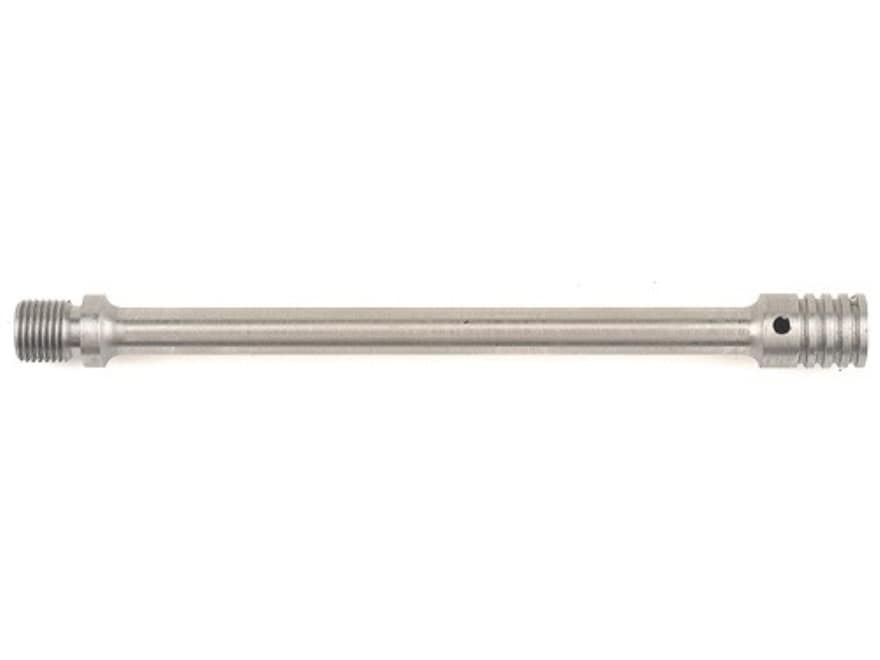
I have seen seals in the form of multiple grooves in a shaft with no other sealing element like o-rings etc. in many applications. For example i have seen this in hydraulic spool valves, but also in high pressure and high temperature gas applications like on pistons in gas operated firearms.

My question is does this really make a good seal? And how does it really work? Does it work in the same way as a Tesla Valvular Conduit by making the flow turn around in the grooves and make greater resistance to any further flow?

Hydraulic spool valve spool:
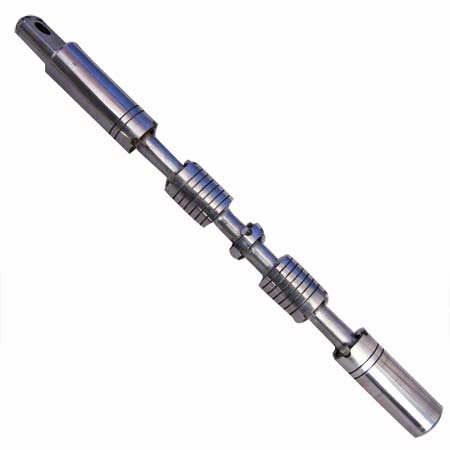
hydraulic-spool-valve-01-1250248.jpg

AK47 piston:
268442.jpg

And why is it used in hydraulic applications? Why not just a o-ring? I can understand it in firearm pistons because the hot gasses will probably destroy a o-ring in the first shot, but in hydraulics i don't understand the reason to use this. Or is there some piston rings in the grooves of the hydraulic spool valves that we just don't see?
 
on Phys.org
Stormer said:
And why is it used in hydraulic applications? Why not just a o-ring?
They are not seals, they are flow regulators.

On/off hydraulic valves have spools that fit close to the valve body. They do not have the parallel grooves seen in proportional flow control valves. The clearance between the grooved spool and the valve body is greater in a proportional valve as fluid is designed to flow through the annular gap, between the spool and valve body, across the grooves. The profile of the groove is important in regulating flow through the valve, as it controls the turbulence of the flow and the pressure drop across the lands between the grooves. The groove also equalises the pressure around the spool valve so the valve is not pushed sideways. That helps centre the spool valve in the bore and so regulates the annular gap, making flow more predictable.

I expect that in the AK47, the grooves would regulate the gas flow transition, and so quieten the mechanism, and reduce wear due to contact.
 
  • Like
Likes   Reactions: Lnewqban
A labyrinth seal is used on a rotating shaft to minimise flow along the shaft.

The spool in a hydraulic directional control valve does not rotate about it's axis, it slides in the axial direction.

A simple spool valve is a switch that connects various ports to the pump or tank. Fluid is not expected to flow along the outer surface of the spool.

The spool in a proportional control valve, changes the flow balance in proportion to axial position. It is designed to have fluid flow along the spool surface.
 
The examples i gave was just examples i had seen used in the past. But after a little googling it looks like what i was looking for was a "straight through labyrinth seal" with a smooth land. And it appears it is mostly used in gas turbines, multistage centrifugal compressor and similar high flow gas applications with high speed rotational shafts. But from the AK47 piston example it looks like it is used in linear motion applications as well.

y:20180924100749491-0073:9781316755686:17009fig5_2.png

1603391161383.png

17-Figure1-1.png
 
Apart from the fact that labyrinth seals and proportional control valves are both resistors in series, they are fundamentally different.

The labyrinth seal is a simple two port maximised resistance to flow, the inner half of which spins with the shaft, the outer static halves usually being separable, so the shaft seal can be assembled.

A proportional spool valve is a three port sliding potentiometer. It is designed to proportion a flow in two directions. Fluid delivered to the centre flows away across the lands to the ports at each end. As the spool slides along the bore it changes the proportion of the lands that must be passed by the fluid, while increasing the exposure of the end ports, which unbalances the flow resistance to the two end ports.

Don't let a fascination with simple labyrinth seals distract you from the hidden virtues of adjustable proportional flow control valves.