Help understanding the Del operator

  • Thread starter Thread starter Dawei
  • Start date Start date
  • Tags Tags
    Del Operator
Click For Summary
The discussion revolves around the del operator, a fundamental concept in vector calculus, particularly relevant for understanding the Navier-Stokes equations in fluid dynamics. The del operator, denoted as ∇, serves as a partial differentiation operator in three dimensions, allowing for operations like gradient, divergence, and curl. Participants emphasize the need for a clearer understanding of mathematical symbols and their applications, especially for engineering students struggling with advanced physics concepts. The conversation highlights the frustration of encountering complex terminology without foundational knowledge, suggesting a desire for more accessible explanations. Overall, mastering the del operator and its applications is crucial for effectively utilizing the Navier-Stokes equations in engineering contexts.
Dawei
Messages
29
Reaction score
0
I'm an engineering major taking an advanced level physics class. I realize that I really have no clue when it comes to basic mathematics, and it is extremely frustrating. I always just learned *how* to solve equations, never what I was actually doing.

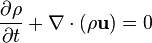
For example the del operator. What exactly does this mean?
762462cbd19e9bf6d392e1d5636193d7.png


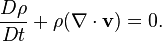
And what is the logic for turning it into this?
b0b2b5bd171ad8bf9b83fb3bf723bdb6.png


I feel like I just really need a good lesson starting with the very basics. I have no "feel" for what half of the symbols that I'm using mean.

I need to really understand and use the Navier Stokes equations for my job, and it's just killing me. Every time I try to look up a word or symbol I don't know, the explanation of it ends up having like 3 or 4 more words or symbols in it that I don't know. I took calc 1-3 and diff eq, did well in the classes, so it's extremely frustrating now to feel like I never actually learned anything, just sort of how to find patterns and solve homework problems...

Can anyone recommend a good explanation of the Navier Stokes equations for me?
 
Physics news on Phys.org
In Cartesian coordinates ]\nabla is the differential operator
\frac{\partial}{\partial x}\vec{i}+ \frac{\partial}{\partial y}\vec{j}+ \frac{\partial}{\partial x}\vec{k}.

Written that way, not applied to anything, it is not a true "vector", just a symbol, but applied to various kinds of functions, it can be thought of as a vector.

For example, if f(x,y,z) is a scalar valued function we can think of \nabla f, also called "grad f" or "gradient of f", as a vector times a scalar- the scalar "multiplies" each part of the vector:
\nabla f= \frac{\partial f}{\partial x}\vec{i}+ \frac{\partial f}{\partial y}\vec{j}+ \frac{\partial f}\partial z}\vec{k}.

If \vec{F}(x,y,z)is a vector function, say, \vec{F}(x,y,z)= f(x,y,z)\vec{i}+ g(x,y,z)\vec{j}+ h(x,y,z)\vec{k} then we can think in terms of the "dot product" or "cross productZ".

Thinking of "dot product" we have \nabla\cdot\vec{F}(x,y,z), also called "div \vec{F}" or "the divergence of \vec{F}", equal to
\frac{\partial f}{\partial x}+ \frac{\partial g}{\partial y}+ \frac{\partial h}{\partial z}.

Thinking of the "cross product" we have \nabla\times\vec{F}(x,y,z), also called "curl \vec{F}" or " curl of \vec{F}, equal to
\left(\frac{\partial h}{\partial y}- \frac{\partial g}{\partial z}\right)\vec{i}- \left(\frac{\partial h}{\partial x}- \frac{\partial f}{\partial z}\right)\vec{j}+ \left(\frac{\partial g}{\partial x}- \frac{\partial f}{\partial y}\right)\vec{k}

Now, let's look at
\frac{\partial\rho}{\partial t}+ \nabla\cdot(\rho\vec{u})= 0

Take \vec{u}= f\vec{i}+ g\vec{j}+ h\vec{k} so that \rho\vec{u}= \rho f\vec{i}+ \rho\ g\vec{j}+ \rho h\vec{k} and
\nabla\cdot(\rho\vec{u})= \frac{\partial(\rho f)}{\partial x}+ \frac{\partial(\rho g)}{\partial y}+ \frac{\partial(\rho h)}{\partial z}

By the product rule, each of those is
\frac{\partial\rho}{\partial x}f+ \rho \frac{\partial f}{\partial x}
\frac{\partial\rho}{\partial y}g+ \rho \frac{\partial g}{\partial y}
\frac{\partial\rho}{\partial z}h+ \rho \frac{\partial h}{\partial z}

We can write their sum as
\frac{\partial\rho}{\partial x}f+ \frac{\partial\rho}{\partial y}g+ \frac{\partial\rho}{\partial z}h
+ \rho \frac{\partial f}{\partial x}+ \rho\frac{\partial g}{\partial y}+ \rho\frac{\partial h}{\partial z}

= \nabla\rho\cdot \vec{u}+ \rho\nabla\cdot\vec{u}

Now, you will also need to know what
\frac{D\rho}{Dt} means. It is NOT just the derivative accidently written with "D" rather than "d". It is the rate of change as we move with the flow. Instead of sticking a, say, thermometer into water and measuring the temperature and rate of change of temperature at that point, we attach it to a float and let float down the stream, measuring the termperature and rate of change of temperature of a little "piece" or water as it flows down the stream.

Specifially, if F(x,y,z, t) is a function of the three space variables and time,
\frac{DF}{DT}= \frac{\partial F}{\partial t}+ \nabla F\cdot\vec{v}
where "\vec{v}" is the velocity vector of the water.<br /> <br /> Well, you can see that <br /> \frac{\partial\rho}{\partial t}+ \nabla\cdot(\rho\vec{u})<br /> becomes<br /> \frac{\partial\rho}{\partial t}+ (\nabla\rho\cdot \vec{u}+ \rho(\nabla\cdot\vec{u}))<br /> =(\frac{\partial\rho}{\partial t}+ \nabla\rho\cdot \vec{u})+ \rho(\nabla\cdot\vec{u})<br /> = \frac{D\rho}{Dt}+ \rho(\nabla\cdot\vec{u})<br /> <br /> But how that "u" mysteriously became "v", I cannot say- unless it is a misprint.
 
Last edited by a moderator:

Similar threads

  • · Replies 8 ·
Replies
8
Views
3K
  • · Replies 2 ·
Replies
2
Views
975
  • · Replies 5 ·
Replies
5
Views
11K
  • · Replies 5 ·
Replies
5
Views
2K
  • · Replies 53 ·
2
Replies
53
Views
5K
  • · Replies 1 ·
Replies
1
Views
2K
  • · Replies 9 ·
Replies
9
Views
2K
  • · Replies 4 ·
Replies
4
Views
7K
  • · Replies 4 ·
Replies
4
Views
4K
  • · Replies 8 ·
Replies
8
Views
2K