How can I make my rocket/glider work correctly?

  • Thread starter Thread starter Max CR
  • Start date Start date
  • Tags Tags
    Work
Click For Summary
SUMMARY

The discussion focuses on designing a rocket powered by two Estes engines, which experiences stability issues during ascent and glide phases. The rocket spins nose-down immediately after launch, attributed to improper flap design and wing thickness. Recommendations include removing flaps, angling wings upwards, and using a single engine for reliability. The importance of minimizing drag and ensuring proper aerodynamic design is emphasized to achieve stable flight.

PREREQUISITES
  • Understanding of basic aerodynamics and stability principles
  • Familiarity with Estes rocket engines and their specifications
  • Knowledge of rocket design, including wing and flap configurations
  • Experience with testing and troubleshooting model rockets
NEXT STEPS
  • Research aerodynamic principles related to wing design and stability
  • Learn about Estes engine specifications and optimal configurations
  • Explore techniques for reducing drag in rocket designs
  • Investigate the effects of thrust on rocket stability during ascent and glide
USEFUL FOR

Model rocket enthusiasts, aerospace hobbyists, and engineers interested in rocket design and stability optimization.

Max CR
Messages
121
Reaction score
3
I am designing a rocket. THis rocket is designed to go upwards being powered by 2 Estes engines. After about 2 seconds, the engines will burn out. Then, a third engine will light up 7 seconds after the 2 engines burn out.

The rocket is supposed to go upwards nearly perfectly straight, then start gliding down. As it is gliding down, it is supposed to then launch another engine causing the glider to glide down quickly.

I am having a problem however. WHen the glider goes upwards, it immidately goes into a spin. It goes forward (nose down) and then spins repeatedly. The first test launch I did, I had no flaps to cause drag. This caused the rockets to glide upwards then backwards so the belly of it was facing towards the sky. The seoncd time I put a lot of flaps on it to cuase drag. This caused it to go into a HUGE spiral. This time (the third time) there was a spiral only not as much. I believe that if I reduce the height of the flaps then this will solve the problem.

I am wondering however, is there any kind of physics formula that could help me determine how long of flaps I should use? ANy ideas?

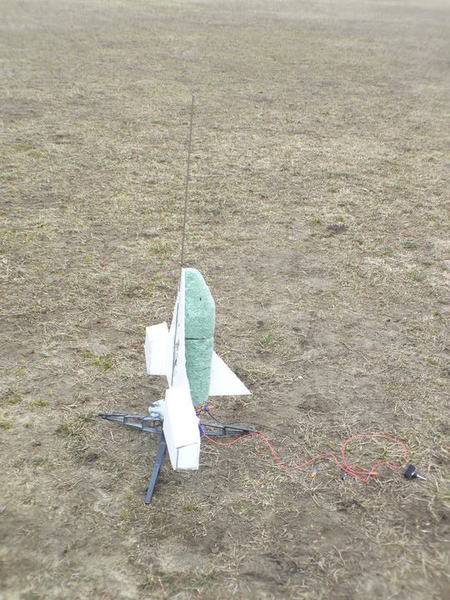
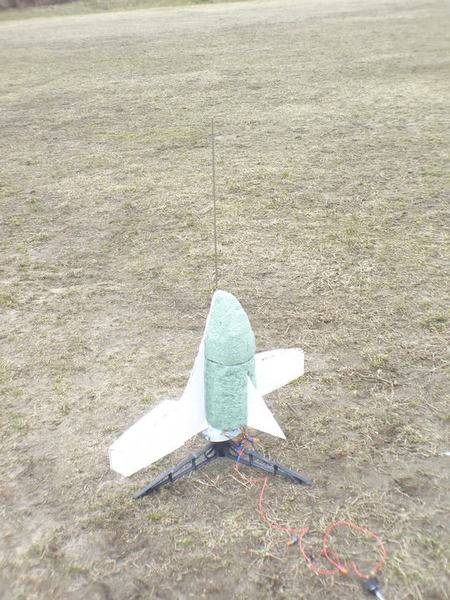
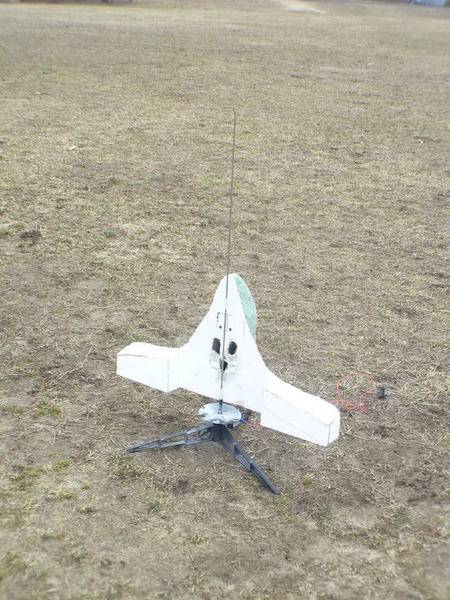
Below are the photos of it. Please give me feedback for my next test launch.

Again, when it is launched it goes nose downards into a spiral which makes it appear there is too much flaps. I just don';t know how much to reduce the flappage by. ANy ideas and professional feedback appreciated.
P1030754.jpg


P1030755.jpg


P1030756.jpg
 
Physics news on Phys.org
One concern is if you get the rocket to glide well, couldn't it travel very far horizontally with the 3rd rocket engine on (fire hazard)?

The problem I see is you've created a crude airfoil out of the fuselage. The nose should have tapered towards the middle, not towards the wing surfaces. This is what caused the backwards pitch reaction before the flaps.

The flaps caused a roll either because they're not even, and/or it induced a snap roll from excessive effective angle of attack.

I'd recommend removing the flaps, and angling the wings "upwards" by shimming the trailing edge away from fuselage with a wedge of foam (thinner at front, thicker at back).
 
Why are your wings so thick? They are probably creating tremendous drag since an Estes accelerates to full speed within a few feet of take off. Another thing is that anything that has lift will create a problem when trying to go straight up, that's why rocket fins are flat and thin. I used to make balsa wood gliders with just flat balsa for wings and they will glide just fine without lift and that's what you need on a rocket. Another potential problem is using 2 motors for take-off. They may not fire at the same time or have the same thrust and they can't be mounted centerline. I would never have more than one engine running at a time for reliability and centerline thrust. I always had problems using the electrical method of firing them. I started using a fuse (like an M80 fuse) and never had a problem firing the motor. Back in those days underwater fuse was advertised in all the comic books. Have you glide tested this thing by hand with the motors in the same condition that they will be in when it is supposed to glide (full or burnt out)? If it won't glide when thrown it won't glide under power. Also any lift it has will be magnified under power so it shouldn't climb when thrown hard. I would have thin flat wings to start and minimize the drag as much as possible. Also having power to make it glide down seems to me that it will need negative lift so it comes down instead of going up and that is just as bad trying to go straight up on takeoff. How is this thing supposed to differentiate between thrust in glide and thrust in takeoff? I think powered glide isn't going to work without a complex design.

Unfortunately I'm not a rocket scientist so take all this with a grain of TNT

No, really, I've seen more aerodynamic wings on cats.
 
Last edited:

Similar threads

  • · Replies 16 ·
Replies
16
Views
7K
  • · Replies 13 ·
Replies
13
Views
4K
  • · Replies 35 ·
2
Replies
35
Views
7K
  • · Replies 3 ·
Replies
3
Views
4K
  • · Replies 2 ·
Replies
2
Views
3K
Replies
7
Views
5K
Replies
8
Views
5K
  • · Replies 3 ·
Replies
3
Views
5K
Replies
3
Views
2K
  • · Replies 2 ·
Replies
2
Views
10K