How can infrared divergences in the fermion propagator be cured in QED?

Click For Summary
SUMMARY

The discussion focuses on curing infrared divergences in the fermion propagator within Quantum Electrodynamics (QED). It establishes that infrared divergences can be addressed by considering contributions from the electron-to-electron transition amplitude along with two real photons, a method first introduced by Bloch and Nordsieck and later expanded by Kinoshita, Lee, and Nauenberg. The standard treatment of these divergences is detailed in Weinberg's "Quantum Theory of Fields, vol. 1" (Chapter 13). Additionally, the paper by P. Kulish and L. Faddeev emphasizes that the masslessness of photons necessitates a modification of the asymptotic states to include a cloud of photons, which effectively cancels the infrared divergences.

PREREQUISITES
  • Quantum Electrodynamics (QED) fundamentals
  • Understanding of infrared and ultraviolet divergences
  • Fermion propagator calculations
  • Feynman diagram techniques
NEXT STEPS
  • Study the Bloch-Nordsieck theorem and its implications in QED
  • Examine Kinoshita, Lee, and Nauenberg's contributions to infrared divergences
  • Review Weinberg's "Quantum Theory of Fields, vol. 1" for perturbation theory
  • Investigate the concept of infraparticles and their role in QED
USEFUL FOR

Physicists, particularly those specializing in Quantum Electrodynamics, theoretical physicists dealing with particle interactions, and researchers focused on quantum field theory and its divergences.

Jamister
Messages
58
Reaction score
4
TL;DR
how to cure infrared divergences in fermion propagator in QED?
Summary: how to cure infrared divergences in fermion propagator in QED?

In calculating the fermion propagator in QED, we identify Ultraviolet and Infrared divergences. the Ultraviolet divergences solved by regularization, but I don't understand how to treat the Infrared divergences. Infrared divergences also appear in the QED vertex, but the solution there to Infrared divergences is by soft photons. How is it done in the fermion propagator?
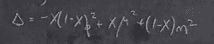
This is the result of the 1PI diagram of the fermion propagator to leading order:

1563652745795.png

1563652892044.png


mu is the mass of the photon.
 
Physics news on Phys.org
The IR divergency is canceled by considering the appropriate contributions to the electron-to-electron transition amplitude plus two (un-noticed) real photons. This is a very general feature, first established by Bloch and Nordsieck and later extended to non-Abelian gauge theories by Kinoshita, Lee, and Nauenberg. The standard treatment within usual perturbation theory can be found in

Weinberg, Quantum Theory of Fields, vol. 1 (Chpt. 13).

A very illuminating paper,

P. Kulish, L. Faddeev, Asymptotic conditions and infrared divergences in quantum
electrodynamics, Theor. Math. Phys. 4 (1970) 745.
http://dx.doi.org/10.1007/BF01066485
showing that the physical reason for the IR properties is that due to the long-ranged Coulomb force due to the masslessness of the photons the naive plane-wave single-particle states used as asymptotic-free states are not the right ones. Rather you have to dress the "free" bare particles with a cloud of (real and virtual) photons around them. This cloud cancels the IR divergences. These modified asymptotic free states are sometimes called "infraparticles".
 
  • Like
Likes   Reactions: Jamister, dextercioby and Orodruin

Similar threads

  • · Replies 1 ·
Replies
1
Views
2K
  • · Replies 6 ·
Replies
6
Views
5K
  • · Replies 3 ·
Replies
3
Views
2K
  • · Replies 5 ·
Replies
5
Views
3K
  • · Replies 10 ·
Replies
10
Views
2K
  • · Replies 2 ·
Replies
2
Views
3K
  • · Replies 1 ·
Replies
1
Views
3K
  • · Replies 3 ·
Replies
3
Views
3K
  • · Replies 85 ·
3
Replies
85
Views
32K
  • · Replies 4 ·
Replies
4
Views
3K