How does D-T fusion reaction utilize its waste to create more fuel?

Join the discussion
Registration is free. Ask a follow-up in this thread, or start your own.
3 replies · 3K views
Leo Liu
Messages
353
Reaction score
156
In Britannica's article on nuclear fusion, I came across the following description of the recycle of triton and neutrons:
Although tritium does not occur naturally, tritons and alpha particles are produced when neutrons from the D-T fusion reactions are captured in the surrounding lithium blanket. The tritons are then fed back into the plasma. In this respect, D-T fusion reactors are unique as they use their waste (neutrons) to generate more fuel. Overall, a D-T fusion reactor uses deuterium and lithium as fuel and generates helium as a reaction by-product.

What puzzle me are why the tritons are produced from the D-T fusion reaction, given that the products are alpha particle, neutron, and energy; and how the neutrons can be recycled to generated more fuel. Could someone kindly explain the details of these processes to me, please?

Source: https://www.britannica.com/science/nuclear-fusion
 
Last edited:
Physics news on Phys.org
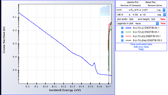
The D-T reactions produces neutrons. If there is a lithium blanket, then there is a good chance it will be captured by lithium-6. Li-6 + n -> He-4 + H-3. The H-3 can then be processed and used as a feed for the D-T fusion.

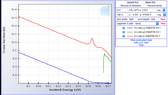
There is also the Li-7 + n -> He-4 + H-3 + n reaction.
 
  • Informative
  • Like
  • Love
Likes   Reactions: berkeman, Astronuc and Leo Liu
What is interesting is how to call the Li7+n or Li6+n reaction. It is not fusion but is it fission?
Technically it seems like fission as a nucleus captures a neutron then the intermediate state eventually decays after a very very short time and the end products result + extra energy.
Or is it labeled decay ?
 
artis said:
What is interesting is how to call the Li7+n or Li6+n reaction. It is not fusion but is it fission?
Technically it seems like fission as a nucleus captures a neutron then the intermediate state eventually decays after a very very short time and the end products result + extra energy.
Or is it labeled decay ?
It is called fission, when the two products are more or less of equal size, e.g., n+6Li -> α +t, or spallation, when other smaller particles are emitted, e.g, (n,2n) reactions. Some reactions have high threshold energies, and some are very unlikely (low cross-section) compare to the main reaction.
 
Attachments
  • Li-6,n_reactions.png
    Li-6,n_reactions.png
    34.1 KB · Views: 230
  • Li-7,n_reactions.png
    Li-7,n_reactions.png
    36.9 KB · Views: 207
  • Like
Likes   Reactions: Leo Liu and artis