SUMMARY
The forum discussion centers on the evolution of television technology, highlighting significant advancements from early systems to modern standards. Key topics include the transition from manual adjustments like horizontal and vertical hold controls to automated synchronization in televisions, particularly with the introduction of negative modulation. The discussion references historical milestones, such as the 1937 Radiolympia show and the development of the NTSC and PAL systems, which improved color compatibility and signal stability. Participants share nostalgic memories and technical insights, emphasizing the ingenuity of early engineers in overcoming technological limitations.
PREREQUISITES
- Understanding of television modulation techniques, specifically "negative modulation."
- Familiarity with NTSC and PAL television standards.
- Knowledge of early television components, including horizontal and vertical hold controls.
- Awareness of historical television technology developments, such as the Eidophor Projector system.
NEXT STEPS
- Research the technical specifications and historical significance of the NTSC and PAL standards.
- Explore the impact of negative modulation on television signal quality and synchronization.
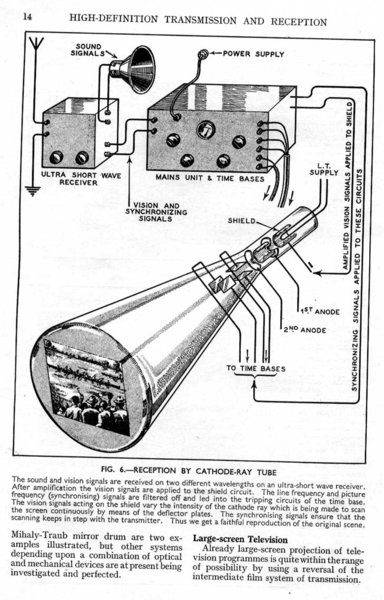
- Investigate the design and functionality of early television components, including vacuum tubes and test signal generators.
- Learn about the Eidophor Projector system and its role in the history of projection technology.
USEFUL FOR
Historians, television engineers, technology enthusiasts, and anyone interested in the technical evolution of television technology and its historical context.