Sambuco said:
I know, but I asked you because I have the impression that many of those reconstructions start from an operationalist perspective, e.g. Höhn starts assuming a kind of relational interpretation.
Yes, they start from an operationalist perspective exactly like Einstein did with his 1905 SR paper. Wiltsche, McDevitt and I are working to justify that by basing all of physics in phenomenology directly.
Sambuco said:
Yes, I’ve read the paper and that section in particular. I got the impression that your approach is similar to Grangier’s Contexts-Systems-Modalities.
Yes, in that same paper we wrote: [Grangier et al., 2024] reach a similar conclusion, “based on a century of theoretical and experimental progress, our conclusion is that classical physics and quantum physics can neither function nor even be conceived one without the other."
Sambuco said:
1. You equate "Locality" with "Local Agency," but they are not the same thing. Locality is the same assumption employed by Bell in his original 1964 formulation of Bell's theorem, it is Shimony's "parameter independence". Instead, Local agency is Locality + No-superdeterminism.
2. You state that the three assumptions are true, but the "local friendliness" (LF) no-go theorem demonstrates that QM is incompatible with the conjunction of those three assumptions. That's why I asked you about how your approach deals with LF no-go theorem.
I grabbed those from Google AI, but I should have simply referred you to: “The Completeness of Quantum Mechanics and the Determinateness and Consistency of Intersubjective Experience: Wigner’s Friend and Delayed Choice,” Michael Silberstein and W.M. Stuckey. In
Consciousness and Quantum Mechanics, edited by Shan Gao (Oxford University Press, 2022) 198-259
http://arxiv.org/abs/1901.10825 for a complete answer. Here is an executive summary.
Start with these two excerpts from the paper:
and:
Next, locality and statistical independence (no superdeterminism) were assumptions for Bell. We do not violate these assumptions because they only apply to causal explanations. Remember, Bell wanted to find out if additional variables could be added to QM "to restore to the theory causality and locality."
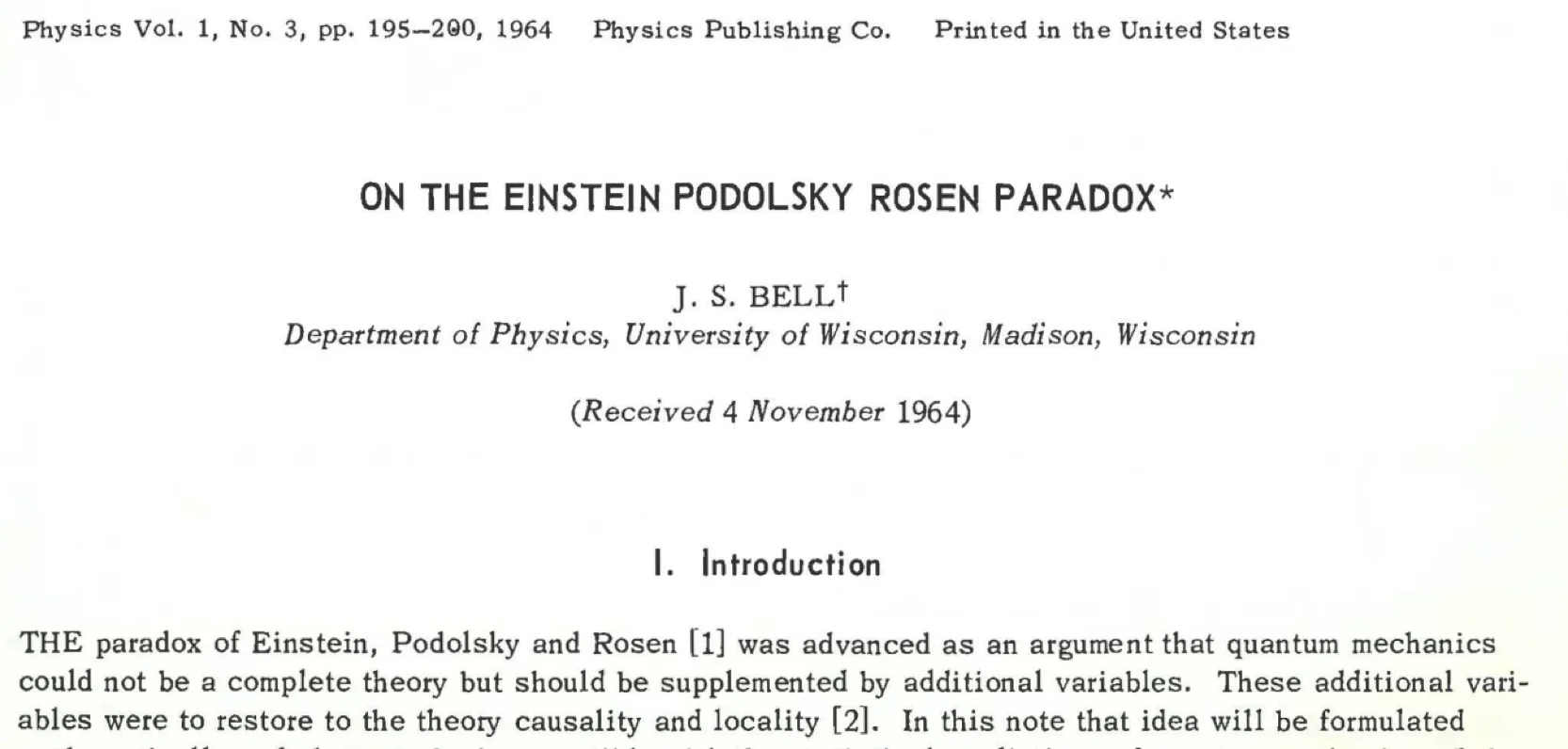
According to our completion of the quantum reconstruction program, QM is as complete as possible and is a principle theory (formalism derived from an empirically discovered fact, i.e., observer-independence of h exactly like observer-independence of c for SR) that provides principle explanation (fundamental explanans is the principle that justifies the empirically discovered fact, i.e., relativity principle justifies observer-independence of h exactly like it justifies observer-independence of c for SR). For example, entanglement per the Mermin device is a conundrum ("A confusing and intricate problem" with no consensus solution) if you demand a causal account, but it is reduced to a paradox ("An assertion or condition that opposes common sense or logic yet turns out to be valid") when resolved in principle fashion. See my recent talk at Wright State University:
That's why we don't violate any of the assumptions in LF.

