aerograce
- 63
- 1
I have constructed a torsional balance, which basically consists of a torsional spring, and a damper. I model this as a spring mass damper system. And it is used to measure thrust of some propulsion system.
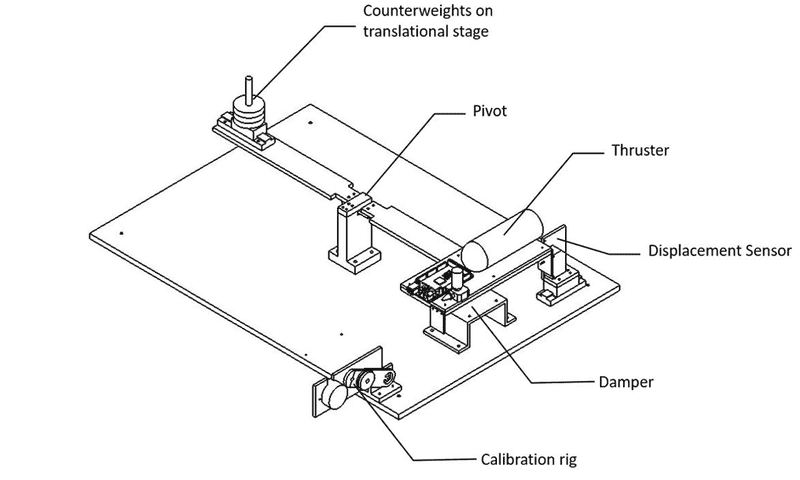
This is how the system looks like. I am just very eager to find out, how to model the damping ratio from the experiment result I have got. Basically I turn on the thruster , and let it fire for certain duration, and then turn off the thruster. I don't see a good step response here because of the flow variation noises from the thruster, but I do see a perfect decaying oscillation curve after I turn off the thruster. I already have the curve fit equation for this decaying oscillation. What should I do to get its natural frequency and damping ratio? Is the systems oscillation frequency after this thruster firing at its damped frequency?
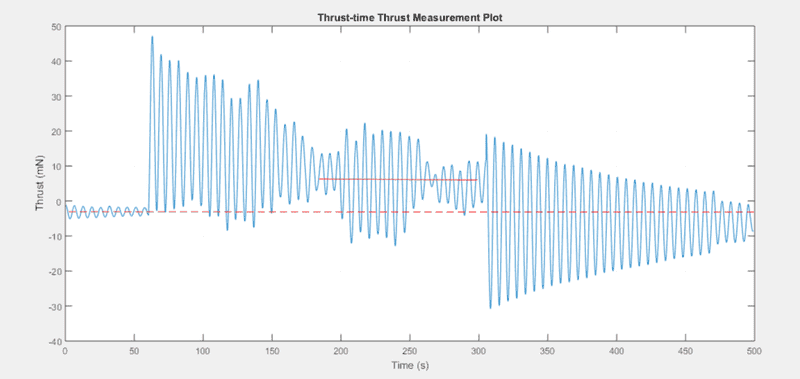
This is how the system looks like. I am just very eager to find out, how to model the damping ratio from the experiment result I have got. Basically I turn on the thruster , and let it fire for certain duration, and then turn off the thruster. I don't see a good step response here because of the flow variation noises from the thruster, but I do see a perfect decaying oscillation curve after I turn off the thruster. I already have the curve fit equation for this decaying oscillation. What should I do to get its natural frequency and damping ratio? Is the systems oscillation frequency after this thruster firing at its damped frequency?