Discussion Overview
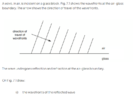
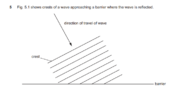
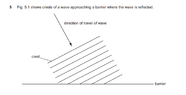
The discussion revolves around the concept of drawing reflected wavefronts, with participants seeking clarification on the methodology and principles involved. The scope includes conceptual understanding and practical application using basic drawing tools like a protractor, pencil, and ruler.
Discussion Character
- Exploratory, Conceptual clarification, Debate/contested
Main Points Raised
- One participant expresses confusion about how to draw reflected wavefronts and seeks guidance on the concept.
- Another participant suggests that reflected wavefronts can be drawn perpendicular to the reflected ray.
- A different participant questions the understanding of the initial inquiry and suggests looking up images for reference.
- Some participants propose drawing the mirror image of the wavefronts about a plane perpendicular to the reflecting surface.
- There is a challenge regarding the application of the proposed logic in specific cases, indicating that the method may not be universally applicable.
- One participant asks for clarification on the meaning of the graphs presented in the discussion, implying a need for deeper understanding of reflection and wavefronts.
- Another participant indicates that the questions posed may be fundamentally basic, suggesting a disparity in understanding among participants.
Areas of Agreement / Disagreement
Participants do not reach a consensus on the best method to draw reflected wavefronts, with multiple interpretations and approaches being discussed. Some participants express confusion and seek further clarification, indicating that the discussion remains unresolved.
Contextual Notes
There are indications of missing assumptions regarding the specific context of the wavefronts being discussed, as well as potential misunderstandings about the initial question. The discussion also highlights the need for clarity in the application of drawing techniques.