I need some help for the verification of an assignment about pendulums

Click For Summary
SUMMARY

Django van der Plas from the Netherlands seeks assistance in verifying a physics assignment on pendulums, specifically requiring a DIY pendulum experiment from someone in a region with a different gravitational force than 9.813 N/m². Participants are instructed to film the pendulum creation process and apply the formula T = 2π√(l/g) to calculate the period (T) based on the pendulum's length (l) and local gravitational acceleration (g). This verification is crucial to ensure unique results for Django and his classmate Rens.

PREREQUISITES
  • Understanding of pendulum mechanics and the formula T = 2π√(l/g)
  • Basic knowledge of gravitational force and its variations
  • Ability to construct a simple pendulum using common materials
  • Video recording skills to document the experiment
NEXT STEPS
  • Research how to calculate the period of a pendulum using different gravitational forces
  • Learn about the materials suitable for building a DIY pendulum
  • Explore video editing techniques to compile and present experimental results
  • Investigate the impact of gravitational variations on pendulum motion
USEFUL FOR

Students studying physics, educators teaching mechanics, and anyone interested in experimental verification of gravitational effects on pendulum motion.

DvdP
Messages
2
Reaction score
0
Hello, my name is Django and I live in the Netherlands. I've got an assignment for physics about pendulums and part of this assignment is that I need to verify my result with someone else in a country with a different gravitational force (the gravitational force were I live is 9.813 N/m2). I wanted ask you whether you'd want to help me with this.
If you want to help you should build a DIY pendulum (with some cheap and easy to find materials) and film it while you make a sling.
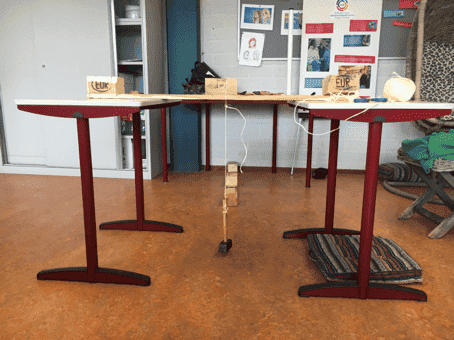
upload_2018-5-23_16-56-48.png

After this I need you to fill in this formula:

T = the period in seconds (for the swing)
l = the length of the pendulum in meters (as you can see in the picture)
g = the acceleration due to gravity in m/s2
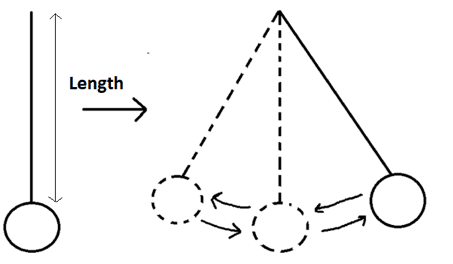
upload_2018-5-23_16-56-27.png


If you would help me with this I'd be very thankful!
Cheers,
Django van der Plas

PS.
Would you please say in the video that you make it for me and Rens, so I can prove that I haven't copied it from somewhere? Thanks!
 

Attachments

  • upload_2018-5-23_16-56-27.jpeg
    upload_2018-5-23_16-56-27.jpeg
    9.4 KB · Views: 531
  • upload_2018-5-23_16-56-27.png
    upload_2018-5-23_16-56-27.png
    5.8 KB · Views: 511
  • upload_2018-5-23_16-56-48.jpeg
    upload_2018-5-23_16-56-48.jpeg
    23.3 KB · Views: 532
  • upload_2018-5-23_16-56-48.png
    upload_2018-5-23_16-56-48.png
    58.5 KB · Views: 520
Physics news on Phys.org

Similar threads

  • · Replies 3 ·
Replies
3
Views
2K
  • · Replies 1 ·
Replies
1
Views
2K
  • · Replies 2 ·
Replies
2
Views
7K
  • · Replies 1 ·
Replies
1
Views
2K
  • · Replies 3 ·
Replies
3
Views
4K
  • · Replies 19 ·
Replies
19
Views
4K
  • · Replies 1 ·
Replies
1
Views
22K
  • · Replies 6 ·
Replies
6
Views
2K
  • · Replies 15 ·
Replies
15
Views
3K
  • · Replies 2 ·
Replies
2
Views
2K