Discussion Overview
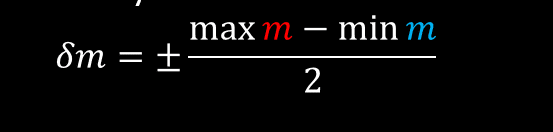
The discussion revolves around the calculation of percentage uncertainty in the context of determining the slope (gradient) from a graph. Participants explore different equations and methods for estimating uncertainty related to best-fit lines and data points.
Discussion Character
- Exploratory
- Debate/contested
- Mathematical reasoning
Main Points Raised
- Some participants express confusion about which equation to use for calculating percentage uncertainty.
- One participant suggests that the equations may refer to different methods for determining the slope, with implications for how uncertainty is calculated.
- Another participant questions the context of the equations and the assumptions behind determining the best line through data points.
- There is a suggestion that the method used to find the best line affects which equation should be applied.
- One participant raises concerns that a simplified procedure might overestimate the uncertainty.
- A later reply asks for clarification on what the max and min slopes represent, indicating a need for more information to provide a proper answer.
- Another participant hints at considering the units involved in percentage versus absolute uncertainty.
Areas of Agreement / Disagreement
Participants do not reach a consensus on which equation is appropriate for calculating percentage uncertainty, and multiple competing views regarding the methods and assumptions remain unresolved.
Contextual Notes
Limitations include a lack of clarity on the definitions of the slopes being discussed and the specific context in which the equations are applied. There are unresolved questions about the statistical distribution of the slopes.