Discussion Overview
The discussion centers on the historical evolution of calculating the standard gravity parameters (SGPs) of solar system bodies, exploring the methodologies and key experiments that contributed to these calculations. It encompasses theoretical insights, historical references, and the implications of gravitational measurements.
Discussion Character
- Historical
- Technical explanation
- Exploratory
Main Points Raised
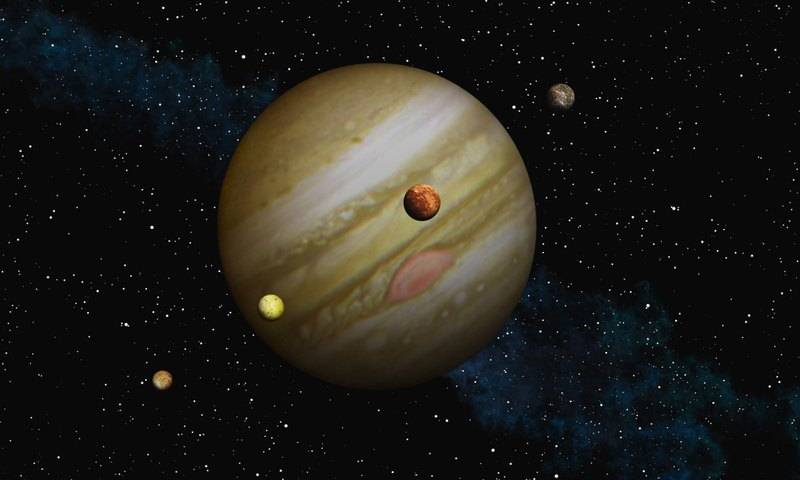
- One participant inquires about references on the history of calculating SGPs, suggesting that early estimates for Jupiter's SGP could stem from Newtonian theory and Galilean observations.
- Another participant posits that the gravitational constant was likely determined first, which then allowed for the calculation of the mass of celestial bodies, leading to the derivation of SGPs. They reference the Schiehallion experiment of 1774 as a significant early measurement.
- A historical reference is made to George Biddell Airy's 1833 article, which discusses the mass of Jupiter based on observations of its fourth satellite, noting the discrepancies in earlier measurements.
- One participant emphasizes that the product of gravitational constant (G) and mass (M) is better known than either value separately, highlighting the challenges in measuring G accurately compared to the precision of orbital measurements.
Areas of Agreement / Disagreement
Participants express various viewpoints on the historical methods and measurements related to SGPs, indicating that there is no consensus on the exact timeline or methodologies used in the calculations.
Contextual Notes
Some limitations include the dependence on historical definitions of gravitational parameters and the varying accuracy of early measurements, which remain unresolved in the discussion.