madbo517
- 4
- 0
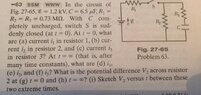
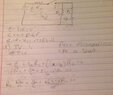
I've attached a picture of the problem statement, figure, and of my work so far.
I'm trying to use mesh currents and then differentiate it, but I really have no idea if I'm on the right track.
Also, I don't understand why i1 isn't just V/R (The physical current is the mesh current for R1, right?).
As you can tell, I'm pretty lost.
Would appreciate any help offered :)
I'm trying to use mesh currents and then differentiate it, but I really have no idea if I'm on the right track.
Also, I don't understand why i1 isn't just V/R (The physical current is the mesh current for R1, right?).
As you can tell, I'm pretty lost.
Would appreciate any help offered :)
Attachments