Discussion Overview
The discussion revolves around the size of airplane engines, specifically turbofan engines, and the implications of propeller diameter on efficiency, thrust, and drag. Participants explore various aerodynamic principles, mathematical relationships, and design considerations related to propeller and engine performance.
Discussion Character
- Exploratory
- Technical explanation
- Debate/contested
- Mathematical reasoning
Main Points Raised
- Some participants discuss the efficiency of accelerating more air at lower speeds versus less air at higher speeds, noting that larger engines may create more drag.
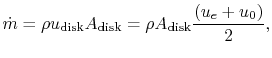
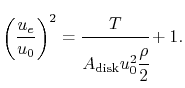
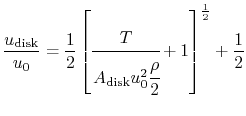
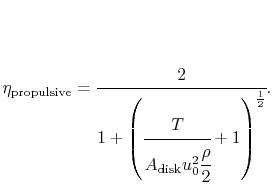
- References to mathematical expressions for thrust and drag are provided, with some participants seeking clarification on these equations.
- One participant mentions the importance of the lift-to-drag (L/D) ratio for propeller blades and how blade geometry affects performance.
- There is a claim that the ideal diameter of turbofan engines is determined through a complex design optimization process, with no single ideal size applicable universally.
- Some argue that larger propellers can generate thrust more efficiently by minimizing kinetic energy, while others caution that larger diameters may lead to increased drag at higher speeds.
- Discussions include the concept of disc loading and its impact on efficiency, particularly at different flight speeds.
- Participants present conflicting views on the relationship between propeller size, rotational speed, and drag, with some asserting that smaller propellers must rotate faster and thus may generate more drag.
- Several references to external sources are shared to support various claims about propeller performance and drag characteristics.
Areas of Agreement / Disagreement
Participants express multiple competing views regarding the optimal size of propellers and engines, particularly in relation to speed and drag. The discussion remains unresolved with no consensus on the ideal propeller size or the implications of drag at different speeds.
Contextual Notes
Limitations include varying assumptions about flight conditions, the complexity of aerodynamic interactions, and the dependence on specific design parameters that may not be universally applicable.