Guineafowl
- 969
- 422
- TL;DR
- Advice on improvements to the installation of a Diamond D777, connected to a Uniden Bearcat UBC360CLT scanner.
I live about 3-4 miles from the Moray coast, elevation 24m, and within 20 miles of Inverness airport and an RAF base, so picked up a cheap secondhand Uniden Bearcat UBC360CLT scanner, capable of many frequencies between 25-960 MHz. The plan was, to see what I can pick up around 120 MHz for aircraft, and around 150 MHz for marine channels.
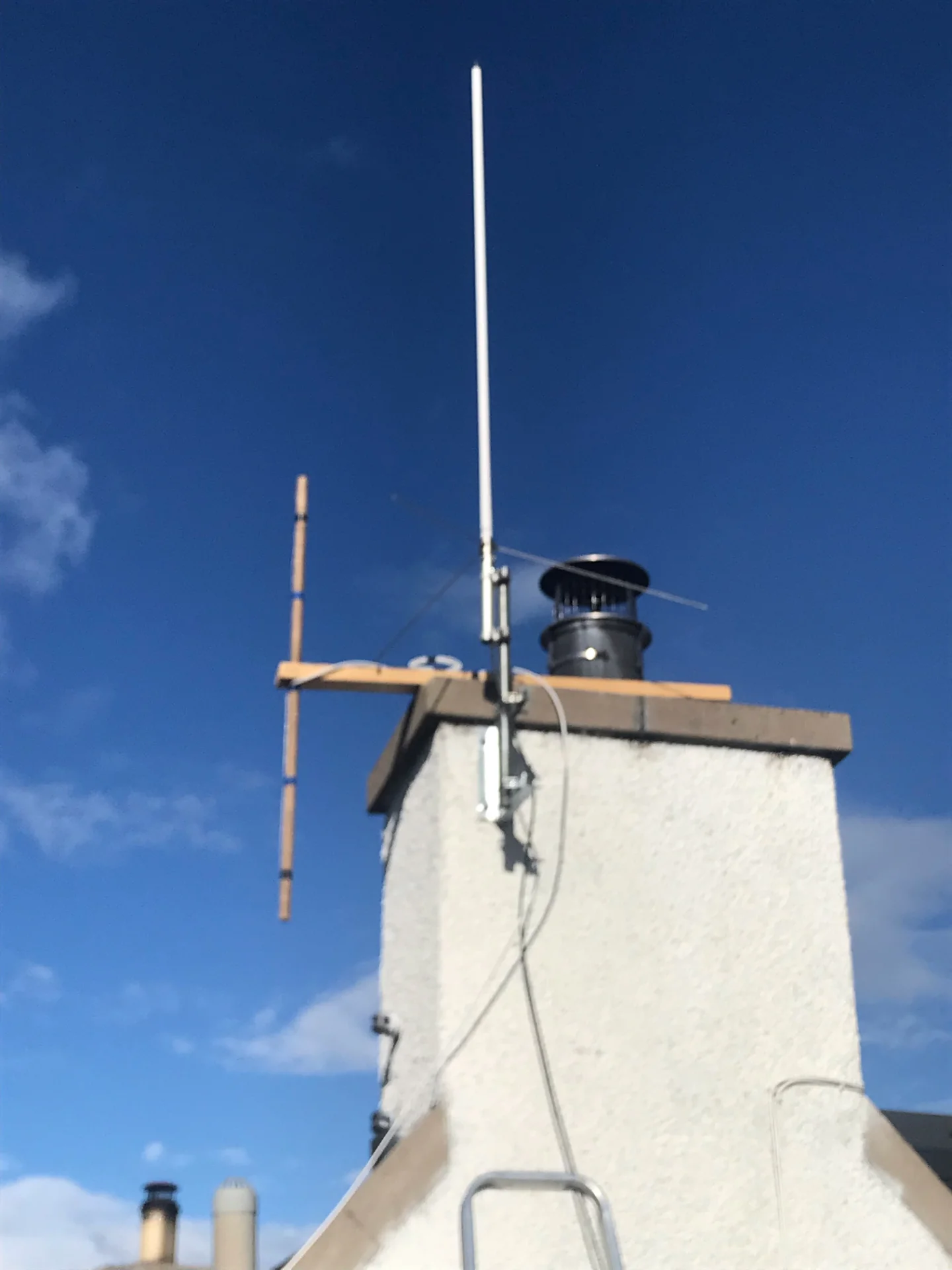
In the photo below, ignore the white antenna for now (and the focus) - I’ve staged it to show the the experimental ‘broomstick’ antenna I cobbled together using an old roll of 75 ohm RG6 coax, stripped to form a crude dipole, an ugly balun for good measure, them led that down to the Uniden’s 50 ohm input. Not ideal, but this was able to receive many local aircraft towers, and aircraft transmissions from 100 miles away. Also, the occasional marine communication.
Encouraged by this, I replaced the wooden effort with a purpose-built Diamond D777 antenna, on the advice of an independent radio shop. Another pic:
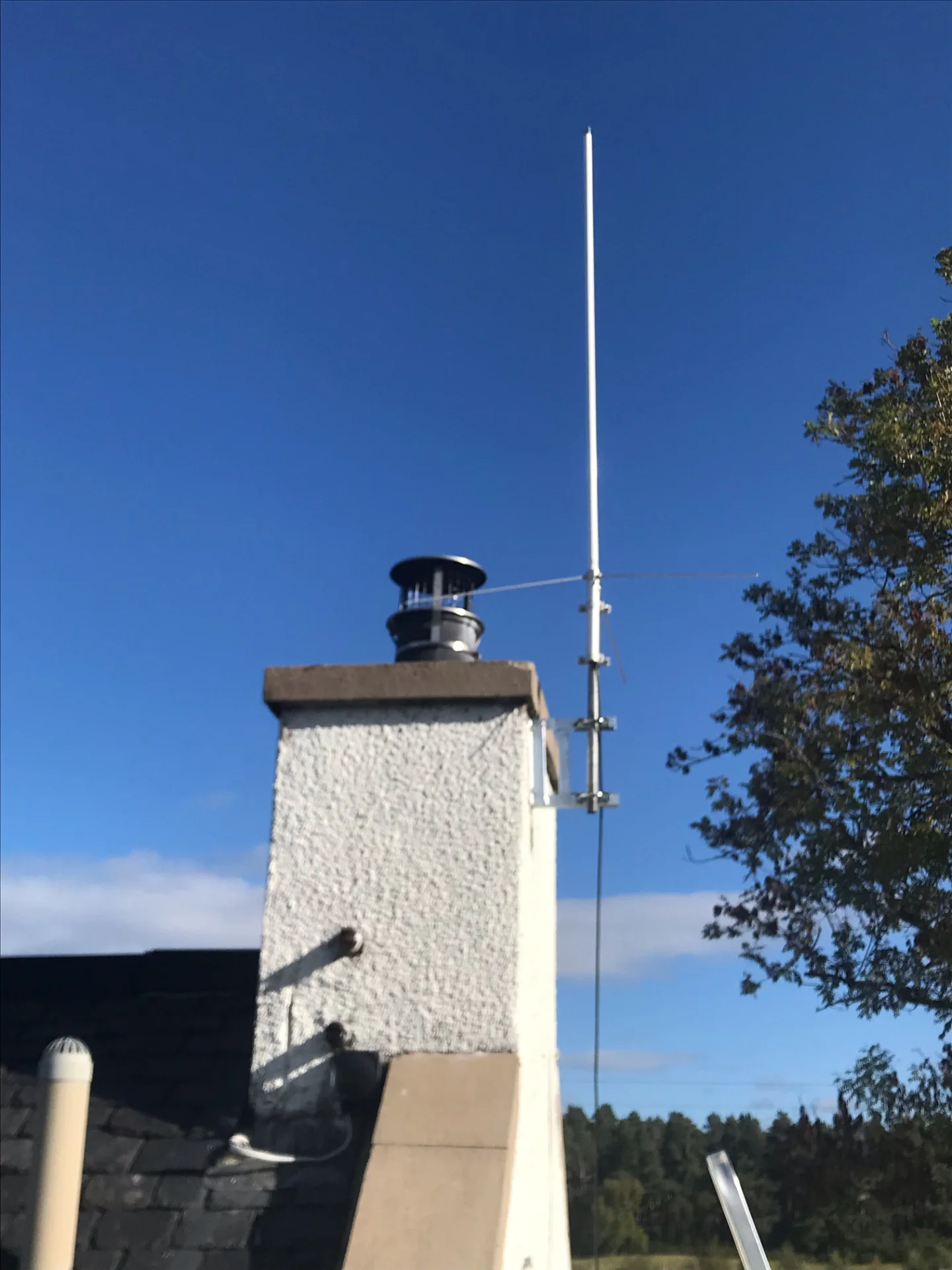
This is connected to the Bearcat with 20m of the correct 50 ohm mini 8 coax.
The performance is not that much better than the Heath-Robinson affair. Low aircraft come in a little clearer, but it’s otherwise much the same, and doesn’t seem to get any marine traffic. So, all I can think of doing is lofting it a little higher, to get a better line of sight and perhaps take those ground radials away from the metal chimney cap. Is this worth doing, or are there better solutions such as a different antenna?
In the photo below, ignore the white antenna for now (and the focus) - I’ve staged it to show the the experimental ‘broomstick’ antenna I cobbled together using an old roll of 75 ohm RG6 coax, stripped to form a crude dipole, an ugly balun for good measure, them led that down to the Uniden’s 50 ohm input. Not ideal, but this was able to receive many local aircraft towers, and aircraft transmissions from 100 miles away. Also, the occasional marine communication.
Encouraged by this, I replaced the wooden effort with a purpose-built Diamond D777 antenna, on the advice of an independent radio shop. Another pic:
This is connected to the Bearcat with 20m of the correct 50 ohm mini 8 coax.
The performance is not that much better than the Heath-Robinson affair. Low aircraft come in a little clearer, but it’s otherwise much the same, and doesn’t seem to get any marine traffic. So, all I can think of doing is lofting it a little higher, to get a better line of sight and perhaps take those ground radials away from the metal chimney cap. Is this worth doing, or are there better solutions such as a different antenna?