Neodymium magnet partial shielding

Click For Summary
SUMMARY

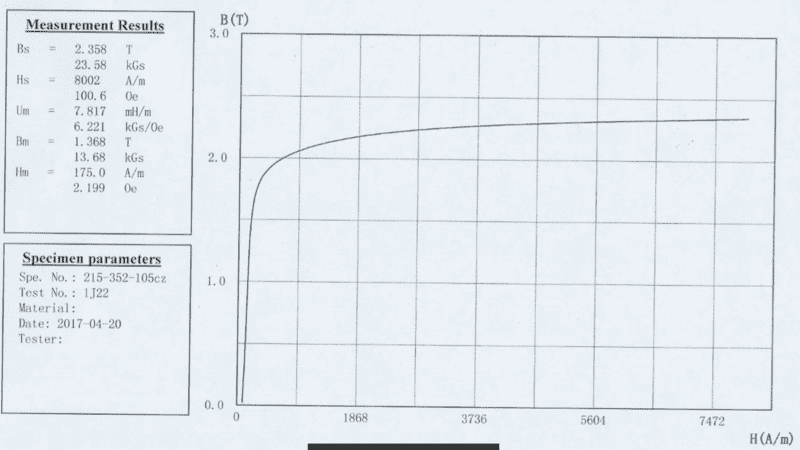
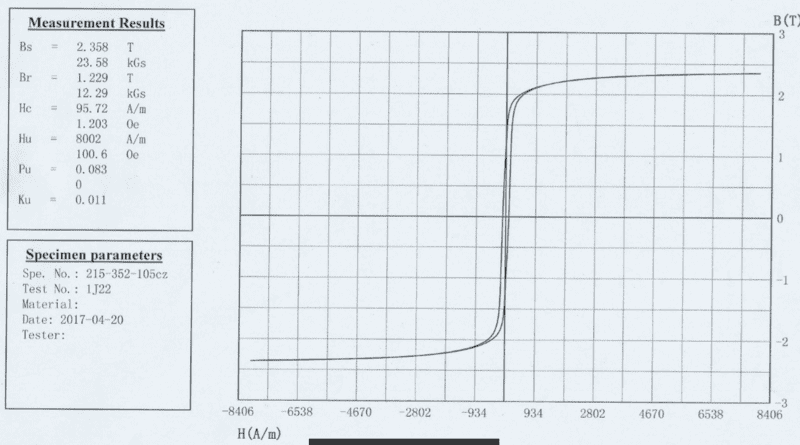
The discussion centers on the calculation of the thickness required for HiperCo 50 metal to achieve a net force of zero between two axially aligned N52 neodymium magnets. Participants emphasize the importance of understanding the saturation point of the HiperCo 50 material, as a thick plate will minimize the magnetic interaction between the magnets. Simulation tools like QuickField are recommended for modeling the magnetic behavior and determining the optimal thickness. The BH curve of HiperCo 50 is crucial for accurate simulations and calculations.

PREREQUISITES
  • Understanding of magnetic field interactions, specifically with neodymium magnets.
  • Familiarity with HiperCo 50 material properties and BH curves.
  • Experience with simulation software, particularly QuickField.
  • Basic knowledge of magnetic saturation concepts.
NEXT STEPS
  • Research the properties and applications of HiperCo 50 alloy in magnetic systems.
  • Learn how to effectively use QuickField for magnetic simulations.
  • Study the principles of magnetic saturation and its effects on magnetic fields.
  • Explore experimental methods for testing magnetic interactions between neodymium magnets and various materials.
USEFUL FOR

Engineers, physicists, and hobbyists working with magnetic systems, particularly those interested in optimizing configurations involving neodymium magnets and HiperCo 50 materials.

Martin Quevedo
Messages
5
Reaction score
1
Hi all distinguished members of this forum !

As my first post here I would like to open with a situation I have been struggling with
I have attached a simple diagram of my problem

I have 2 cylindrial N52 neodymium magnets axially aligned with each other with opposite poles facing each other.

in the middle of both magnets there is a HiperCo 50 metal

The idea is that the net force on each magnet is zero. That is, the force of repulsion between the magnets and the force of attraction between magnet and metal (hiperco alloy) cancel one another.

I will very much appreciate if someone can share some math that allows to calculate the thickness required on the hiperco metal to achieve Fa and Fr to cancel.

I have also attached BH graph of the hipeco alloy

best regards,
Martin
magnet diagram.PNG
hiperco1.PNG
hiperco2.PNG
 
Physics news on Phys.org
Why don't you just test it physically? It's a lot more fun :-)

This website might be what you need for looking up the maths and theory:
http://www.physicspages.com/index-electrodynamics/
http://www.physicspages.com/2013/07/16/diamagnetism/

Magnets are dielectric with centripetal and centrifugal forces. They will exert that typical sideways pushing-away from each other if too close, which can be tricky to calculate. Hopefully you can try and make your "hovercraft" float with a far enough distance between the two magnets ;-) I suspect you need find a sweet spot (making the distance a harmonic of the wavelength maybe?).

If the plate is much larger than the magnets's field size it might be difficult to keep it horizontal.
I'm sure you already have this covered, but you will need something else to keep the plate stable until the forces settle and there is no more movement to induce new imbalance. Perhaps a simple tensegrity structure that will not restrict movement too much but stop the plate (and magnets?) from flying off. Just google it (or youtube).

By the way there are a few "home-scientists" on youtube who have created very interesting videos showing what EM fields actually look like. This might help you to figure out if your calculations make sense.
 
Last edited:
Martin Quevedo said:
I have 2 cylindrial N52 neodymium magnets axially aligned with each other with opposite poles facing each other.

in the middle of both magnets there is a HiperCo 50 metal

The idea is that the net force on each magnet is zero. That is, the force of repulsion between the magnets and the force of attraction between magnet and metal (hiperco alloy) cancel one another.
If the plate is thick enough not to saturate, I don't think much of the field from one magnet will affect the other magnet. So the magnets will both stick to the sheet.

If the sheet is very thin and can saturate, then I think the math gets pretty complicated, and you may just need to simulate the setup to get an idea of the behaviors.

A better way to do this, IMO, is to cut a hole in the sheet between the magnets to let some field through so the magnets can influence each other. Experiment with the diameter of the hole versus the magnet diameters and spacings to see if you can arrive at a stable configuration...
 
Last edited:
  • Like
Likes   Reactions: mfb
Dear Karin,

Thank you very much for your response!

I am planning to do some tests on this particular situation
I also wanted to know some math on the matter because I needed to at least get an approximate of the thickness of the hiperco 50 material to place between the magnets.

All 3 components are fixed in space by mechanisms not shown in my picture.
 
berkeman said:
If the plate is thick enough not to saturate, I don't think much of the field from one magnet will affect the other magnet. So the magnets will both stick to the sheet.

If the sheet is very thin and can saturate, then I think the math gets pretty complicated, and you may just need to simulate the setup to get an idea of the behaviors.

A better way to do this, IMO, is to cut a hole in the sheet between the magnets to let some field through so the magnets can influence each other. Experiment with the diameter of the hole versus the magnet diameters and spacings to see if you can arrive at a stable configuration...

Very interesting answer Beckerman!

I was under the impression (wrong apparently) that a portion of magnetic field would go through depending on the thickness up to a saturation point. But according to what you described, it is a all or nothing situation. If no saturation accurs, all magnetic field will be re routed by the metal plate. and only if it saturates the remainng portion of the field would pass through.

I am correct in the interpretation of your explanation?Martin
 
It is not "all or nothing", but if the plate is thick, the influence of the magnets on each other will be very small.
 
mfb said:
It is not "all or nothing", but if the plate is thick, the influence of the magnets on each other will be very small.
I was doing some simulation with QuickField. I used the BH curved provided by the manufacturer to configure the behaviour of permeability of the metal plate.
In the simulation I was able to reduce the force to zero by varing the thickness of the plate. So, if the simulation is correct, this should mean that there is a portion of the field passing through the plate influencing the magnet on the other side.
This would prove what you are stating here, mfb.
 
Last edited by a moderator:
Sounds interesting. Let us know your results please, and your purpose :-)
 
Karin Rodrigues said:
Sounds interesting. Let us know your results please, and your purpose :-)
I sure will
I am working with the simulations but sometimes it is a bit hard to get the BH curve of the material
Regards,
Martin
 
  • Like
Likes   Reactions: Karin Rodrigues

Similar threads

  • · Replies 5 ·
Replies
5
Views
2K
  • · Replies 6 ·
Replies
6
Views
1K
  • · Replies 5 ·
Replies
5
Views
2K
  • · Replies 7 ·
Replies
7
Views
2K
  • · Replies 32 ·
2
Replies
32
Views
3K
  • · Replies 4 ·
Replies
4
Views
7K
  • · Replies 1 ·
Replies
1
Views
2K
  • · Replies 9 ·
Replies
9
Views
4K
  • · Replies 6 ·
Replies
6
Views
2K
  • · Replies 2 ·
Replies
2
Views
2K