Why a conductive shield doesn't block the magnetic field?

Click For Summary
SUMMARY

The discussion centers on the limitations of conductive shields in blocking magnetic fields, particularly in the context of shielded wires and coaxial cables. It highlights that while the magnetic field of the inner conductor can penetrate the shield conductor, the boundary conditions at the surface of a perfect conductor dictate that the tangential component of the magnetic field (Ht) is equal to the surface current density (Js), and the normal component (Hn) is zero. The conversation also emphasizes that while superconductors effectively shield against magnetic fields, practical applications suggest that twisted pair cables are more effective for electromagnetic noise shielding compared to coaxial cables.

PREREQUISITES
  • Understanding of electromagnetic theory, particularly magnetic field behavior in conductive materials.
  • Familiarity with coaxial cable design and its applications in signal transmission.
  • Knowledge of boundary conditions in electromagnetic fields, especially in perfect conductors.
  • Basic principles of twisted pair cabling and its advantages over coaxial cables for noise reduction.
NEXT STEPS
  • Research the properties of superconductors and their applications in electromagnetic shielding.
  • Study the design and functionality of twisted pair cables for effective electromagnetic noise reduction.
  • Explore the mathematical modeling of magnetic fields in conductive materials, focusing on boundary conditions.
  • Investigate the differences between coaxial and twisted pair cables in terms of shielding effectiveness and signal integrity.
USEFUL FOR

Electrical engineers, telecommunications professionals, and anyone involved in designing or optimizing signal transmission systems, particularly in environments with high electromagnetic interference.

nabil25
Messages
6
Reaction score
0
Hi
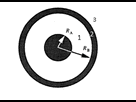
While studying the shielded wires, i noticed that the magnetic field of the inner conductor can penetrate the shield conductor (can be calculated in the region 3). However, the boundary condition of the magnetic field at the surface (between dielectric and perfect conductor) of a perfect conductor impose that the tangential component of H (Ht = Js surface current density) and the normal component is Hn = 0. Inside the perfect conductor, we have Ht = 0 and Hn = 0.

So why do we superpose the magnetic field of the inner conductor and the outside conductor when calculating the magnetic field in the region 3 ? Why we still have Hi (inner cond) in the region 3 ?
1477345339-capture.png
 
Physics news on Phys.org
nabil25 said:
and the normal component is Hn = 0
Where does that come from?

It is true for superconductors - they do provide shielding, but I don't think your question is about those.
 
Leaving theory aside, practical signal cabling theory says: "A coaxial cable shields against electrostatic noise. To shield against electromagnetic noise, use a twisted pair."

See https://en.wikipedia.org/wiki/Category_5_cable for a description of a cable that is designed for immunity against electronic noise.
 

Similar threads

  • · Replies 8 ·
Replies
8
Views
4K
  • · Replies 11 ·
Replies
11
Views
4K
  • · Replies 1 ·
Replies
1
Views
2K
  • · Replies 4 ·
Replies
4
Views
2K
  • · Replies 6 ·
Replies
6
Views
1K
Replies
2
Views
2K
  • · Replies 3 ·
Replies
3
Views
934
  • · Replies 13 ·
Replies
13
Views
3K
  • · Replies 7 ·
Replies
7
Views
3K
  • · Replies 14 ·
Replies
14
Views
3K