News and Updates for Homeschool Parents "Latest News for Homeschool Parents

  • Thread starter Thread starter Z-Johnny
  • Start date Start date
  • Tags Tags
    News
Click For Summary
SUMMARY

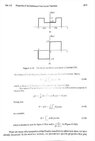
The forum discussion centers around the confusion regarding the presence of the term ##1/{2\pi}## in equations 4.45 and 4.46 of a textbook related to Fourier transforms. Participants assert that the equations are missing the exponential term ##e^{j\omega t}##, which is essential for proper Fourier transformation. The discussion highlights the importance of correctly identifying the relationship between ##g(0)## and ##g(t)##, emphasizing that the calculation of ##g(0)## requires the use of the Inverse Fourier transform. Ultimately, the consensus is that both equations should include the ##1/{2\pi}## factor and the exponential term to be accurate representations of Fourier transforms.

PREREQUISITES
  • Understanding of Fourier transforms and their properties
  • Familiarity with mathematical notation, particularly integrals and exponential functions
  • Knowledge of the relationship between time and frequency domains in signal processing
  • Experience with Oppenheim's signal processing texts or similar resources
NEXT STEPS
  • Review the derivation of the Fourier transform and its properties in Oppenheim's "Signals and Systems"
  • Study the Inverse Fourier transform and its applications in signal reconstruction
  • Examine the role of the exponential term in Fourier transforms and its implications for signal analysis
  • Practice solving problems involving the Fourier transform, focusing on equations with and without the ##1/{2\pi}## factor
USEFUL FOR

Students and professionals in electrical engineering, signal processing, and applied mathematics who are working with Fourier transforms and seeking clarity on common misconceptions in textbook equations.

Z-Johnny
Messages
7
Reaction score
0
TL;DR
Why here is not 1/2*pi ? I don't understand . Can anybody help explain?
Capture1.JPG

Capture2.JPG
 
Engineering news on Phys.org
Can anyone help explain this issue?
 
It’s not a Fourier transform. ## D=\left. \frac{d}{dt}x(t) \right |_{t=0}## it’s on the previous page. They’re solving for ##g(0)## not ##g(t)## notice how the right side of the equation doesn’t have the multiply by the exponential?

My hardcopy of the book has ##1/{2\pi}## there. Hrm i’ll have to try that when it’s not 2 am to see which copy is right. It’s not intuitive to me because of the reason above. On my phone so please forgive format or screenshot error.
 

Attachments

  • 4B26BD12-23A6-41E1-9191-D9C95883C539.jpeg
    4B26BD12-23A6-41E1-9191-D9C95883C539.jpeg
    18.8 KB · Views: 173
Last edited:
Joshy said:
It’s not a Fourier transform. ## D=\left. \frac{d}{dt}x(t) \right |_{t=0}## it’s on the previous page. They’re solving for ##g(0)## not ##g(t)## notice how the right side of the equation doesn’t have the multiply by the exponential?
Dear Joshy,
Thank you very much for your reply. But I'm still confused because of g(0) comes from g(t) when t = 0 ,right?
So if we want get g(0), we should get g(t) firstly . If we get g(t) , we should use the Inverse Fourier transform. That means there should have a 1/2*pi. This is what I thought .

Hopefully you can explain more , it is very appreciated!
 
Joshy said:
It’s not a Fourier transform. ## D=\left. \frac{d}{dt}x(t) \right |_{t=0}## it’s on the previous page. They’re solving for ##g(0)## not ##g(t)## notice how the right side of the equation doesn’t have the multiply by the exponential?

My hardcopy of the book has ##1/{2\pi}## there. Hrm i’ll have to try that when it’s not 2 am to see which copy is right. It’s not intuitive to me because of the reason above. On my phone so please forgive format or screenshot error.
Dear Joshy,

Great.! I think your book is right . I don't know why it is different in some edition . So this is my confused. Thank you very much!
 
The strange thing is mine is also the 2nd edition.

The Fourier transform would have some multiple on the right side ##e^{j\omega t}## something like
$$\frac{1}{2 \pi} \int G(jw)e^{j\omega t}\,d\omega$$
I’m a bit tired right now, but curious to give this a more thorough look tomorrow (gosh i’ll lose sleep over this but i’m already running on fumes)

…. plus what about the next line in my book equation 4.46? Something seems off.
 
Last edited:
Joshy said:
The strange thing is mine is also the 2nd edition.

The Fourier transform would have some multiple on the right side ##e^{j\omega t}## something like
$$\frac{1}{2 \pi} \int G(jw)e^{j\omega t}\,d\omega$$
I’m a bit tired right now, but curious to give this a more thorough look tomorrow (gosh i’ll lose sleep over this but i’m already running on fumes)

…. plus what about the next line in my book equation 4.46? Something seems off.
Yes. It seems like the equation 4.46 still miss the 1/2*pi. But based on the result it seems like there is a 1/2*pi.
 
I wouldn't reverse engineer the answer like that. Just because the answer is ##-1/2\sqrt{\pi}## doesn't mean that the formula in 4.45 should have a ##1/{2\pi}## in front of it. I'm not sure if they were intending to do a Fourier transform there or not. Something definitely looks off, but I can't put my finger on it. If the intention is a Fourier transform, then it's also missing the exponential.

The ##\pi## in the solution might be coming from the graph in figure 4.18b. Notice there are two rectangle pulses in that graph with a height of ##-j\sqrt{\pi}## and ##j\sqrt{\pi}##. I think what the author wants us to do is to either use duality, which I'm not too thrilled about (it might be "the trick" but I'm very iffy on it), or you can multiply the given ##X(j\omega)## by ##j\omega## and use the Fourier on that result. If you multiply by ##j\omega##, then you'll have ##G(j\omega)=j\omega X(j\omega)##, which is a line ##-\omega \sqrt{\pi}##. You can do the Fourier transform of that from ##-1## to ##1## to get ##g(t)## and solve for ##g(0)##.

Alternatively you can do it without multiplying by ##j\omega## and do the derivative in time domain. It's already known that each rectangular pulse is going to have some solution in the form of ##sinc(x)##. You could get away with this doing the Fourier transform on just one and then add the two of them with different phase shift, which would multiply the solution by ##e^{j\omega_0 t}## where ##\omega_0## is the frequency shift (the left rectangle is shifted by ##0.5## and the right one by ##-0.5##).

A trick I'm thinking of is doing the derivative of ##G(j\omega)## because it'll be a constant horizontal line just ##-\sqrt{\pi}##, then post-process the answer in the time domain. I think that'll still be some ##sinc(x)## form solution because it's from ##-1## to ##1## it'll still be a rectangle, but no need to deal with two ##sinc(x)## functions with phase shift. That might be the easiest way of doing it although I'm not 100% sure if that's acceptable. I felt like I tried getting away with that during an exam to save time once and the professor didn't buy it, but I'm not sure if it wasn't bought because I took a shortcut or if it was legitimately wrong.

I might be overly thinking this so if there's something quick and easy I'd love to hear it. I tried solving it by hand and it's taking me a minute. I do want to tell you a little secret that has helped me out tremendously. I learned all of this stuff from Oppenheim's book too. I was furious when a professor in my graduate level course decided to use ##f## instead of ##\omega##... all my textbooks and previous coursework used ##\omega## and I had memorized the tables for that instead of ##f##. I quickly changed my mind and can't thank him enough for it. Try integrating with ##f## instead and don't forget the Jacobean. (Hint: ##2\pi##). Now you'll never have to worry about that whether or not a ##2\pi## should be there or not ;) I have a newborn at home so I'm only getting 2-3 hours of sleep on good nights... apologies if I'm a bit scattered or confused.

My trick solves the problem with the integral and makes it easy to remember, but if you're taking something where the work is already done in ##\omega## domain say for instance the graph in Oppenheim's book is already on ##\omega## domain then ##f## isn't going from ##-1## to ##1##... it's going from ##-1/2\pi## to ##1/2\pi## your limits of integration will change.
 
Last edited:
Joshy said:
The strange thing is mine is also the 2nd edition.

The Fourier transform would have some multiple on the right side ##e^{j\omega t}## something like
$$\frac{1}{2 \pi} \int G(jw)e^{j\omega t}\,d\omega$$
I’m a bit tired right now, but curious to give this a more thorough look tomorrow (gosh i’ll lose sleep over this but i’m already running on fumes)

…. plus what about the next line in my book equation 4.46? Something seems off.
Yes. It seems like the equation 4.46 still miss the 1/2*pi. But based on the result it seems like there is a 1/2*pi.
 
  • #10
Dear Joshy,

Thank you very much for sharing your thought !
I have calculated with 1/2*pi . The result is the same . If it isn't there , the result is different . So trust me , 1/2*pi is miss there .
 
  • #11
I did it by hand.

Yes: It needs the ##1/2\pi## for both 4.45 and 4.46, but I also think it's missing the exponential ##e^{j\omega t}## inside of the integrals unless some happy accident allows it to work without. Those two equations are not Fourier transforms without it. If it doesn’t have the exponential, then result would be zero.

The other thing to notice is that your book and my book has two different answers despite the graph being the same. If getting the same answer as the book is important to you in this case, then you could reasonably believe that the ##1/2\pi## doesn’t belong there. This is why I’m cautioning on reverse engineering the answer.
 
Last edited:

Similar threads

  • · Replies 10 ·
Replies
10
Views
2K
Replies
1
Views
2K
  • · Replies 2 ·
Replies
2
Views
911
  • · Replies 5 ·
Replies
5
Views
1K
Replies
4
Views
2K
  • · Replies 7 ·
Replies
7
Views
2K
Replies
8
Views
1K
Replies
4
Views
2K
  • · Replies 1 ·
Replies
1
Views
598
  • · Replies 44 ·
2
Replies
44
Views
5K