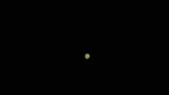
Jupiter 2026-02-14 06:41.4 UT.
After several weeks and many nights of bad seeing, clouds, terabytes of wasted data, and whatnot, I finally was able to acquire this image. The seeing wasn't great, but it was the best I've had in all my recent attempts (which isn't saying much). This is likely my last attempt at Jupiter for this apparition.
Equipment:
Celestron C14 EdgeHD telescope.
SkyWatcher EQ8-R Pro mount.
TeleVue 2X Powermate.
Astronomik RGB filters with ZWO filter wheel.
ZWO ASI290MM monochrome camera.
Acquisition:
Location: San Diego, California.
Atmospheric seeing was only mildly weird and pissed-off.
10 ms subframe exposure time (all colors).
Three separate 1-minute videos taken for each color, alternating RGBRGBRGB (9 minutes total).
Dark frames also acquired.
Processing:
Each video processed with Autostakkert! to create unsharpened image (9 images total)
o Best 70% of frames kept.
o No normalization.
o 3x Drizzle.
o No sharpening.
o Dark, calibration frames used.
Initial sharpening in PixInsight.
o "Convolution" processes to mitigate drizzle artifacts.
o "MultiscaleLinearTransform" for the heavy lifting of sharpening.
o "Pixelmath" to multiply by a circular mask to eliminate stacking artifacts at frame edges.
Derotation of frames using WinJUPOS (takes 9 sharpened frames and produces, 3 sharpened, derotated frames; one frame for each color).
Channel combination also done using WinJUPOS to create a single, sharpened, derotated, RGB color image.
Second round of sharpening/editing using PixInsight.
o "CurvesTransformation" for relative color corrections/adjustments.
o "UnsharpMask" for a bit more sharpening.
o RC Astro NoiseXTerminator plugin for noise reduction.
o DynamicCrop process for cropping.
Final, minor adjustments; resizing; and JPEG conversion performed in Adobe Lightroom.
Learned readers are correct to question my aggressive drizzle strategy (3x). After all, the data is already oversampled and the drizzle algorithm produces diminishing returns for oversampled data. It was more about producing a larger image than it was about eking out any extra detail. I've had luck in past years using this method compared to simple upsampling. But I concede the difference might be negligible.