Prevent Fruit Fraud: Spotting Manipulated Beam Balances

  • Thread starter Thread starter zorro
  • Start date Start date
  • Tags Tags
    Balance Beam
Click For Summary
SUMMARY

The discussion centers on identifying manipulated beam balances commonly used in markets in India, where discrepancies in fruit weights can occur. Participants suggest using a known reference weight, such as a liter of water (1 kg), to verify the accuracy of the balance. Techniques discussed include swapping weights and fruit sides to detect fraud and understanding the physics of torque, which can reveal discrepancies in weight measurements. The conversation highlights the importance of awareness and knowledge of balance mechanics to avoid being cheated by vendors.

PREREQUISITES
  • Understanding of beam balance mechanics
  • Knowledge of torque and its application in weight measurement
  • Familiarity with reference weights, specifically 1 kg (liter of water)
  • Basic physics principles related to lever arms and equilibrium
NEXT STEPS
  • Research methods for verifying the accuracy of traditional beam balances
  • Learn about the principles of torque and how they apply to balance scales
  • Explore techniques for detecting fraud in weight measurements
  • Investigate the design and mechanics of various types of weighing scales
USEFUL FOR

Market shoppers, physics enthusiasts, vendors, and anyone interested in understanding weight measurement integrity and preventing fraud in traditional markets.
zorro
Messages
1,378
Reaction score
0
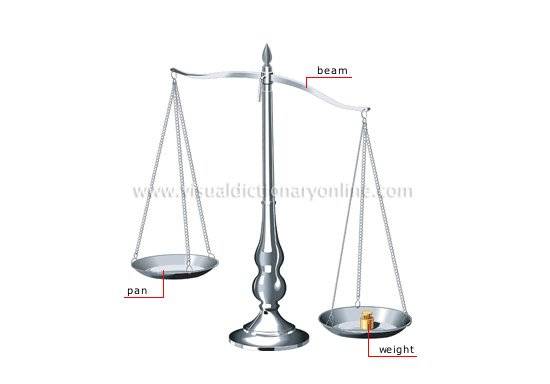
I bought some fruits from the market yesterday and after returning home, I found that some fruits were not weighed properly. In my country (India), they use traditional beam balances. I ordered for 0.5 kg berries and found that they were only 360g on an electronic balance. Does anyone here know any method to figure out the manipulated beam balances on the spot?. They look similar to this one :

beam-balance.jpg
 
Engineering news on Phys.org
Bring some sort of reference weight with you?
 
... Are you sure you didn't eat some while on your way home? :biggrin:
 
different arm length. weigh, then move the weights and fruit to the other side. if they are the same, then the reference weights are wrong (or your electronic scale is wrong).
 
Proton Soup said:
different arm length. weigh, then move the weights and fruit to the other side. if they are the same, then the reference weights are wrong (or your electronic scale is wrong).

Different arm length and heavier pan/chain on one side.

This is a clever use of torque. The short side of the scale has a heavier pan or heavier chains. The empty scale balances because the torque (Force times distance) is equal.

But, when you place the reference weight, which is correct, on the short side, it takes less weight for the fruit on the long side to balance the torque.

As Proton Soup mentioned, swapping sides for the fruit/weight uncovers the fraud.

However, I find it hard to believe this wouldn't be noticeable for such a large discrepancy. For the fruit to weigh 28% less than the reference weight, the arm would have to be 28% longer. With that big of a discrepancy, the vendor is putting a heavy reliance on customers being too naive to even consider the possibility of being cheated, ignorance of physics, or he sells to a lot of blind people (and cheating blind people is even more reprehensible). If the customer doesn't understand the physics, the fact that the vendor used a heavier pan/chain for the reference weight could even make it seem like the vendor inadvertantly cheated himself.
 
There are a couple of ways that a scale could be scammed.

The 1/2 kg weight may be light.
You would have to have a known weight to prove it and there are ways that he could still get around it if he thought that you were on to him - like switching to a real 1/2 kg weight. A good known weight would be a liter of water which is 1 kg.

Does he refuse to let you see the scales in a level position with nothing on them or refuse to switch the side that the weights go? There may be extra weight under the purchase side pan.
 
Last edited:
If he is using different length arms, once you swap sides you still haven't solved the problem of how much fruit you should get.

After you swap the fruit, keep adding fruit in a second pile until the scale balances in the opposite direction. Then just eyeball the split of the second pile and say it must be about right.

Actually, it will get you 527g instead of the 500g, since 695*.72 will equal the torque created by putting the 500g weight on the opposite side. Splitting the 335 gram difference will get you about 167 or 168 grams instead of the 140 grams you're missing, but the vendor would have to do more than just know a trick for cheating customers to realize that - he'd have to actually understand the physics behind the trick.
 
drizzle said:
... Are you sure you didn't eat some while on your way home? :biggrin:

:biggrin:

BobG said:
However, I find it hard to believe this wouldn't be noticeable for such a large discrepancy. For the fruit to weigh 28% less than the reference weight, the arm would have to be 28% longer. With that big of a discrepancy, the vendor is putting a heavy reliance on customers being too naive to even consider the possibility of being cheated, ignorance of physics, or he sells to a lot of blind people (and cheating blind people is even more reprehensible). If the customer doesn't understand the physics, the fact that the vendor used a heavier pan/chain for the reference weight could even make it seem like the vendor inadvertantly cheated himself.

It was my first time out in the marketplace in India. I don't live here.
AFAIR, I don't think the arms were of different length. Heavier chain/pan and clever holding of balance (thereby exerting some torque on one side with hand) seems a possibility to me.

Can we check the balance by holding it upright and seeing whether the arms are leveled initially or is there any possibility of hoax in it too?
 
Abdul Quadeer said:
:biggrin:


It was my first time out in the marketplace in India. I don't live here.
AFAIR, I don't think the arms were of different length. Heavier chain/pan and clever holding of balance (thereby exerting some torque on one side with hand) seems a possibility to me.

Can we check the balance by holding it upright and seeing whether the arms are leveled initially or is there any possibility of hoax in it too?

Yes. The arms should be level before any weight is placed on the scale.

But that doesn't prove that there's no hoax. Your typical balance scale in a doctor's office uses different length arms so you can measure a person's weight without having to move 100 pound (50 kg) weights around. You can balance both sides of the scale by moving a very light weight further away or closer to the pivot point, even with a full size adult standing on the other side. If you were weighing very heavy items (bags of grain, for instance), you'd almost certainly use a balance scale with different arm lengths just because it would suck to have keep lifting so many heavy weights.

The hoax is in giving the impression that putting a 500g weight on one side means the items on the other side of the balance have to be 500g (at least if the arms are different lengths).

Bringing your own reference weight to check the calibration of the scale would work. Put the vendor's 500g weight on one side and your 500g weight on the other.
 
  • #10
Weigh the vendor. Then cram the suspect produce into any convenient orifice and weigh him again. You will not, of course, want to consume said produce after that, but it will test the accuracy of the scales.
 
  • #11
Perhaps the density of the arm is not homogeneous.
 
  • #12
Another way to cheat with a balance scale.

The "chains" for the reference weight are rigid and are forced to maintain the same angle relative to the balance arms. (Say 60 degrees for simplicity).

The reference weight is placed off to one side instead of the center.

Now you have one torque pulling clockwise (a torque of .5 Nm in the example), plus a counter torque of .125 Nm pushing counterclockwise, giving you a net torque of .375 Nm for a 5 Newton weight (very, very roughly a 500 g weight).

(The easy solution is to measure the center of mass for the reference weight relative to the pivot point; not the location where the pan is connected).

In the drawing, the opposite side of the scale isn't shown, but it's torque has to match the net torque on the reference side, not the mass of the reference weight. If both sides have rigid "chains" at a constant angle, clever placement of the fruit and weight can alter both sides of the equation even more subtly.
 

Attachments

  • balance.jpg
    balance.jpg
    7.1 KB · Views: 558
  • #13
A more extreme example using a 4 lb sledge hammer.

The green is a table. The four pound sledge hammer is hung from a ruler. The ruler has just a small fraction of an inch overlapping the table. The string holding the ruler is 10 inches from the edge of the table. The edge of the handle of the sledge hammer rests against the edge of the ruler so the hammer can't rotate without pushing the ruler upwards and the string is just long enough that the hammer forms a 15 degree angle with the ruler. The other dimensions are in the drawing. The initial torques result in the ruler rotating counterclockwise (upwards).

Of course, the elaborate set-up is just a distraction for the important part of the scenario. The center of mass of the hammer is to the left of the pivot point (the table edge). In other words, the hammer's center of mass is underneath the table. Just focusing on the location of the center of mass relative to the table edge, it's obvious what direction the hammer/ruler have to rotate. It's also obvious when the net torque will equal zero - when the center of mass is directly below the table edge (in other words, the hammer ruler can't rotate counter clockwise forever).

You can try this at home with any full size hammer. I used a four pound sledge because the maintenance guy where I work gave it to me for free, plus it just makes the demo more dramatic. I did this demo for some fifth graders and the reaction was very cool. They all knew the hammer/ruler would fall to the floor until I actually let go of the apparatus. After a couple second silent pause, they quickly revised their opinion and excitedly explained exactly what was actually happening.
 

Attachments

  • Picture1.jpg
    Picture1.jpg
    13.3 KB · Views: 563
  • #14
BobG said:
A more extreme example using a 4 lb sledge hammer.

The green is a table. The four pound sledge hammer is hung from a ruler. The ruler has just a small fraction of an inch overlapping the table. The string holding the ruler is 10 inches from the edge of the table. The edge of the handle of the sledge hammer rests against the edge of the ruler so the hammer can't rotate without pushing the ruler upwards and the string is just long enough that the hammer forms a 15 degree angle with the ruler. The other dimensions are in the drawing. The initial torques result in the ruler rotating counterclockwise (upwards).

Of course, the elaborate set-up is just a distraction for the important part of the scenario. The center of mass of the hammer is to the left of the pivot point (the table edge). In other words, the hammer's center of mass is underneath the table. Just focusing on the location of the center of mass relative to the table edge, it's obvious what direction the hammer/ruler have to rotate. It's also obvious when the net torque will equal zero - when the center of mass is directly below the table edge (in other words, the hammer ruler can't rotate counter clockwise forever).

You can try this at home with any full size hammer. I used a four pound sledge because the maintenance guy where I work gave it to me for free, plus it just makes the demo more dramatic. I did this demo for some fifth graders and the reaction was very cool. They all knew the hammer/ruler would fall to the floor until I actually let go of the apparatus. After a couple second silent pause, they quickly revised their opinion and excitedly explained exactly what was actually happening.

How did you attach the ruler to the table?
 
  • #15
Abdul Quadeer said:
How did you attach the ruler to the table?

Gravity. A tiny portion of the ruler just sits on the table.
 

Similar threads

  • · Replies 6 ·
Replies
6
Views
4K
Replies
2
Views
2K
  • · Replies 1 ·
Replies
1
Views
3K
  • · Replies 67 ·
3
Replies
67
Views
16K
  • · Replies 3 ·
Replies
3
Views
3K
  • · Replies 1 ·
Replies
1
Views
4K
  • · Replies 4 ·
Replies
4
Views
9K
  • · Replies 59 ·
2
Replies
59
Views
12K
Replies
6
Views
5K
  • · Replies 3 ·
Replies
3
Views
5K