Probability of a photon passing through a filter

Join the discussion
Registration is free. Ask a follow-up in this thread, or start your own.
5 replies · 3K views
Karagoz
Messages
51
Reaction score
5
In quantum physics they say that the probability P for a photon to pass through the filter depends on the angle Φ between the photon and the filter polarization axis:

P = cos^2(Φ)
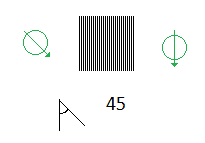
Photon.png

And if I'm not wrong, when the photon passes through that filter (like illustrated in the image above) the photon will change its polarization axis.

In the picture above where the Φ = 45°, then P = 0.5

So if we let one single photon try passing through that filter, then the probability of it passing through the filter is 50% (P = 0.5)

So if we have 1000 photons, then we can say that ca 50% will pass through that filter since the probability is 50%.

But those photons that didn't pass through the filter, if we try them passing the same filter, will they pass through the filter?

I mean let's say that one single photon (where Φ = 45°) didn't pass through the filter (since there's 0.5 chance it doesn't). If we try with the same photon again and again the photon will never pass through that filter since it didn't pass through it first time?
 

Attachments

  • Photon.png
    Photon.png
    571 bytes · Views: 1,287
Physics news on Phys.org
Karagoz said:
I mean let's say that one single photon (where Φ = 45°) didn't pass through the filter (since there's 0.5 chance it doesn't). If we try with the same photon again and again the photon will never pass through that filter since it didn't pass through it first time?
I would think if the photon does not pass through the 1st filter, it is gone and can't be reused.

[Edit: Ah, it appears Orodruin and I posted at the same time.
 
Those photons that didn't pass through the filter are absorbed by it, so we don't get to try them again.

However, there are analogous experiments (google for "Stern-Gerlach experiment") in which a beam of particles is passed through an inhomogeneous magnetic field and splits into two beams - the spin-up ones and the spin-down ones, with 50% probability for each particle. If you pass the "up" beam through another magnetic field oriented in the same direction, 100% will be deflected up this time (and 100% of the "down" beam will be deflected down).

The best way of understanding all of this is to look at how the math works. If you know some linear algebra, googling for "Born rule" will get you started. If you want a layman-friendly good explanation, try Giancarlo Ghirardi's book "Sneaking a look at God's cards".
 
Last edited:
  • Like
Likes   Reactions: StevieTNZ
Karagoz said:
In quantum physics they say that the probability P for a photon to pass through the filter depends on the angle Φ between the photon and the filter polarization axis:

P = cos^2(Φ)

View attachment 223690
And if I'm not wrong, when the photon passes through that filter (like illustrated in the image above) the photon will change its polarization axis.

In the picture above where the Φ = 45°, then P = 0.5

So if we let one single photon try passing through that filter, then the probability of it passing through the filter is 50% (P = 0.5)

So if we have 1000 photons, then we can say that ca 50% will pass through that filter since the probability is 50%.

But those photons that didn't pass through the filter, if we try them passing the same filter, will they pass through the filter?

I mean let's say that one single photon (where Φ = 45°) didn't pass through the filter (since there's 0.5 chance it doesn't). If we try with the same photon again and again the photon will never pass through that filter since it didn't pass through it first time?
If you use a polarizing beam splitter ( which has two output ports) then no photons are absorbed and you can re-test them.
 
Mentz114 said:
If you use a polarizing beam splitter ( which has two output ports) then no photons are absorbed and you can re-test them.

Just to make this more clear: You can re-test them, but you will always get the same result. If you put the same photon directly on an identical beam splitter again, it will of course again exit via the same exit port.
 
  • Like
Likes   Reactions: Mentz114