How Can I Record a Raw Analog Signal with an Arduino Using a Circuit Board?

Click For Summary
SUMMARY

This discussion focuses on recording raw analog signals using an Arduino and circuit boards. The recommended approach involves utilizing an Analog-Digital Converter (ADC) to convert the analog signals into digital data, which can then be stored on an SD card. For input signals within a voltage range of 0-2V, the built-in ADC of the Arduino is suitable. Additionally, the LabJack U6 Pro is suggested for more advanced data logging needs, offering features such as variable ADC resolution and a wide voltage range.

PREREQUISITES
  • Understanding of Arduino programming and hardware
  • Familiarity with Analog-Digital Converters (ADC)
  • Knowledge of data logging techniques
  • Basic electronics concepts, including voltage ranges and signal types
NEXT STEPS
  • Research Arduino's built-in ADC capabilities and programming
  • Explore data logging techniques using SD cards with Arduino
  • Learn about the LabJack U6 Pro and its features for data acquisition
  • Investigate SparkFun's resources on analog-to-digital conversion
USEFUL FOR

Electronics enthusiasts, hobbyists working with Arduino, and engineers involved in data acquisition and signal processing will benefit from this discussion.
Tone L
Messages
72
Reaction score
7
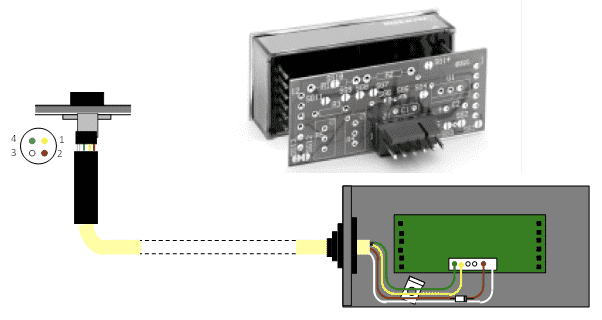
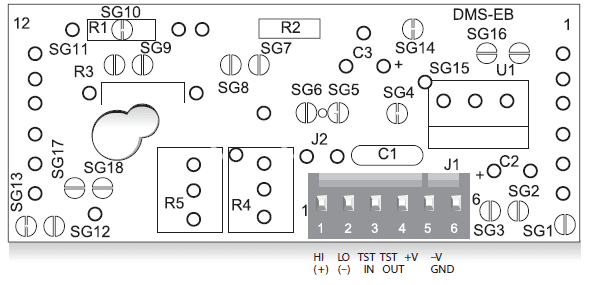
Greetings. I have a system that is powered by 5V . You will see below in the image. The system displays the difference between the Hi and Lo signal digitally, on the display which the board is plugged into. However. I want to store the data maybe in a SD card? Using Arduino? How do I harness the Hi Lo signal?

I am looking for circuit board recommendations i think.
upload_2018-10-17_9-53-34.png

upload_2018-10-17_9-53-49.png
 

Attachments

  • upload_2018-10-17_9-51-8.png
    upload_2018-10-17_9-51-8.png
    14.9 KB · Views: 496
  • upload_2018-10-17_9-53-34.png
    upload_2018-10-17_9-53-34.png
    14.9 KB · Views: 781
  • upload_2018-10-17_9-53-49.png
    upload_2018-10-17_9-53-49.png
    15 KB · Views: 689
Engineering news on Phys.org
You probably want an Analog-Digital Converter(ADC) that will convert the analog signal to digital at some fixed time interval. Then you can store the digital data as you would any other digital data.
 
  • Like
Likes osilmag, Asymptotic and davenn
What is the voltage range of the two input signals? And what is the input source?

If the input voltage is less or equal to 5V you could use the built-in ADC in an Arduino or similar. How much circuitry you need in front of the ADC pins on the Arduino depends on the source of yhe hi/lo sigal.
 
  • Like
Likes Tone L
What you want (I think) is a data logger. LabJack makes some nice ones that are in the ~$300 - $500 range. I use the U6 Pro because it has a nice instrumentation amplifier and variable ADC resolution. Works +/-10V down to micro volts. Small USB powered unit. Plenty of digital IO timers etc.
 
  • Like
Likes Tone L
Lord Crc said:
What is the voltage range of the two input signals? And what is the input source?

If the input voltage is less or equal to 5V you could use the built-in ADC in an Arduino or similar. How much circuitry you need in front of the ADC pins on the Arduino depends on the source of yhe hi/lo sigal.

Thanks! The voltage range of the two input signals is 0-2V. The input source is 5V I think, what exactly do you mean by this? Sorry :D
 
Most likely this can only be answered by an "old timer". I am making measurements on an uA709 op amp (metal can). I would like to calculate the frequency rolloff curves (I can measure them). I assume the compensation is via the miller effect. To do the calculations I would need to know the gain of the transistors and the effective resistance seen at the compensation terminals, not including the values I put there. Anyone know those values?

Similar threads

Replies
1
Views
2K
  • · Replies 3 ·
Replies
3
Views
2K
  • · Replies 14 ·
Replies
14
Views
3K
Replies
9
Views
2K
Replies
5
Views
5K
  • · Replies 16 ·
Replies
16
Views
9K
Replies
1
Views
2K
  • · Replies 1 ·
Replies
1
Views
2K
Replies
50
Views
10K
Replies
4
Views
3K