Share Animal Pictures: For Animal Lovers
- Thread starter micromass
- Start date
-
- Tags
- Animal
Join the discussion
Registration is free. Ask a follow-up in this thread, or start your own.
3,073 replies · 328K views
Physics news on Phys.org
DennisN
Gold Member
- 2,197
- 10,329
Incredibly funny! What an annoying gibbon!BillTre said:Slapping their heads and pulling their ears and tails.
It is hilarious.
 The skill is incredibly impressive. Also the guts and the playfulness.
Science Advisor
Gold Member
- 2,856
- 12,708
Flat fish start off in development, up-right, like a normal fish. However, early in development they flop over on one side.
The eye on the underside then migrates to the top side and other changes occur.
Apparently the side that is up has changed in this group of flatfishes (Pleuronectoidei) through evolution.
A labile trait.
Closer to the center are more ancient branch points.
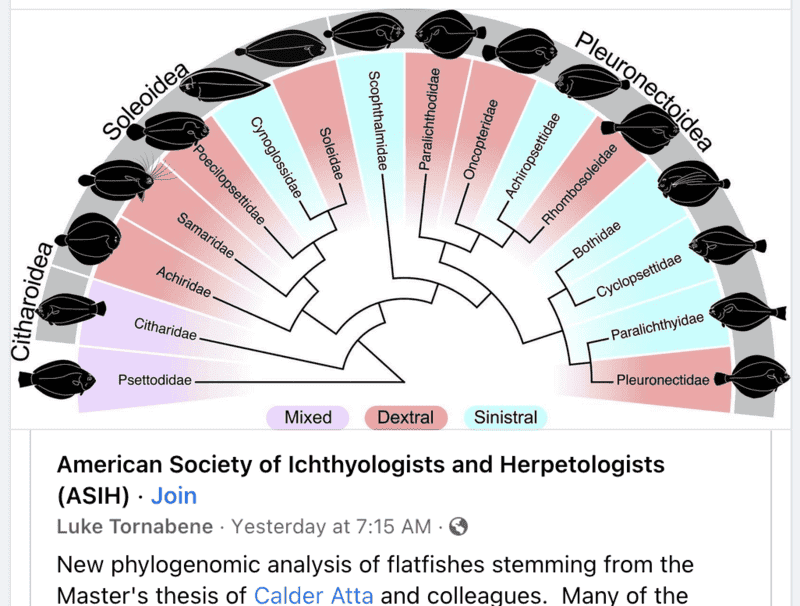
https://www.sciencedirect.com/science/article/pii/S1055790321002487?dgcid=coauthor
The eye on the underside then migrates to the top side and other changes occur.
Apparently the side that is up has changed in this group of flatfishes (Pleuronectoidei) through evolution.
A labile trait.
Closer to the center are more ancient branch points.
https://www.sciencedirect.com/science/article/pii/S1055790321002487?dgcid=coauthor
pinball1970
Gold Member
2025 Award
- 3,878
- 6,214
This looks like a hole, danger. Why would the cats be attracted? Curiosity?
Staff Emeritus
Science Advisor
Gold Member
- 8,252
- 2,666
pinball1970 said:This looks like a hole, danger. Why would the cats be attracted? Curiosity?
Interesting! I thought it was fake black hole until the cat fell into it.
Staff Emeritus
Science Advisor
Gold Member
- 8,252
- 2,666
Staff Emeritus
Science Advisor
Gold Member
- 8,252
- 2,666
The dearly departed and beloved Anatolian, Dr Who

Staff Emeritus
Science Advisor
Gold Member
- 8,252
- 2,666
DennisN
Gold Member
- 2,197
- 10,329
I recently saw two extremely fascinating seminars (on the World Science Festival channel) which I can't get out of my head.
I have had a great fascination with animal intelligence for many, many years. I don't know why, maybe it's partly because I also like artifical intelligence, which borrows some ideas from biology and also is connected to cognitive science.
As I've said to one of my friends, in another life I could have ended up studying the behavior and intelligence of animals. I am that fascinated by it.
Anyway, if anyone has the slightest interest in these things, these seminars may be for you.
The first seminar includes a neuroscientist, a dolphin researcher, an octopus researcher and an ant reasearcher.
Rethinking Thinking: How Intelligent Are Other Animals?
Intelligence was once thought to be uniquely human. But researchers have discovered astonishing cognitive abilities in many other species—not just our close cousins like chimps, or fellow mammals like dolphins—but also crows, parrots, and even octopuses. If we consider the intelligence of swarms, we must add bees, termites, and ants to the list of super smart creatures. Join the scientists who study smarts as we ask: What is intelligence? Why do some species get an extra dose? And just how special are humans, really?
The second seminar is also very fascinating. It is, as far as I understand, partly about quite new and pioneering work with plants, bioacoustics, fungi, slime molds, ants and swarms.
Intelligence Without Brains
How much brain do you need to be smart? Bees and ants perform marvels as colonies, though each insect has barely any brain. And plants—with no brain at all—exhibit behaviors that, by any definition, count as intelligent. Brace yourself for a mind-bending exploration of plants that learn new behaviors and warn their brainless fellows of danger; vines that compete with each other; molds that solve puzzles; and trees that communicate and cooperate through a ‘wood-wide web’ of microscopic mycological fibers. Perhaps the real question is, are we smart enough to appreciate the vast range of intelligence that surrounds us?
I have had a great fascination with animal intelligence for many, many years. I don't know why, maybe it's partly because I also like artifical intelligence, which borrows some ideas from biology and also is connected to cognitive science.
As I've said to one of my friends, in another life I could have ended up studying the behavior and intelligence of animals. I am that fascinated by it.
Anyway, if anyone has the slightest interest in these things, these seminars may be for you.
The first seminar includes a neuroscientist, a dolphin researcher, an octopus researcher and an ant reasearcher.
Rethinking Thinking: How Intelligent Are Other Animals?
Intelligence was once thought to be uniquely human. But researchers have discovered astonishing cognitive abilities in many other species—not just our close cousins like chimps, or fellow mammals like dolphins—but also crows, parrots, and even octopuses. If we consider the intelligence of swarms, we must add bees, termites, and ants to the list of super smart creatures. Join the scientists who study smarts as we ask: What is intelligence? Why do some species get an extra dose? And just how special are humans, really?
The second seminar is also very fascinating. It is, as far as I understand, partly about quite new and pioneering work with plants, bioacoustics, fungi, slime molds, ants and swarms.
Intelligence Without Brains
How much brain do you need to be smart? Bees and ants perform marvels as colonies, though each insect has barely any brain. And plants—with no brain at all—exhibit behaviors that, by any definition, count as intelligent. Brace yourself for a mind-bending exploration of plants that learn new behaviors and warn their brainless fellows of danger; vines that compete with each other; molds that solve puzzles; and trees that communicate and cooperate through a ‘wood-wide web’ of microscopic mycological fibers. Perhaps the real question is, are we smart enough to appreciate the vast range of intelligence that surrounds us?
DennisN
Gold Member
- 2,197
- 10,329
Oh, by the way, here's another incredible documentary I saw recently. From one of the seminars I posted above I learned that the very, very strange animal, cuttlefish, has astounding camouflage abilities I did not know about. And the way they can disorient/hypnotize prey is simply incredible. 
Cuttlefish - the King of Camouflage
Cuttlefish - the King of Camouflage
Science Advisor
Gold Member
- 2,856
- 12,708
Cuttlefish are amazing with their color pattern control. I used to know some cuttlefish researchers and heard a lot of cuttlefish stories. They do patterns for both social interaction as well as camouflage.
They can make a "hey baby" signal on one side of their body to a potential mate, while making a threat signal on the other side for a potential mating competitor.
They can make a "hey baby" signal on one side of their body to a potential mate, while making a threat signal on the other side for a potential mating competitor.
DennisN
Gold Member
- 2,197
- 10,329
Yes, I heard about that in one of the seminars. It is incredible. In the documentary above they also demonstrated that some male individuals during mating competition make themselves appear as females. This fools the other males, and also let's the "crossdresser" get close to another female, and sneak into mate with it. Just incredible.BillTre said:They can make a "hey baby" signal on one side of their body to a potential mate, while making a threat signal on the other side for a potential mating competitor.
Science Advisor
Gold Member
- 2,856
- 12,708
Other things can do amazing pattern changes too.DennisN said:Yes, I heard about that in one of the seminars. It is incredible. In the documentary above they also demonstrated that some male individuals during mating competition make themselves appear as females. This fools the other males, and also let's the "crossdresser" get close to another female, and sneak into mate with it. Just incredible.
Once I was scuba diving in a large Hawaii tide pool (bigger then a football field and ~20 feet deep) and saw a couple of trumpet fish, somewhat like this:
As the waves mottled the sunlight coming through the water surface, trumpet fishes moved a mottled pattern along their body.
Staff Emeritus
Science Advisor
Gold Member
- 8,252
- 2,666
Staff Emeritus
Science Advisor
Gold Member
- 8,252
- 2,666
Keith_McClary
- 752
- 1,507
Staff Emeritus
Science Advisor
Gold Member
- 8,252
- 2,666
DennisN
Gold Member
- 2,197
- 10,329
I visited the pet store a couple of days ago to get some things for my cats.
I was taking the time to go around and look at different fish and found a couple of very beautiful fishes that were in their own tanks. I asked if I could take some photos, which I was allowed.
The told me they were fighting fish (I don't know which species, though), and they were in separate tanks because otherwise they fight each other.
Here are two photos of a beautiful blue and red one:
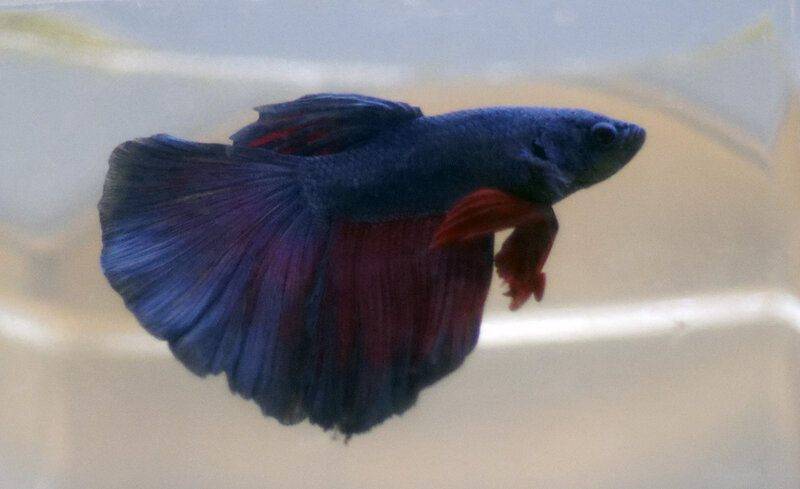
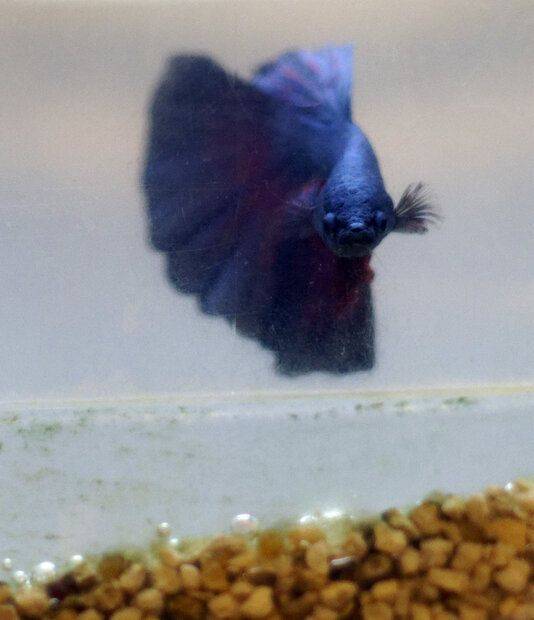
I was taking the time to go around and look at different fish and found a couple of very beautiful fishes that were in their own tanks. I asked if I could take some photos, which I was allowed.
The told me they were fighting fish (I don't know which species, though), and they were in separate tanks because otherwise they fight each other.
Here are two photos of a beautiful blue and red one:
Science Advisor
Gold Member
- 2,856
- 12,708
They are Bettas (Betta splendens).
The adult males fight and have to be kept separate. They also grow longer fins.
The females have shorter fins, may be less colorful, and can be kept together.
They have been bred in SE Asia (and now all over the world) for a long time. There are many spectacular lines. Pictures here.
They (and their relatives) are bubble nesters. They keep their fertilized eggs in nests of bubbles (mixed with fish spit).
The adult males fight and have to be kept separate. They also grow longer fins.
The females have shorter fins, may be less colorful, and can be kept together.
They have been bred in SE Asia (and now all over the world) for a long time. There are many spectacular lines. Pictures here.
They (and their relatives) are bubble nesters. They keep their fertilized eggs in nests of bubbles (mixed with fish spit).
Science Advisor
Gold Member
- 2,856
- 12,708
Longest insect tongue (proboscis actually) found (from Science mag news):
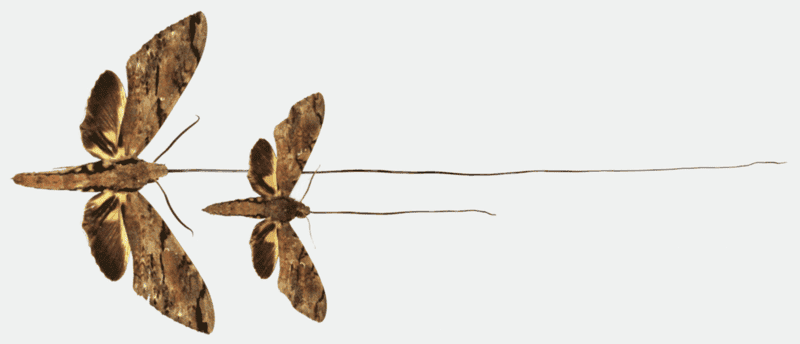
This moth’s whole history is absurd. Charles Darwin predicted its existence when he first saw the shape of the Angraecum sesquipedale orchid (which apparently prompted him to exclaim, “Good heavens, what insect can suck it?”). About 2 decades later, in 1903, the moth was actually discovered, and ever since, the Malagasy variant has been considered a subspecies of its mainland counterpart, X. morganii. But no longer.
pinball1970
Gold Member
2025 Award
- 3,878
- 6,214
Call yourself a dog?
DennisN
Gold Member
- 2,197
- 10,329
One of my friends (who actually works with various animals herself) recommended this documentary, and I saw it recently. It was one of the most fascinating, thoughtful and emotional documentaries I've seen, so I warmly recommend it. It is about a person who befriends a wild octopus during a tough time in his life.
My Octopus Teacher (2020), trailer:
About it on Wikipedia: My Octopus Teacher
My Octopus Teacher (2020), trailer:
About it on Wikipedia: My Octopus Teacher
pinball1970
Gold Member
2025 Award
- 3,878
- 6,214
Red heads verses yellow heads in gang warfare. This gets ugly quickly guys so viewer discretion advised.
(Joke)
(Joke)