Solving a Trigonometric Integral

Click For Summary

Discussion Overview

The discussion revolves around solving the trigonometric integral ∫(sin(x)-sin²(x)/√(sin²(x)+c)) dx, where c is a constant. Participants explore various approaches to integrate this expression, including substitution and integration by parts.

Discussion Character

  • Exploratory
  • Mathematical reasoning
  • Homework-related

Main Points Raised

  • One participant requests help with the integral, presenting the original expression.
  • Another participant reformulates the integral but questions if it is the correct expression to integrate.
  • Several participants suggest checking an attached JPG file for clarification on the integral's expression.
  • One participant proposes using the substitution u=sin(x) to simplify the integral to ∫(u-u²/√(u²+c)) du.
  • Another participant notes that the substitution leads to a derivative that does not match the original integral's form.
  • Concerns are raised about integration by parts resulting in a more complicated expression, prompting requests for alternative methods.
  • A participant mentions that applying a specific method with a substitution for c may simplify the integral.

Areas of Agreement / Disagreement

Participants express varying opinions on the best approach to solve the integral, with no consensus on a single method or solution. Some suggest substitution while others highlight complications with integration by parts.

Contextual Notes

Some participants indicate that the integral's primitive may be complex, and there are unresolved aspects regarding the correct expression and the implications of different methods proposed.
yanic
Messages
8
Reaction score
0
Can anyone please help to solve this following integral?
∫(sin(x)-sin^2 (x)/√(sin^2 (x)+c)) dx
c is a constant
 
Physics news on Phys.org
Re: integral

pape said:
Can anyone please help to solve this following integral?
∫(sin(x)-sin^2 (x)/√(sin^2 (x)+c)) dx
c is a constant
Integral belongs to calculus...
is this what you want to integrate?
$$\int\frac{\sin(x)-\sin^2(x)}{\sqrt{\sin^2(x)}}+c$$

Regards,
$$|\pi\rangle$$
 
Re: integral

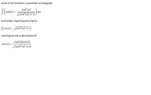
View attachment 1302
Please check the JPG file for the correct expression of
the function.

Best...
 

Attachments

  • forum.JPG
    forum.JPG
    13.2 KB · Views: 131
Last edited:
Re: integral

pape said:
https://www.physicsforums.com/attachments/1302
Please check the JPG file for the correct expression of
the function.

Best...
"And what I have found so far is" What is "what you have found"? How did you get this line? What does it mean?

How does the derivative relate to the given problem?

Please be more specific.

-Dan
 
Re: integral

topsquark said:
"And what I have found so far is" What is "what you have found"? How did you get this line? What does it mean?

How does the derivative relate to the given problem?

Please be more specific.

-Dan

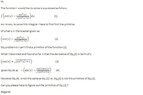
View attachment 1303

Please check the attached file.
I hope that I have been more specific this time.

Regards
 

Attachments

  • integral.JPG
    integral.JPG
    28.5 KB · Views: 119
Re: integral

You can start by substituting $u=\sin(x)$ to obtain
$$\int u-\frac{u^2}{\sqrt{u^2+c}}\, du$$
From there you can try integration by parts.
 
Re: integral

eddybob123 said:
You can start by substituting $u=\sin(x)$ to obtain
$$\int u-\frac{u^2}{\sqrt{u^2+c}}\, du$$
From there you can try integration by parts.
If $$u= \sin(x)$$ Then $$du=\cos(x)\,dx$$ which is not same as that function he wants to integrate?

Regards,
$$|\pi\rangle$$
 
Re: integral

eddybob123 said:
You can start by substituting $u=\sin(x)$ to obtain
$$\int u-\frac{u^2}{\sqrt{u^2+c}}\, du$$
From there you can try integration by parts.

Hello,
Integration by part leads to a more complicated expression at the end for the finding of the primitive.
Do you have any other suggestion please?

Regards
 
Re: integral

pape said:
Hello,
Integration by part leads to a more complicated expression at the end for the finding of the primitive.
Do you have any other suggestion please?

Regards

Unfortunately, that's because the primitive is quite complex...

Incidentally, if you apply Eddybob's method, but set $$c=b^2\,$$, so that $$b=\sqrt{c}\,$$, you can take the constant outside of the square root... ;)
 

Similar threads

  • · Replies 3 ·
Replies
3
Views
3K
  • · Replies 4 ·
Replies
4
Views
3K
  • · Replies 14 ·
Replies
14
Views
4K
  • · Replies 5 ·
Replies
5
Views
4K
  • · Replies 8 ·
Replies
8
Views
3K
  • · Replies 1 ·
Replies
1
Views
2K
  • · Replies 3 ·
Replies
3
Views
2K
  • · Replies 3 ·
Replies
3
Views
2K
  • · Replies 8 ·
Replies
8
Views
2K
  • · Replies 3 ·
Replies
3
Views
3K