LACAZE
- 1
- 0
Hi everyone,
To begin, sorry for my english...:S
I try to calculate inner/outer surface stresses on a pipe submitted to instanatenous temperature variation on the OUTER SURFACE.
I know the Roark's formua giving the stresses but with an instantaneous temperature variation on the INNER SURFACE.
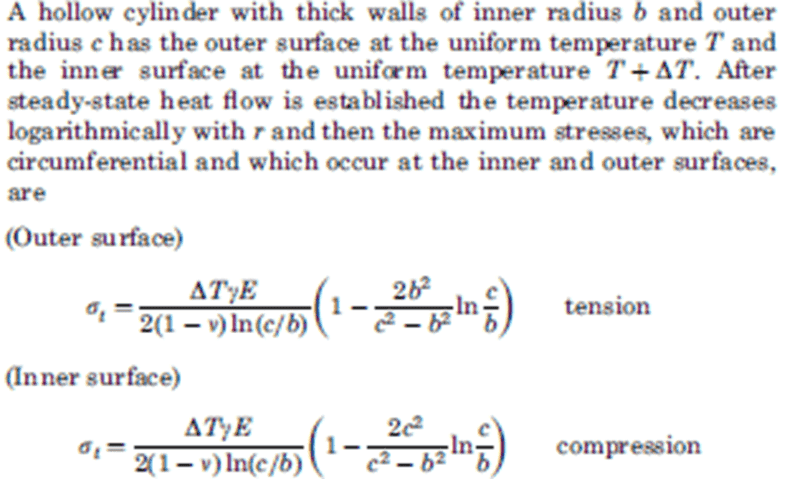
My question is: can i apply theses formulas to my case (but with a Delta T on the outer surface, not on the inner surface)?
For me, the Roark formulas is the combination result of the temperature formula on the thickness with the Hook formulas.
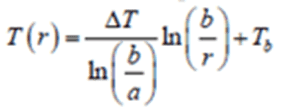
Temperature/thickness formula:
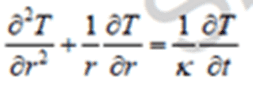 =>
=>
Hook formula:
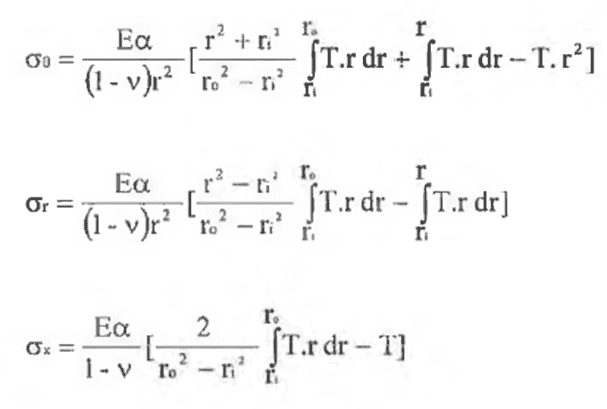 So, to my mind, i can apply it to my case, it is just the results sign which change (tension stresses in outer surface area and compression stresses in inner surface area for a outer negative tempeature variation).
Thanks a lot.
Bruno.
To begin, sorry for my english...:S
I try to calculate inner/outer surface stresses on a pipe submitted to instanatenous temperature variation on the OUTER SURFACE.
I know the Roark's formua giving the stresses but with an instantaneous temperature variation on the INNER SURFACE.
My question is: can i apply theses formulas to my case (but with a Delta T on the outer surface, not on the inner surface)?
For me, the Roark formulas is the combination result of the temperature formula on the thickness with the Hook formulas.
Temperature/thickness formula:
Hook formula:
Thanks a lot.
Bruno.