The Birth of a Textbook - Comments

  • Context: Insights 
  • Thread starter Thread starter Orodruin
  • Start date Start date
  • Tags Tags
    textbook writing
Click For Summary
SUMMARY

The forum discussion centers on the publishing process of a new textbook by @Orodruin, highlighting both positive and negative experiences. While @Orodruin reports a smooth experience with LaTeX formatting and responsive publisher support, other participants share concerns about the challenges faced by authors transitioning from LaTeX to other formats, particularly XML, which can lead to errors in proofs and formatting. The conversation also touches on the availability of a solutions manual, which is intended for teachers adopting the textbook, and the potential for promotional contests to distribute copies of the book.

PREREQUISITES
  • Familiarity with LaTeX typesetting for academic publishing
  • Understanding of the textbook publishing process
  • Knowledge of XML formatting challenges in publishing
  • Awareness of the role of solutions manuals in educational resources
NEXT STEPS
  • Research the LaTeX publishing process for textbooks
  • Explore common issues in transitioning from LaTeX to XML formats
  • Investigate the role of solutions manuals in academic publishing
  • Learn about promotional strategies for new textbook releases
USEFUL FOR

Authors, academic publishers, educators, and students interested in the textbook publishing process and the challenges of formatting academic materials.

Orodruin
Staff Emeritus
Science Advisor
Homework Helper
Insights Author
Gold Member
2025 Award
Messages
22,820
Reaction score
14,860
Greg Bernhardt submitted a new PF Insights post

The Birth of a Textbook
textbook.png


Continue reading the Original PF Insights Post.
 

Attachments

  • textbook.png
    textbook.png
    11.6 KB · Views: 1,751
  • Like
Likes   Reactions: shahnawaz, qspeechc, Demystifier and 18 others
Physics news on Phys.org
Congratulations @Orodruin ! I think, I'll get a copy :-)).

One naughty question: Was the publishing process really so smooth? I heard from a colleague about publishing a textbook with another publisher that the production part was (or better said still is) awful. His carefully LaTeX-written book got totally cluttered in the process by putting it from LaTeX/pdf to some other format (I guess xml?). It's an experience I had to make with the one or other paper, including one, where they even distorted formulae, making everything completely unreadable and nonsensical. They really asked us to proof read it, although it was pretty obviously simply unreadable. It was a tedious process to get everything right again, and this was only for a paper of a few (perhaps 10) pages! If I think about such a thing concerning a long textbook of around 700 pages, I get high blood pressure ;-)).
 
  • Like
Likes   Reactions: jedishrfu, dextercioby and Greg Bernhardt
Very proud of you @Orodruin! I have a copy and it's very impressive. Everyone should go out and buy one!

btw, we will be holding 3 contests in the near future and the winner will be awarded a copy of the new book! Stay tuned for details!
 
  • Like
Likes   Reactions: scottdave, jedishrfu, atyy and 2 others
vanhees71 said:
One naughty question: Was the publishing process really so smooth? I heard from a colleague about publishing a textbook with another publisher that the production part was (or better said still is) awful. His carefully LaTeX-written book got totally cluttered in the process by putting it from LaTeX/pdf to some other format (I guess xml?).

I honestly do not have anything bad to say about the publishing process itself. For me it all went very smoothly. Of course, my sample of publishers is limited here, but for me there was never any question with the publisher of using anything other than LaTeX and the template I was asked to use worked well and (to me) gave an aesthetically pleasing result. The few issues I had regarding the template were resolved within at most a few days by their LaTeX support (as well as some other minor technicalities I asked about). When did your colleague write his book? Things may have changed over time or simply vary among publishers.

I do agree that some journals are prone to massacring your paper (none mentioned, none forgotten, I do not submit papers there anymore after they edited a key sentence to mean the exact opposite).

vanhees71 said:
Congratulations @Orodruin ! I think, I'll get a copy :-)).
Just as a heads-up to everyone, PF has been given a few copies to be used as promotional prizes in contests starting with next week's photo contest, which starts tomorrow. However, depending on shipping costs, the contest may have to be restricted to US addresses for receiving the prize. Greg is investigating.

Greg Bernhardt said:
I have a copy
I am very jealous. My author copies did not arrive yet (and are being shipped to my work address and I am out for x-mas). I will have to take your word for the impressiveness. :rolleyes:
 
  • Like
Likes   Reactions: vanhees71 and davenn
All I want to know is how much epidural that you took to give birth to this book.

Zz.
 
  • Like
Likes   Reactions: Borg, Auto-Didact, vanhees71 and 5 others
What a wonderful PF Insights. Thank you @Orodruin.
 
  • Like
Likes   Reactions: vanhees71 and Orodruin
Very interesting insight article, Thanks @Orodruin, and congratulations.
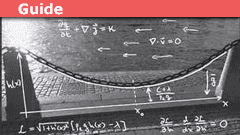
And I really like the cover art.
 
  • Like
Likes   Reactions: vanhees71 and Orodruin
Congratulations, @Orodruin ! Thanks for sharing your experience.
 
  • Like
Likes   Reactions: Orodruin
ZapperZ said:
All I want to know is how much epidural that you took to give birth to this book.

Zz.
Do you really want to know that?
 
  • Like
Likes   Reactions: vanhees71 and jerromyjon
  • #10
Congratulations!

I took this class (which was called "Applied Analysis" at the time) when I was in college (back in the early days of Grunge) and our textbook was really unsatisfactory (although the typesetting and binding were beautiful and there were very few typos compared to some of the other advanced math texts I've worked with - there are fewer editions and fewer readers than more introductory works so errors don't get caught as often in the more advanced math textbooks, especially in the problem sets - I'll look it up and update from home if I get a chance). At the time, I depended almost entirely on lecture notes which were much more clear. I've gone back to it several times when dealing with math I was supposed to have mastered then and been disappointed every time at the lack of clear presentation of the topics, like tensors, that I was referring back to and eventually bought another text for reference purposes for some of the subjects.

This said, the advances in the computerized typesetting process over the last few decades has been amazing. As late as the 1980s, a large share of masters theses and PhD dissertations and conference papers had the equations written in by hand, and if you go back to the 1970s and earlier that was true even in a lot of published journal articles (also with typewriter written text in courier font showing whiteout marks, no justification, etc.). It was still very painstaking in the 1990s to get it done right each symbol took a dozen or two key strokes.

This week, my son in advanced high school math had to write a short (six page) paper explaining an issue in advance math or statistics for his high school IB class, and he was effortlessly pounding out something that looked as professional as anything you'd see on arXiv from a type setting perspective! (I've finally gotten to the point where he's advanced enough in math that I can do more good than harm helping him with his homework again.)
 
Last edited:
  • Like
Likes   Reactions: scottdave and Orodruin
  • #11
Congratulations @Orodruin ! I might get a copy :-)). If I do though, how do I obtain a solution manual?
 
  • Like
Likes   Reactions: Orodruin and Greg Bernhardt
  • #13
smodak said:
Congratulations @Orodruin ! I might get a copy :-)). If I do though, how do I obtain a solution manual?
I think the idea of the publisher is to offer the solutions manual to teachers who adopt the course.
CRC Press homepage said:
A solutions manual and figure slides are available upon qualifying course adoption
 
  • #14
Congratulations @Orodruin

an awesome achievement !Dave
 
  • Like
Likes   Reactions: Orodruin
  • #15
Orodruin said:
I think the idea of the publisher is to offer the solutions manual to teachers who adopt the course.
I am an enthusiast - neither a teacher, nor a student. A solution manual would be very useful for self-learners like me.
 
  • #16
smodak said:
I am an enthusiast - neither a teacher, nor a student. A solution manual would be very useful for self-learners like me.
To be honest, I do not have much control over how the publisher handles the solutions manual. Contractually, you might be surprised at what the author does not really control such as the title and the cover. However, I must say that they always listened to my opinion with regards to those decisions (for example, I was asked about the cover art and they readily accepted my idea).

If I had to make a guess as to why they want to keep the solutions manual to the teachers it would be because it is mainly teachers that decide to adopt a textbook for their course, not students, and so it makes economic sense as some teachers will want to keep solutions from their students in order for them to try harder and/or use the problems as homework exercises. (Note that, based on the reviews I got, the teacher corps is strongly divided on this issue ...)

If only there existed an online forum where students and laymen could go to post their questions and doubts regarding the solutions to different physics problems and get help for free ... No, that would be too good to be true! :rolleyes:
 
  • Like
Likes   Reactions: Greg Bernhardt
  • #17
Thanks for the sharing of this rarely shared experience Orodruin. Since my undergrad times I always wondered how much time and effort textbook authors had dedicated to finish the textbook, whether they are bound by deadlines from the publisher, and so on. How the typos and more technical mistakes (i.e. reviewing) are handled are also interesting to know. You know, even a university prof often (or may be always) has one or two things about physical concepts that he does not completely understood or has completely forgotten due to rare use of the concepts in his research. And then writing a basic level book covering many topics in physics such as this, surely this requires the author to be well acquainted with a broad spectrum of topics, not just those around his specialty research. Now I am glad part of my curiosity is answered.
 
  • Like
Likes   Reactions: Orodruin
  • #18
Congratulations @Orodruin.

Your account of the process reminds me of Tracy Kidder's book Soul of a New Machine, which won a Pulitzer prize. Except that yours was mostly a solo project, rather than a team project.

Most of all, I'm impressed by your perseverance and energy to see it through. It sounds like an awful lot of work to me. ZZ's comment about epidural was spot on.

I know many people who do modeling of physical processes. I used to do that myself. Most of them would really appreciate knowledge of better mathematical tools that might make their job easier.
 
  • Like
Likes   Reactions: Orodruin
  • #19
Way to go! While offspring and the vegetation which supports them are obviously more important, books are a close third as far as priorities go. Definitely jealous that you have the means and the ambition to make it happen! I may just have to enter the next contest for a chance to win a copy... since priorities won't allow me the privilege to splurge, lol.
 
  • Like
Likes   Reactions: Orodruin
  • #21
  • Like
Likes   Reactions: Orodruin
  • #22
Is there any way to buy it in electronic format? I try not to buy real books anymore, since otherwise I'd have no space in my house to live.
 
  • #23
atyy said:
Is there any way to buy it in electronic format?
Not that I am aware of. At least not at the present time.
 
  • #24
On the Amazon page for your book, it doesn't seem to offer the "Look Inside" feature?

I hope that's not intentional, and that this feature will be enabled in the near future. (I almost never buy books any more unless I can "look inside" first.)
 
  • #25
strangerep said:
On the Amazon page for your book, it doesn't seem to offer the "Look Inside" feature?

I hope that's not intentional, and that this feature will be enabled in the near future. (I almost never buy books any more unless I can "look inside" first.)
Again, this is not something I can control and I do not know if the preview is created by Amazon or the publishers. My best guess is that whoever does it has not gotten to that point yet. Other CRC Press books on Amazon do have the look inside feature.
 
  • #26
Orodruin said:
I honestly do not have anything bad to say about the publishing process itself. For me it all went very smoothly. Of course, my sample of publishers is limited here, but for me there was never any question with the publisher of using anything other than LaTeX and the template I was asked to use worked well and (to me) gave an aesthetically pleasing result. The few issues I had regarding the template were resolved within at most a few days by their LaTeX support (as well as some other minor technicalities I asked about). When did your colleague write his book? Things may have changed over time or simply vary among publishers.
Well, my colleague finished the book about a year ago and is still struggling with the production process, with several rounds of disappointing proofs he gets back, and the process is very slow. Of course, also in his case, he worked with LaTeX, and the result looks very good (as expected from LaTeX), but obviously the production office transfers it to another system (maybe xml), and already their things can get easily worse. The last proofs he got had completely mixed references like pointing to wrong equations, cluttering the literature/reference lists etc. etc. It's annoying technical things that all work well with his LaTeX version (also using a style provided by the publisher, i.e., it looks indeed like the books of this publisher). I don't understand, why they do not simply take directly the pdf from the LaTeX and print it. They also publish it as ebook. With this publishing company, my experience with the ebooks they offer is that you can use the pdf version only anyway. The epub versions, I've seen, are all failures, particularly leading to bad quality of formulae up to the degree of unreadability.

Recently I finished my habilitation thesis. I wrote it in LaTeX without any trouble, including two reference lists, a lot of formulae and figures and putting the published papers at the end (it's a socalled "cumulative habilitation", where you write a longer review-like summary of the published papers of the subject and then attach these papers). Of course, I didn't do the printing with a publisher but just sent my pdf to the university printing office, who also bound it for a very good price. It's of course not as nice as a real book, but at least all typos and mistakes are my own and not that of some production office of a publisher...
 
  • Like
Likes   Reactions: dextercioby
  • #27
vanhees71 said:
I don't understand, why they do not simply take directly the pdf from the LaTeX and print it.
I believe that this is essentially what CRC Press does (at least in my case). I provided a print ready pdf according to their style files, they add the necessary surrounding pages (such as the copyright notes etc) and print it. To be honest, I clearly prefer this way and I am sorry for your colleague's problems. For me the process was very streamlined. The proofreaders read my pdf and provided me with their comments rather than making changes to the pdf. Whenever I did not agree on some comment in the proofs it was open for discussion. I made the changes I agreed with, which I think improved the text, and made my case for why the other changes should not be made or why I proposed a different change. They accepted all such arguments.

vanhees71 said:
Recently I finished my habilitation thesis. I wrote it in LaTeX without any trouble, including two reference lists, a lot of formulae and figures and putting the published papers at the end (it's a socalled "cumulative habilitation", where you write a longer review-like summary of the published papers of the subject and then attach these papers). Of course, I didn't do the printing with a publisher but just sent my pdf to the university printing office, who also bound it for a very good price. It's of course not as nice as a real book, but at least all typos and mistakes are my own and not that of some production office of a publisher...

This is essentially what is done for PhD theses in physics in Sweden (called "compilation thesis" - freely translated). It is in fact exactly how I wrote my thesis.
 
  • #28
That also makes a lot of sense. If a PhD student has published papers in peer-reviewed journals, it's another proof of the value of the work, and one should be allowed to write the PhD thesis in this way. In our university, as far as I know, this is not yet possible, i.e., you have to write a full thesis in addition to papers. Fortunately for the habilitation you have the choice to write a quite long thesis or a cumulative one, where you put the most important papers you published on a subject with a somewhat extended review-like summary. I think that should also be possible for the PhD.
 
  • #29
In Sweden, at least at my university and all I have seen, you have a choice. Most theory students just write an additional introduction and then put their papers. In hep experiment it is more common to write the thesis as a monologue for obvious reasons. I had 7 papers in my thesis, the usual would be something like 3-6 depending on the extent of each publication.
 
  • #30
Indeed, I always wonder, who from the ~1000 people of the big collaborations has really written the papers and how you can make everybody agree with what's written ;-)). I've been once involved in writing a review with the entire working group (10 auhthors), and it wasn't so easy to get everything together in a coherent way, starting from different conventions used. The rescue was to use a version-control system (I think it was SVN at the time) ;-))).
 

Similar threads

  • · Replies 13 ·
Replies
13
Views
3K
  • · Replies 11 ·
Replies
11
Views
2K
  • · Replies 3 ·
Replies
3
Views
4K
  • · Replies 13 ·
Replies
13
Views
5K
  • · Replies 15 ·
Replies
15
Views
3K
  • · Replies 2 ·
Replies
2
Views
2K
  • · Replies 25 ·
Replies
25
Views
4K
  • · Replies 6 ·
Replies
6
Views
2K
  • · Replies 23 ·
Replies
23
Views
5K
  • · Replies 19 ·
Replies
19
Views
2K