Troubleshooting Your Kickped Kick Scooter: Common Wheel Issues Explained"

  • Thread starter Thread starter LongApple
  • Start date Start date
  • Tags Tags
    Wheel
Click For Summary

Discussion Overview

The discussion revolves around troubleshooting issues with the rear wheel of a Kickped kick scooter, focusing on potential causes for reduced mobility and performance. Participants explore various mechanical aspects, including bearings, brake functionality, and the impact of external conditions like snow and mud.

Discussion Character

  • Exploratory
  • Technical explanation
  • Debate/contested

Main Points Raised

  • One participant notes that the front wheel moves while the back wheel does not, raising questions about the underlying mechanics and possible bearing issues.
  • Another participant suggests that the rear brake may be rubbing against the wheel, affecting its movement.
  • A different participant counters that the brake is not the issue since it is rarely used and seeks further diagnostic steps.
  • Concerns are raised about potential gunk or wear affecting the rear wheel's ability to roll freely, possibly exacerbated by exposure to snow or mud.
  • There is a discussion about the role of bearings in wheel movement, with one participant expressing confusion about their function and how they can be damaged.
  • Another participant introduces the idea that friction in the front wheel could also be contributing to the issue, suggesting a need to compare the performance of both wheels.

Areas of Agreement / Disagreement

Participants do not reach a consensus on the exact cause of the rear wheel's issues, with multiple competing views regarding the role of the brake, bearings, and external conditions. The discussion remains unresolved.

Contextual Notes

Participants express varying levels of understanding regarding technical terminology and concepts, which may affect the clarity of the discussion. There are also references to specific diagnostic methods that remain unexplored.

Who May Find This Useful

Individuals experiencing similar issues with kick scooters, those interested in mechanical troubleshooting, or users seeking to understand wheel mechanics may find this discussion relevant.

LongApple
Messages
68
Reaction score
0
http://www.nycewheels.com/kickped-kick-scooter.html

When I walk side by side the kickbed scooter without standing on the scooter, the front wheels moves and back wheel does not. When I stand on the scooter and use it at usual, it moves, though not as fast as before.

I am wondering if this has anything to do with bearings but I thought maybe it would make sense to get a better idea of how wheels work in general.

1. What are some things I should try?

2. What could be some reasons the back wheel seems to not roll as well and

3. What products should I use or who should I show the scooter to who can diagnose the problem?

http://www.nycewheels.com/kickped-kick-scooter.htmlFront wheel
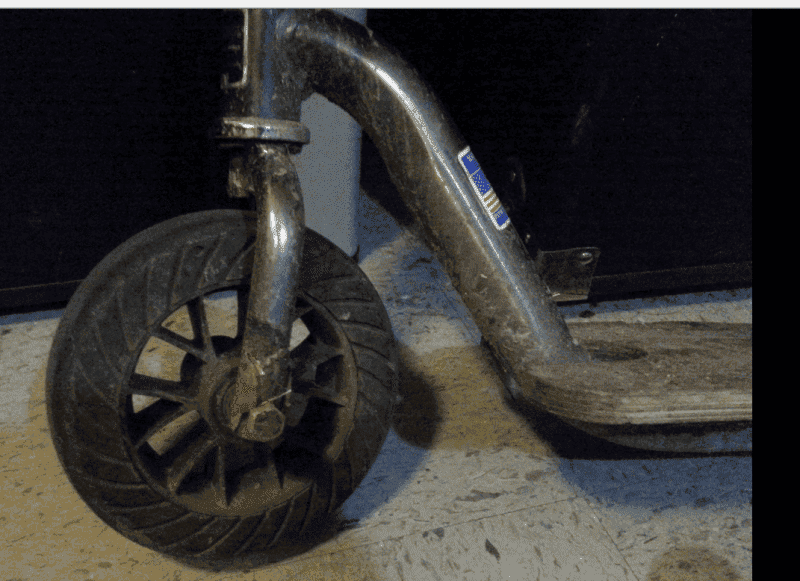
upload_2015-1-31_23-58-20.png


Back wheel doesn't roll as well as it used to
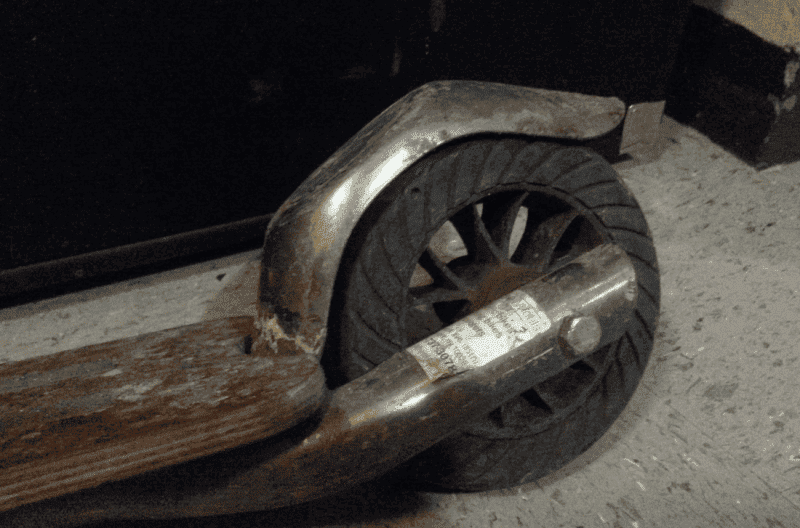
upload_2015-1-31_23-57-24.png
 
Engineering news on Phys.org
Short version:

In a two wheel device, if one wheel turns more easily than the other, why? What parts are in trouble and what should be done?
 
Is the rear brake rubbing until you stand on the platform and then the brake unloads?
You may possibly have bearing issues in the rear
 
>Is the rear brake rubbing until you stand on the platform and then the brake unloads?

No.

Also I have almost never used the break.

What are some next steps to diagnose the problem?
 
If the brake isn't dragging, disassemble the rear wheel
 
Dennis C said:
If the brake isn't dragging, disassemble the rear wheel

Part of the problem is my vocabulary and understanding. Why do we talk about the break? I never use it and never intend to use it. I don't know what "break dragging" means either. If I had to guess, I would bet the break isn't the problem because I never use it.

The rear wheel doesn't move. Unless you push on it very hard. I imagine something somehow gunking up or stuck inside some part of the wheel or some part of the wheel doesn't roll well because something is worn down. I bet the snow/mud I went through has something to do with it but I am not sure.

I've been looking for a good animation and picture to explain how wheels work especially the inside but still don't understand. What kind of things do you use to dissasemble a scooter wheel or is that even the right course of action.

Evidently there are these giant magical balls inside of the wall that somehow make it roll better? How do you damage bearings?

http://www.youblob.com/content/bearings-explained

https://www.youtube.com/results?search_query=wheel+bearings+explained
 
Last edited by a moderator:
LongApple said:
Part of the problem is my vocabulary and understanding. Why do we talk about the break? I never use it and never intend to use it. I don't know what "break dragging" means either.
If the brake is touching the wheel while the wheel is trying to move, the wheel won't move as fast as it would if it spins freely.

LongApple said:
I imagine something somehow gunking up or stuck inside some part of the wheel or some part of the wheel doesn't roll well because something is worn down. I bet the snow/mud I went through has something to do with it but I am not sure.
I think you might be right.

LongApple said:
Evidently there are these giant magical balls inside of the wall that somehow make it roll better? How do you damage bearings?
The "giant magical balls" in a bearing help with rolling because there's not as much rubbing together to cause friction. The balls theoretically only touch at a single point (in reality the balls flatten a tiny bit) so things can spin more freely. There's lots of different types of bearings, but the main idea is to reduce parts rubbing together (friction).
 
Last edited:
LongApple said:
Short version:

In a two wheel device, if one wheel turns more easily than the other, why? What parts are in trouble and what should be done?

Variants:
1) Keep in mind that walking side by side means pushing the top of the handle, this transfers torque around the front wheel, which means a small torque will be transferred to the rear wheel trying to push it up. the bigger the front wheel friction, the greater the transfer of torque. For visualization just block the front wheel via a rock in front and push it by the handle forward. So a big culprit could be your front wheel friction (bearings, etc.)

2) Rear wheel friction (bearings, etc.), easily tested by spinning it and observing the time it takes to slow down. (I don't know how to tell you to measure this, but you can compare with the front wheel)
 

Similar threads

Replies
1
Views
1K
  • · Replies 24 ·
Replies
24
Views
4K
  • · Replies 26 ·
Replies
26
Views
4K
  • · Replies 9 ·
Replies
9
Views
3K
  • · Replies 6 ·
Replies
6
Views
3K
  • · Replies 25 ·
Replies
25
Views
5K
Replies
3
Views
2K
  • · Replies 8 ·
Replies
8
Views
3K
  • · Replies 23 ·
Replies
23
Views
5K
  • · Replies 2 ·
Replies
2
Views
2K